
Up above to Kawkaban, a mountain town of Yemen
Perched atop a rugged pinkish red plateau, Kawkaban literally means “two stars”. It is also called “the eagle nest” and at 2800 meters above sea level, the fortified historical sight provided excellent views of the huge open Yemeni countryside. With history dating back to nearly 7th century BC, Kawkaban was the prettiest place I visited in Yemen mainland. Located in the pleasant Al Mahweet region, Kawkaban was more than an hour’s drive from Sanaa and we stopped at Shibam on the way. Mahweet was Yemen’s food bowl and an agriculturally rich region, it was also important in honey production. Art flourished there for centuries and the governorate was famous for clay, ceramic, glass, granite and marble handicraft industries. Multitude of springs gushed through its fertile wadis and the misty mountains were lush and green.

A day trip to Kawkaban
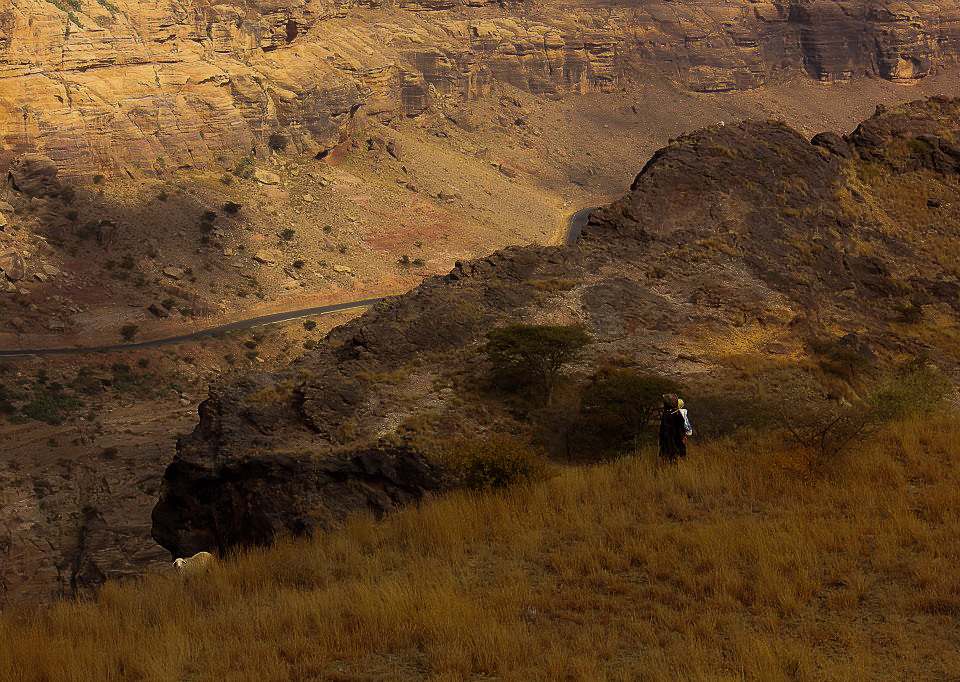
Al Mahweet travel plans took up another unoccupied Sanaa day and getting permits for the region were harder than the previous itinerary. Kawkaban was my second day trip outside Sanaa and one very early morning Mohamed and I drove out of the city. Due to our early start, there was no traffic and we sped over the vast Yemeni plains, stopping every now and then for either Houthi check points or photos. It was yet another beautiful spring day and the open sky showered us with abundant sunshine. Cool breeze brought in wafts of floral and fruity fragrances and the mountains circled us. Although, the new village of Shibam was the first stop on our itinerary, the pinkish orange mountains tempted us to continue driving. The twisting winding road continued through tree clad slopes and we followed it until clouds engulfed us in their cottony insides. The flat pastoral emptiness of the table top plateau opened up in a most surprising way and soon big floppy straw hats dotted the landscape. The highlands were covered with tall yellow grass and Bedouin shepherd ladies weaved in and out between them like colourful will o wisps.

The witches of the Yemeni highlands
Bathed in deep shade of gold, the hilly emptiness of Yemen looked spectacular and only flecks of herding animals were visible from amongst the swirling mist. Kawkaban stood on the other side of a deep chasm and in the bold afternoon light, the fortified historic village glowed like rich honey. It was Yemen at its prettiest and the cool mountain air felt wonderfully fresh. Excited to be away from a trash strewn land, we left our car there on top of the clean mountain and hiked down to the bottom. It was an easy hike for both feet and eyes and the amount of straw hats seen on the highlands seemed incredible. Yemeni ladies have a hat fetish and floppy, conical or tubular, the local straw headgears were most fascinating. The witchy looking sun shades called madhalla towered atop black robed ladies and the magical combination poked from among the brown plains, amidst green fields and underneath flower filled apricot branches. I stared at them all the way down to Shibam where we booked a local restaurant for lunch and the foothill village was as pretty as it could get. Mahweet’s pinkish red bulbous mountains were the perfect break and with spring flowers blooming riotously, a walk through the entire landscape bathed in pink, was simply relaxing. Lunch was at a traditional restaurant that served the rare Yemeni cuisine and it was a feast fit for a king.

The remote refuge of Kawkaban
The lunch arrived with a stream of staff bearing massive platters and after the unfurling of the signature plastic sheet, they placed all of them in front of us. Soups, salads, breads, rice, main courses, side dishes, deserts and endless cups of tea spread in front of us. The lunch was siesta inducing, but Kawkaban beckoned and I followed my Mohammed back to the taxi. This time we did not stop anywhere en route and drove non stop until Kawkaban city gate arrived. An ancient fortified town, Kawkaban was special. It dated back to the 7th century and the beautiful fortified citadel had only one gate that was ritually closed every night. An old Yemeni cultural hot seat, Kawkaban was the capital of an important 19th century Yemeni dynasty and it was famous for its affiliated school of music. Named after two jewel encrusted palaces, Kawkaban’s sheer location provided refuge to low lying Shibam residents throughout centuries. Supposedly one of the toughest places to conquer in Yemen, during times of conflict, Shibamites used to scurry up the single cliff path to seek shelter in remote Kawkaban. The hill top town’s massive grain silos and water tanks ensured sustenance during siege and although, a new modern paved road made Kawkaban easier to be accessed, the architectural remnants of its unshakable history were visible throughout the fortification.

The old unconquered fortified village
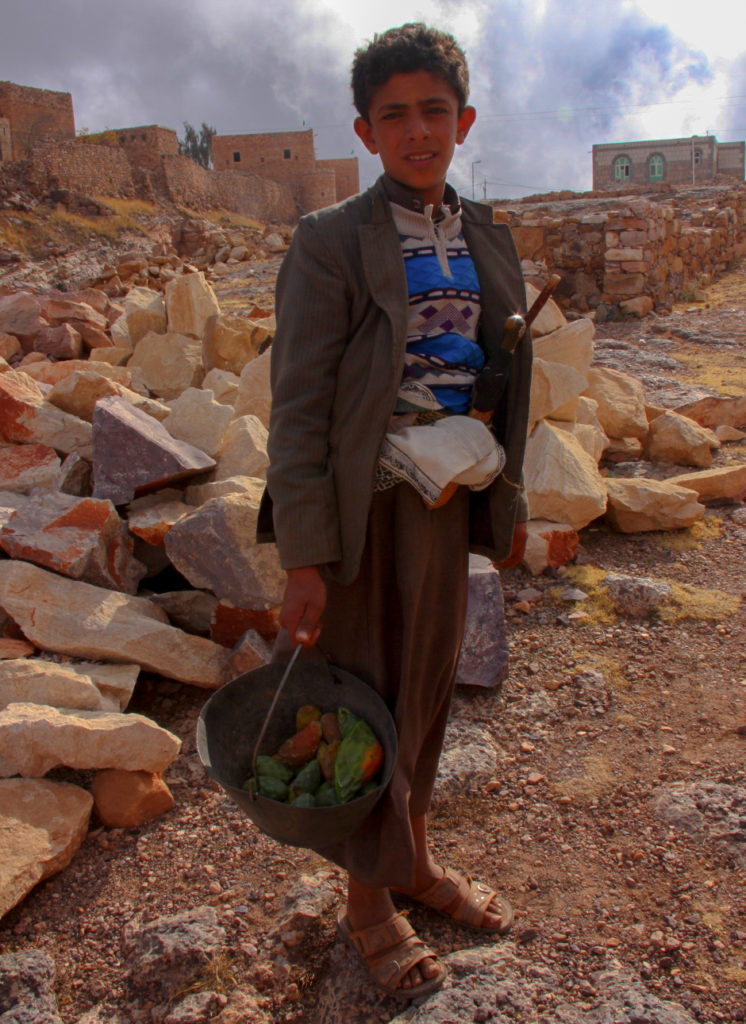
Old kingdom of Sheba lurked at every corner of Kawkaban and the crumbling honey coloured houses were most photogenic. The late afternoon light fell in golden shafts and the entire village literally glowed. Clouds bore down on us and scurry village children selling prickly cactus pears from buckets came running towards us. A cold breeze fluttered the green flags of mosque and after the customary checking of my passport and travel permit by the Houthi guards, we were allowed to walk around the village. Simply built Turkish barracks stood at the entrance of the famous iron Bab al Hadid gate and they immediately gave away Yemen’s Ottoman past. Kawkaban was small and the historic center held beautiful honey coloured sand stone buildings. The dilapidated buildings were full of character and some showed remnants of Yemen’s Jewish history.

The time warped beauty of Kawkaban
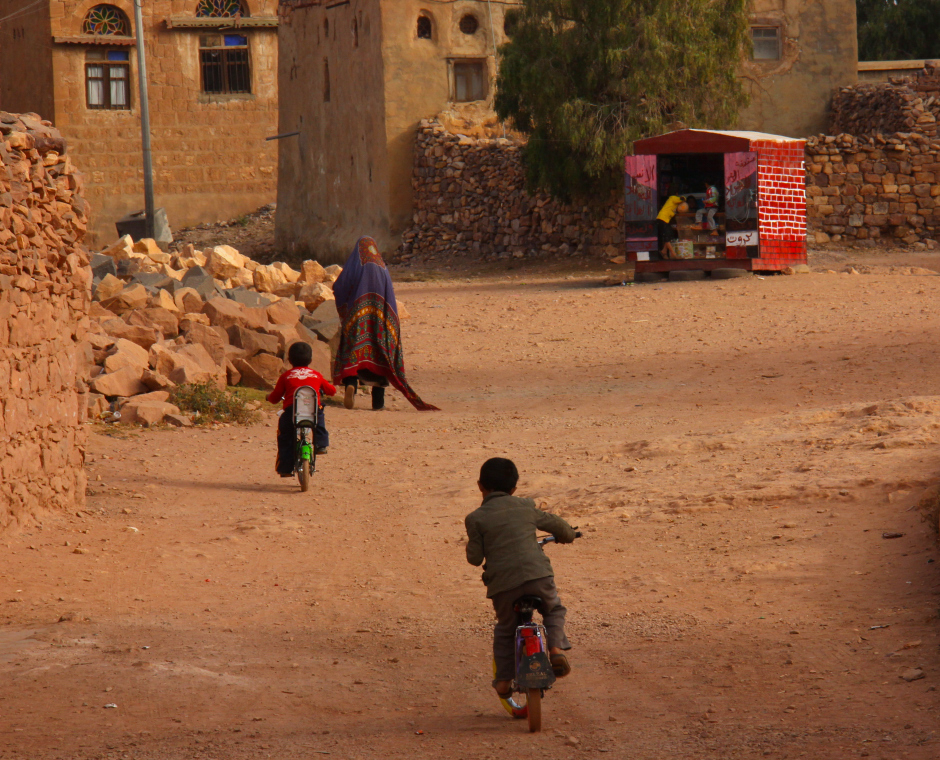
The lovely 18th century mosque Ash-Sharifah was a striking building and its circular stone ablution pool reminded me of step wells in India. The village walk was beautiful and Kawkaban was like a lost time warped place. It was siesta time and the little village was bathed in a quiet, golden glow. Light and skies played magical illusions and we explored until it was time for the sun to set. Slowly the village stirred to life and quaint Yemeni rural people sipped tea, stared and called out greetings to us. Bright blue shutters were hurled open and strong breeze scattered petals from the apricot blossoms in handfuls. With the soft sun turning the sky into beautiful violet and lilac, the fresh mountain breeze grew colder and we huddled in our jackets while hiking our way down. Shibam lay below and it was the last stop of our day.








Follow the rest of the Yemen series here
- YEMEN CRISIS AND MEMORIES OF OLD SANAA
- MEMORIES OF SOCOTRA
- HOW I ENDED UP ON THE SOCOTRA ISLAND
- HADIBO AND URBANIZATION OF SOCOTRA
- THE MOUNTAIN BEDOUINS OF SOCOTRA
- LOSING TIME IN WADI DIRHUR
- CAVE ESCAPADE IN SOCOTRA
- THE SHIFTING SAND DUNES OF ZAHAK
- GETTING BURIED IN SAND IN OMAK
- DRIVING FROM QADAMA TO QALANCIYA
- THE AMBER HUNTER OF DETWA LAGOON
- LIVING A BIT OF LOCAL LIFE IN QALANCIYA
- EMPTY MOUMI PLATEAU: THE DESERT ROSE FOREST
- SOCOTRA YEMEN: TRAVEL DREAMS GO FROM AWESOME TO HORRIBLE.
- SOCOTRA TRAVEL DIARY DURING THE YEMEN WAR
- SANAA, THE UNESCO WORLD HERITAGE SITE OF YEMEN
- SANAA TRAVEL QUIRKS AND SHOCKS
- MY SANAA IMPRESSIONS
- UNCONQUERED FORTIFIED CITADEL OF THULA
- GREEN WATER OF HABABA
RESPONSIBLE TRAVELING-BECAUSE I CARE
FAQs
What are the best attractions in Kawkaban?
Kawkaban’s highlights include its historic fortified village perched atop a rugged pinkish-red plateau at 2,800 meters, the famous iron Bab al Hadid gate with its Turkish barracks revealing Yemen’s Ottoman past, honey-colored sandstone buildings, remnants of Jewish history, and the striking 18th-century Ash-Sharifah mosque with a circular stone ablution pool reminiscent of Indian step wells.
Is Kawkaban worth visiting?
Absolutely, according to the author, who calls it ‘the prettiest place I visited in Yemen mainland.’ She describes the fortified village glowing ‘like rich honey’ in the afternoon light and the cool mountain air as wonderfully refreshing.
How much time should I spend in Kawkaban?
The author visited as a day trip from Sana’a, over an hour’s drive away with a stop at Shibam along the way, exploring on foot until sunset — suggesting a full day is ideal to properly hike down into the village and take in its scenery and history.
What is Kawkaban famous for?
Kawkaban, whose name means ‘two stars,’ is also called ‘the eagle’s nest’ for its dramatic elevated position. With history dating back nearly to the 7th century BC, it’s known as an old, unconquered fortified village offering sweeping views over the Yemeni countryside, and it sits within the Al Mahweet region, celebrated for agriculture, honey production, and centuries-old craft traditions in clay, ceramic, glass, granite, and marble.
Is Kawkaban tourist-friendly?
Visiting required passing through security formalities — the author describes Houthi guards checking passports and travel permits before visitors were allowed to walk around the village. Once inside, though, she describes a peaceful, easy hike and a village that felt safe and welcoming to explore at a relaxed pace.
I’m planning a trip to Kawkaban — what should I prioritize seeing and doing there?
Prioritize the hike down from the mountaintop parking area into the historic village, taking in views of the deep chasm and countryside along the way. Inside, seek out the Bab al Hadid iron gate, the honey-toned sandstone buildings, and the Ash-Sharifah mosque, then continue on to nearby Shibam for lunch at a local restaurant in this equally picturesque foothill village.
Can you give me an honest, first-hand take on what Kawkaban is actually like to visit?
The author’s account is glowing throughout — she describes Kawkaban as feeling like a ‘lost, time-warped place,’ bathed in quiet golden light during siesta hours, with light and sky creating magical illusions across the honey-colored stone. She was also delighted by small cultural details, like the striking straw hats (called madhalla) worn by local women, describing Yemeni women as having a real ‘hat fetish’ in the best possible way.
What’s the best time of year to visit Kawkaban, and why?
The article doesn’t specify a best season for the trip, though the author’s visit included apricot branches in bloom along the hike, suggesting a springtime visit offers particularly scenic surroundings.
What should a first-time visitor to Kawkaban know before they go?
First-time visitors should know that travel permits and passport checks by local guards were required to enter the village at the time of the author’s visit, reflecting Yemen’s security situation. It’s also worth knowing the village empties out during siesta time, so exploring in the quieter afternoon hours offers a particularly atmospheric, golden-lit experience.
How does Kawkaban compare to nearby destinations for someone deciding where to go?
The author paired Kawkaban with a stop in nearby Shibam, calling the foothill village ‘as pretty as it could get’ in its own right. Compared to Hababa, which she found neglected and heartbreaking, or the vast beauty of the wider Al Mahweet region, Kawkaban stood out as uniquely well-preserved and, in her words, the prettiest spot she saw on the Yemeni mainland.


Yemen seems to be torn apart with war. Sad to know how things have gone bad recently…I hope you had safe encounters there
Yemen is going through hard times. I have very good memories from that place.
This looks a great trip
Thank you. It was a great trip.
Another beautiful post. wonderful photos.
Thank you.
what an amazing, romantic, isolated place! 🙂
Thank you. Kawkaban was very enchanting.
what a lovely place… am a fan of the stunning pictures you always capture Svetlana. thanks for sharing 🙂 Cheers, Archana – http://www.drishti.co
Thank Archana. I am happy that you like the photos. Hope you like them in the future too.
Amazing… Nice pics
Thank you.
Your posts should be printed out with the photos and read at leisure during a long train trip. I think I will do that for my next trip 🙂 Thanks for your beautiful work.
Wow Antonina. You just made my day. Thank you very much. You just gave me the biggest compliment any travel writer/blogger would love to hear. Safe Travels.