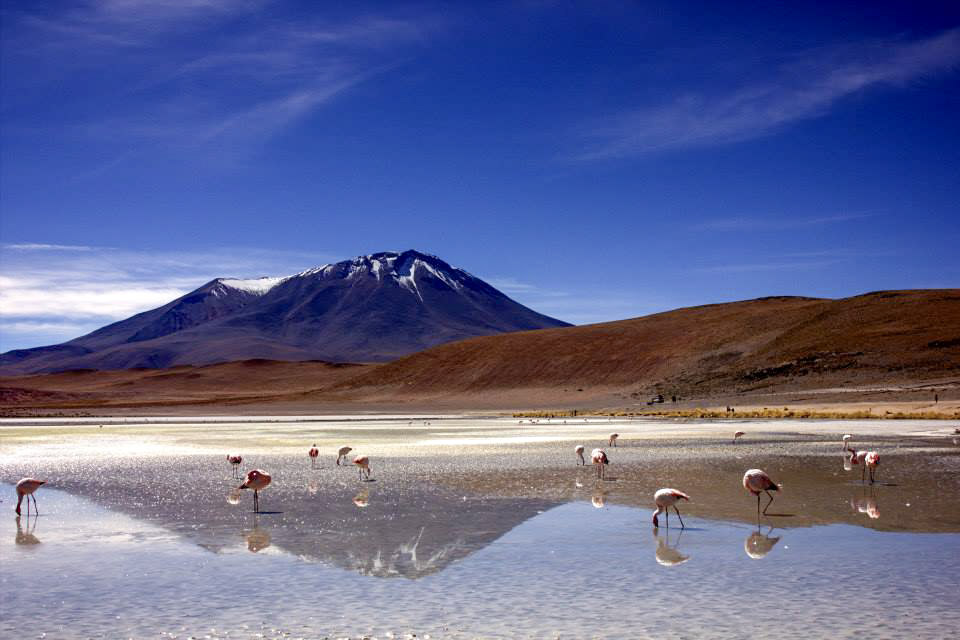
Salar de Uyuni Tour Day 2
Our last day of the Salar de Uyuni tour began at predawn. The stars were still bright and hard, the air was cold, and we were once again numb from sleep. Pepe drove deeper and into Uyuni wilderness, towards Sol de Manana, until the altitude was nearly 5000 meters above sea level. Meaning Morning Sun in Spanish, it is a large geothermal field which is characterized by intense volcanic activity and has sulphur springs, mud lakes, and steam pools with boiling mud.
Several natural holes emit pressurized steam rising to 50 meters, and they are most active in the morning. In that pre-dawn darkness, we woke up with a start when steam rose eerily like ghosts all around us. Although Pepe encouraged us to explore around, we did not cherish the idea of stumbling into a boiling mud lake in the dark and were too sleepy and cold to step out of the warm car.

The last day of Salar de Uyuni tour
So we snuggled inside the car, huddling into a tight group as Pepe drove on. The trail was filled with caravans of tour cars, and their headlights shone feebly through morning fog. Finally, somewhere on the Bolivian Antiplano (Highlands), the sun rose like a sleepy child and filled the sky shyly with soft, fuzzy light. It peeped slowly among the stars and soon faded them out. The sky changed colours and from a lovely silver, quickly ripened into a light golden hue.
Pepe screeched to a stop at Termas de Polques hot springs and dragged his lazy bunch out of the car. We followed him to the rusty cabins, attended our “morning” business in disgusting hole-in-the-floor toilets, stripped and made mad dashes over powdery frost. Unprepared for a swim, we were nearly naked on that freezing morning, as we jumped into the hot springs and luxuriated in the delicious hot-cold experience. The sun rose youthfully around us, spreading the rising steam and scattering birds in flocks, and we watched it rise from our hot spring natural tub.
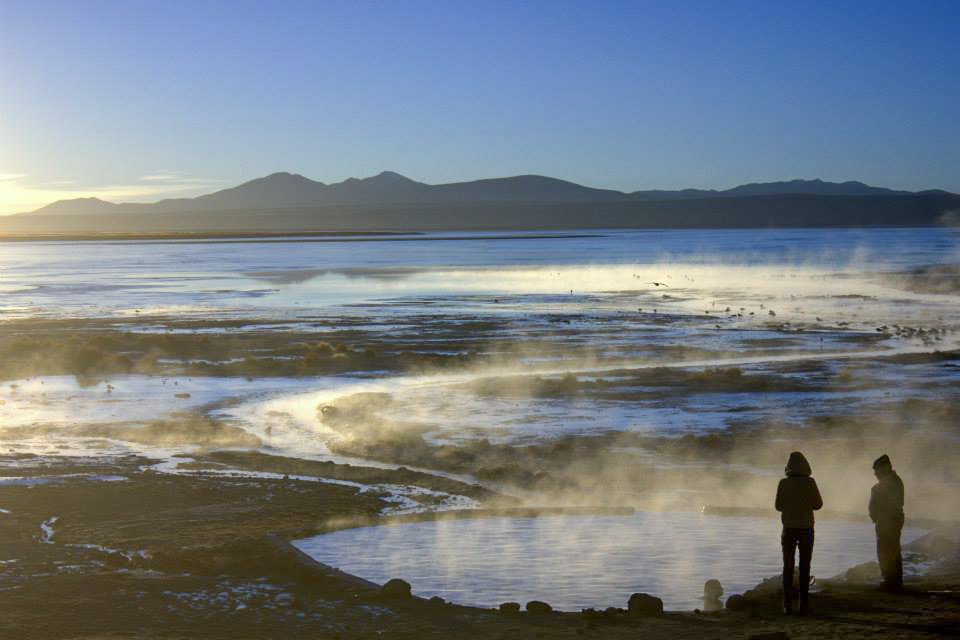
A morning swim in the geothermal pools
It was the most awesome and refreshing experience, and we felt clean and energized after the dip. The cold combined deliciously with the hot steam, and after the initial electric jolt-like shock, the most amazing sensation filled us to our cores. We swam, lazed, and gossiped till the young sun disappeared into blinding light. Breakfast was waiting for us at the cabin when we came out of the pool, and our morning madness made us ravenous. We ate till we burst, chatted with other travelers who arrived in jeep loads, and enjoyed our time by the spring. An impatient Pepe, however, soon bundled us back into the car and once again raced over the strange moon land of Bolivia.
The stone tree of Arbol de Piedra
The landscape became drier as we neared the Chile border, and the famous Arbol de Piedra (4412m) blossomed like a mirage in the middle of the endless desert. Energetic and awake after our morning swim, we delightfully trudged over the rippling sand and trooped out for photos. The stone tree stood beautiful, curvaceous, and nearly alive due to its magnificent shape. Carved out by howling, sandy winds, it was strangely top-heavy and naturally ringed by a wall of boulders. We needed to go to the toilet again badly, but strangely, following distinctly marked WC signs scattered us at different spots in the desert.
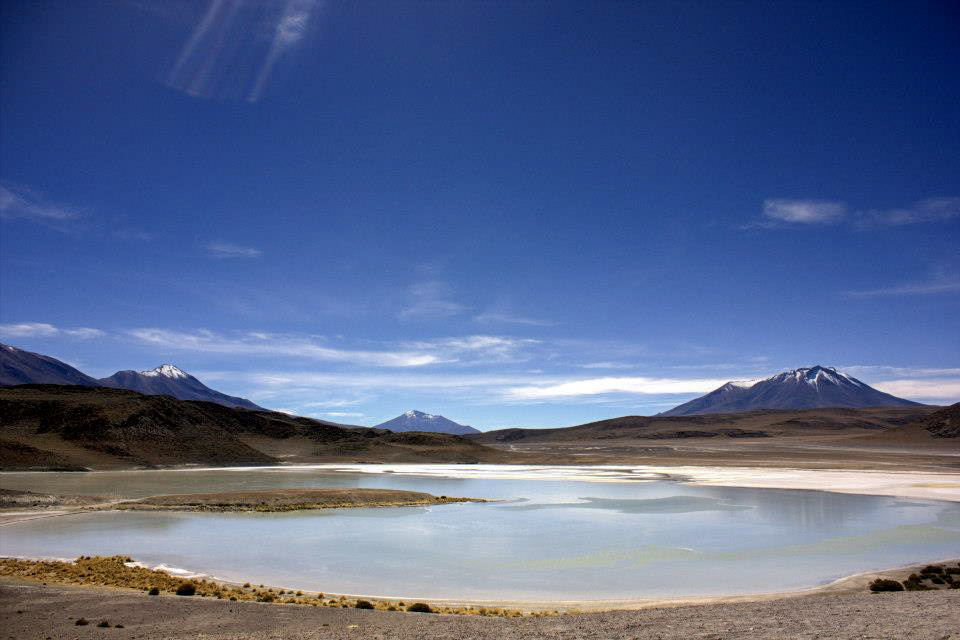
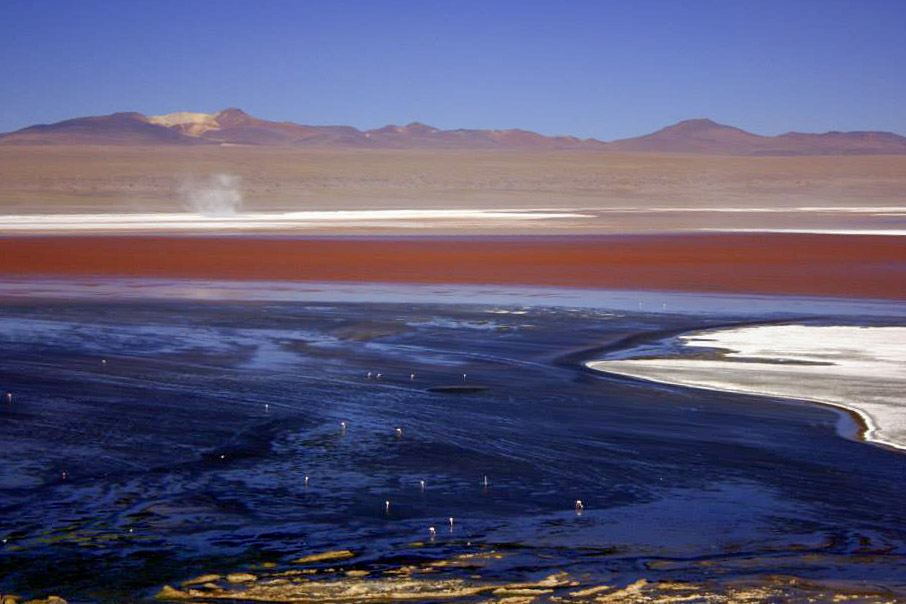
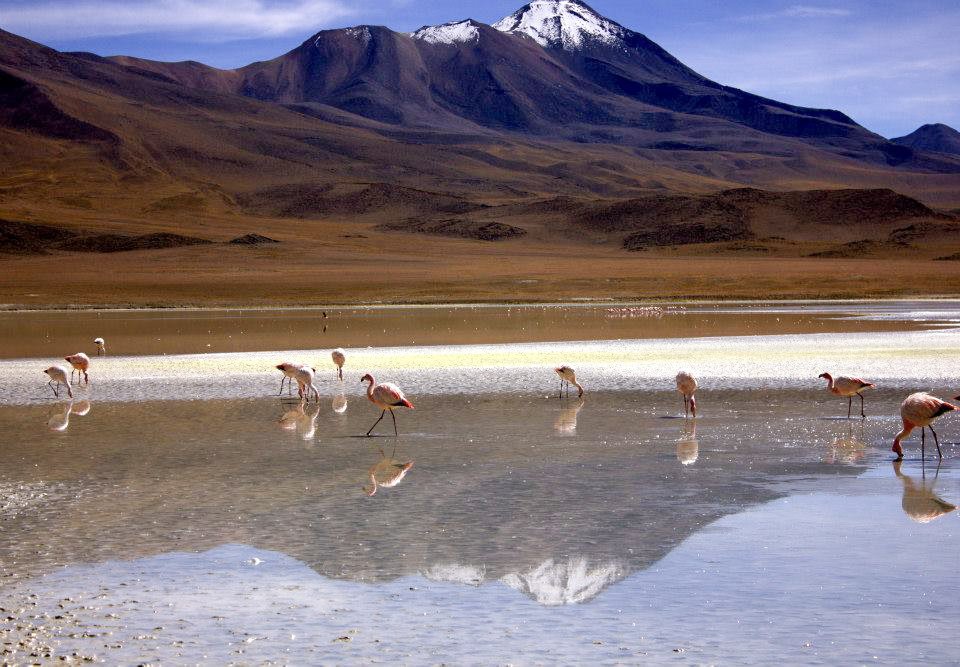
Chile came soon with burnt-out buses, doves, and a lonesome immigration office. We waited for Pepe to drop our French companions there and wished them luck as they went over towards Santiago de Chile. The rest of us headed back towards Bolivia and crossed the beautiful Salvador Dali desert. Strangely dotted with fantastic rock formations, the desert looked as beautifully quirky as the great master’s creations, and we watched his lovely namesake pass by in slow motion.

End of the Salar de Uyuni tour and
Our Uyuni trip came to an end soon, and in spite of the grueling routine, we found it mildly heartbreaking to leave the incredible beauty behind. That day, a road block disrupted traffic in Uyuni (a very common Bolivian phenomenon) and in spite of Pepe’s expert driving, it took us an extra 3 hours to reach the little dusty town again. Bolivian wilderness soon got merged into endless rocky mountains, streams, and gorges as we raced on until finally Uyuni came in sight. We tipped and thanked Pepe profusely and trooped back to Gringo Plaza together, a very raggedy but extremely happy bunch. Although dust-caked, dirty, and bone exhausted, another night at Hostal Avenida seemed unpalatable, so Claudia and I immediately boarded the first bus to La Paz.
The capital city was only 10 hours away, and the thought of city sights, a comfortable hotel, and a hot shower made us take one of the most foolish travel decisions ever.



Follow the rest of the Bolivia series
- PHOTOS FROM MY BOLIVIA TRIP
- ARRIVING IN BOLIVIA ALL THE WAY FROM INDIA
- THE CHARMING CITY OF SANTA CRUZ
- BOLIVIA TRAVEL PHOTOS
- THE RELAXING DAYS OF SANTA CRUZ
- TRIP TO SAMAIPATA
- A SCARY HIKE IN AMBORO NATIONAL PARK
- SUCRE, A CHARMING COLONIAL TOWN
- TARABUCO; A LIVELY, INDIGENOUS MARKET
- A LONG RIDE TO POTOSI
- SALAR DE UYUNI TOUR DAYS 1 and 2
RESPONSIBLE TRAVELING-BECAUSE I CARE
FAQs
What are the top things to do in Uyuni?
This final leg of the Salar de Uyuni tour covers the Sol de Mañana geothermal field (near 5,000 meters altitude, with sulphur springs and boiling mud pools), a morning swim in the Termas de Polques hot springs, the surreal rock formations of the Salvador Dalí Desert, and the stone tree formation Arbol de Piedra.
Is a trip to Uyuni worth it?
Yes — despite the grueling, exhausting pace of the multi-day tour, the author found it ‘mildly heartbreaking’ to leave the landscape behind at the end, describing the morning hot springs swim as one of the most refreshing experiences of the trip and the Salvador Dalí Desert as beautifully quirky.
How many days do you need in Uyuni?
This article covers the final day of a multi-day Salar de Uyuni tour, which by this point had included predawn starts, a geothermal field visit, a hot springs swim, and a border-area stop — confirming that a proper Salar experience runs at least 2-3 full days.
What is Uyuni known for?
Beyond the salt flats themselves, the Uyuni tour route is known for otherworldly geothermal features like Sol de Mañana’s boiling mud pools and steam vents, natural hot spring pools at Termas de Polques, and the surreal, Dalí-esque rock formations of the desert near the Chilean border.
Is Uyuni safe for tourists?
The article doesn’t flag major safety issues, though it does note some rough conditions — very basic ‘hole-in-the-floor’ toilets at the hot springs, freezing pre-dawn temperatures near 5,000 meters altitude, and a road block that added three extra hours to the return trip, a phenomenon the author describes as fairly common in Bolivia.
I’m planning a trip to Uyuni — what should I prioritize seeing and doing there?
Prioritize the Sol de Mañana geothermal field for its dramatic volcanic activity, the Termas de Polques hot springs for a genuinely memorable predawn swim, and the Salvador Dalí Desert for its striking rock formations — and bring a swimsuit and be ready for basic facilities and freezing early-morning temperatures.
Can you give me an honest, first-hand take on what Uyuni is actually like to visit?
The author’s honest account balances real discomfort — freezing predawn starts, disgusting hole-in-the-floor toilets, and an unplanned three-hour delay from a road block — against genuine wonder, describing the hot springs swim as awesome and refreshing and feeling heartbroken to leave the landscape behind despite the exhausting pace of the tour.
What’s the best time of year to visit Uyuni, and why?
The article doesn’t specify a best season, but describes bitterly cold predawn conditions at nearly 5,000 meters altitude on the tour’s final day, so travelers should be prepared for freezing early mornings regardless of when they visit.
What should a first-time visitor to Uyuni know before they go?
First-timers should know the classic Salar tour ends with a high-altitude geothermal field and hot springs stop, that toilet facilities along the route can be very basic, that road blocks are a fairly common occurrence in Bolivia and can add hours to travel time, and that a swimsuit is essential for the Termas de Polques hot springs.
How does Uyuni compare to nearby destinations for someone deciding where to go?
The tour route straddles the Bolivia-Chile border, with some travelers continuing on to Santiago de Chile from the immigration office near the hot springs — the article frames this stretch of the Uyuni tour as a natural link between Bolivian salt-flat scenery and onward South American travel.


