The Aryan Villages of Ladakh: Exploring Garkon and Darchik
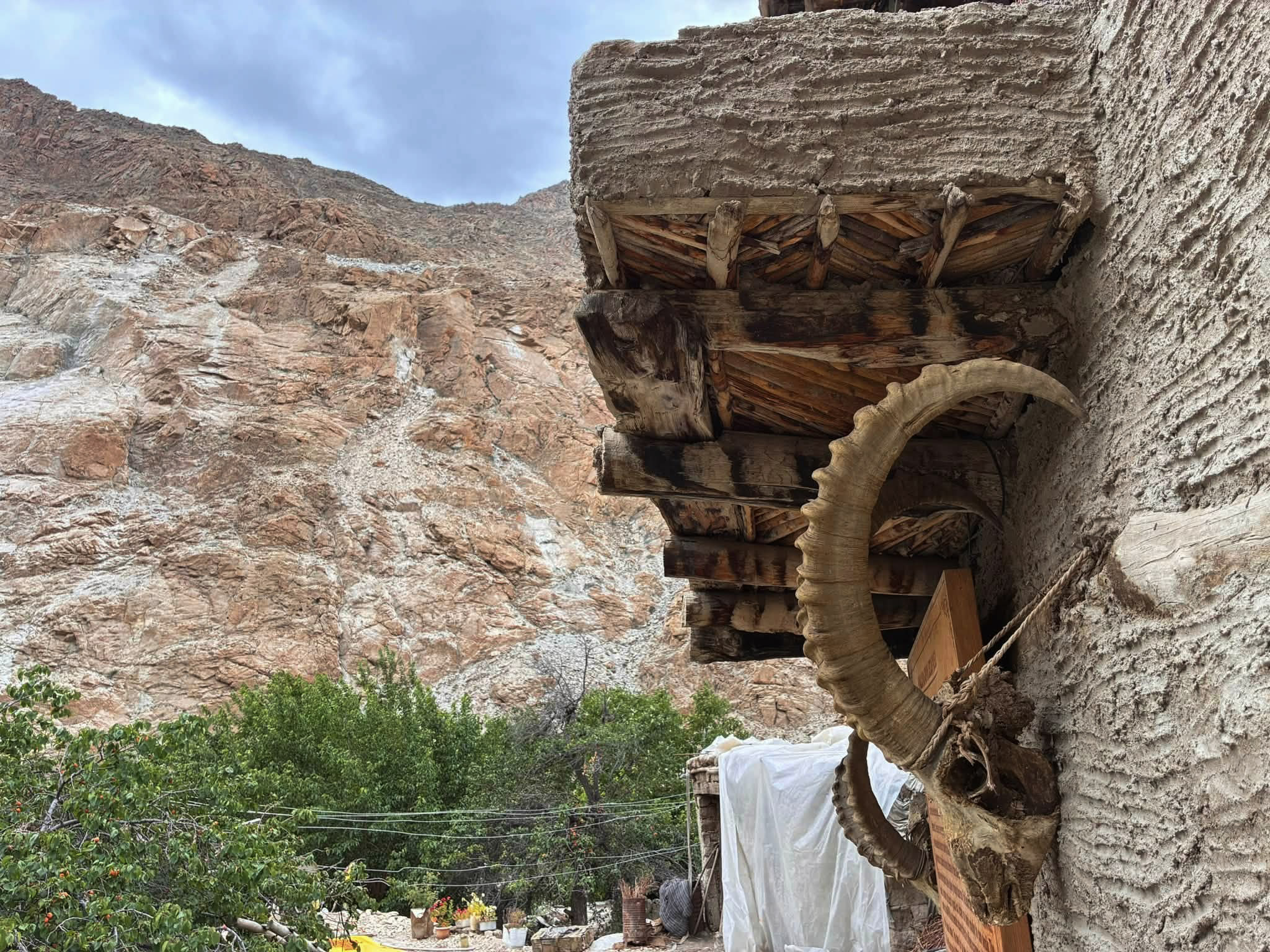
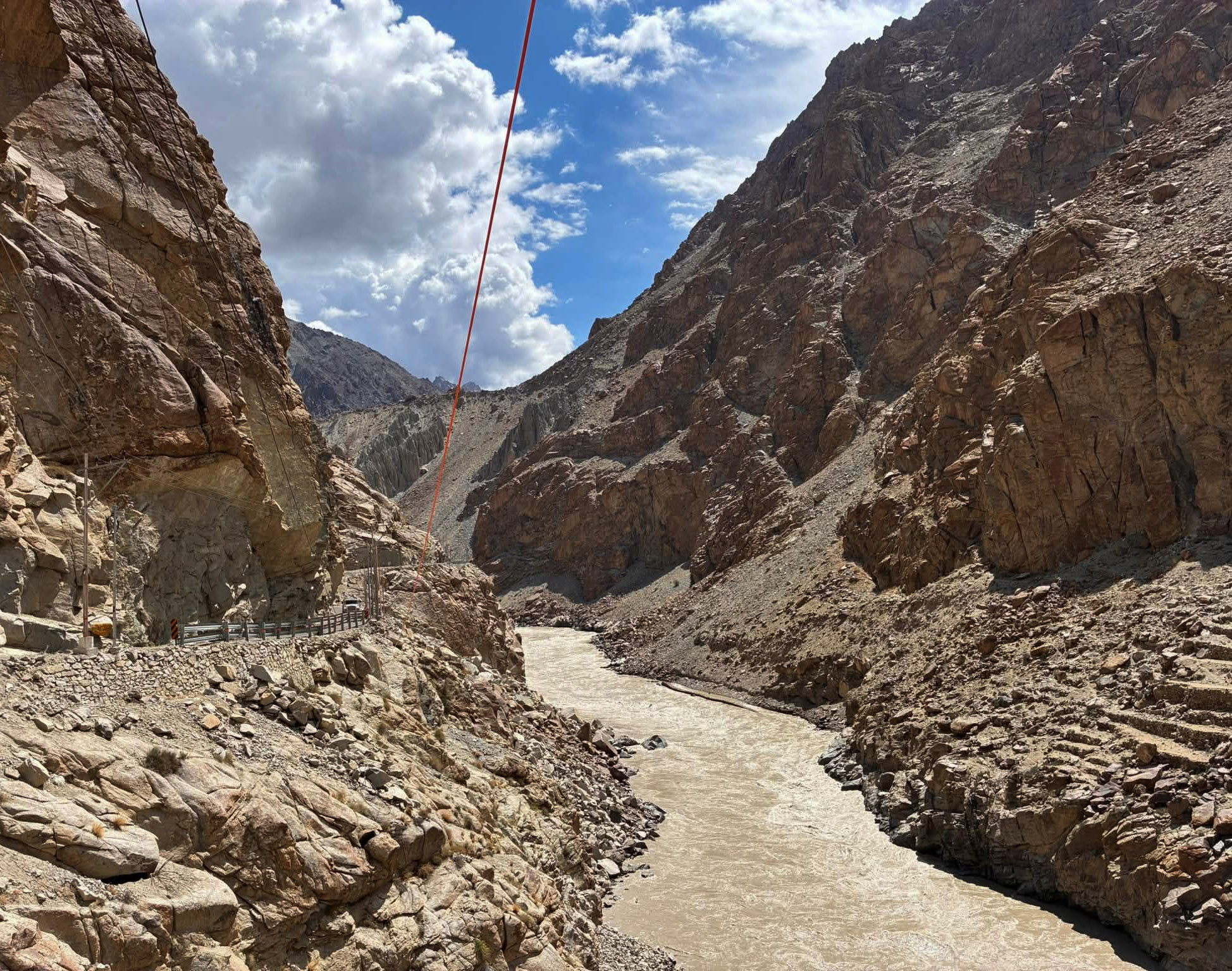
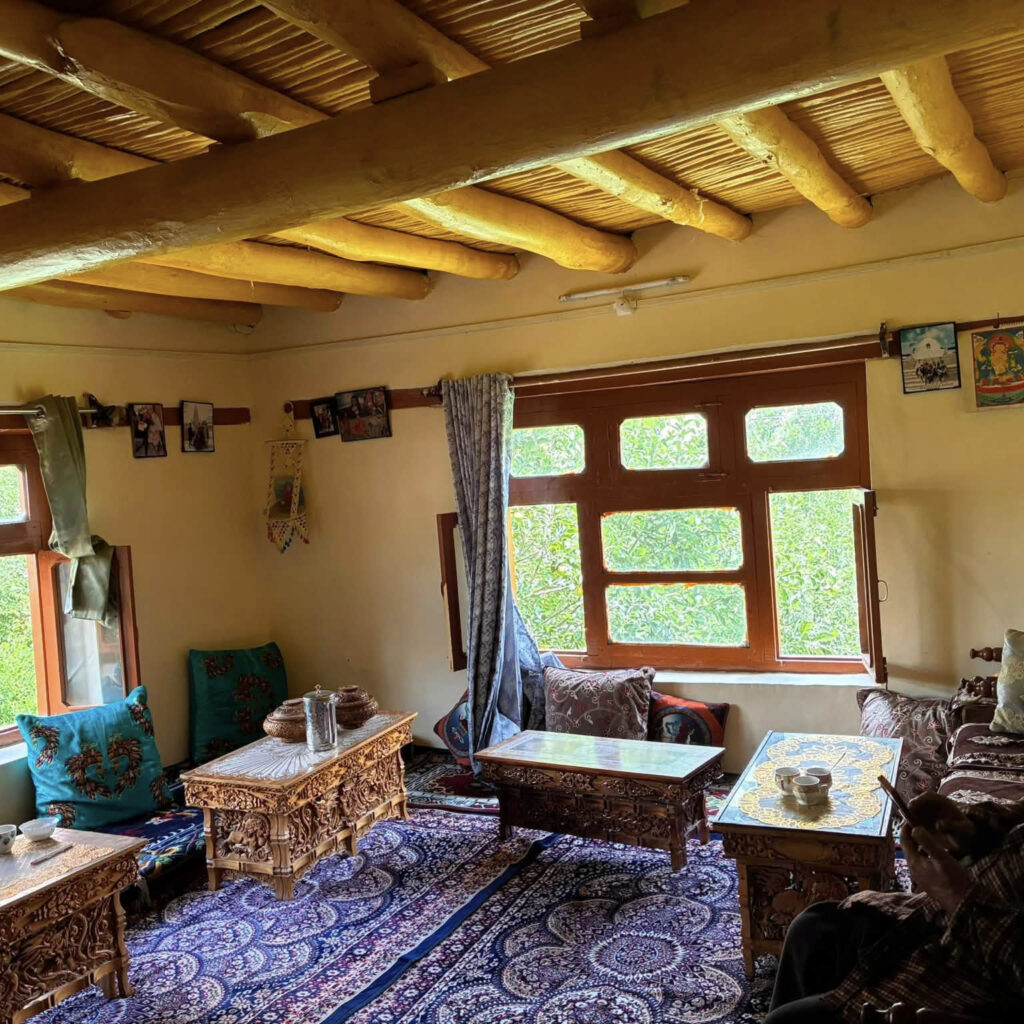
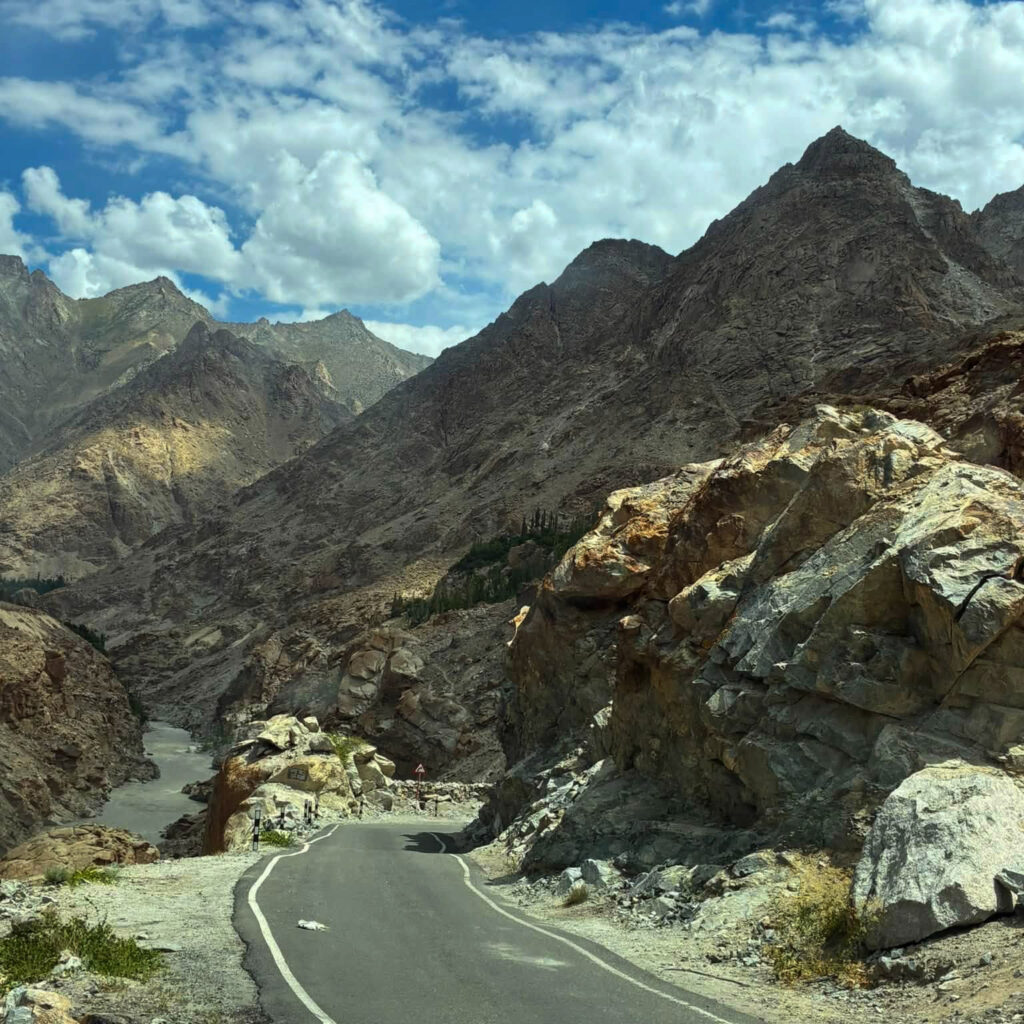
Hidden along the Indus River in western Ladakh, the remote villages of Garkon, Darchik, Dha and Hanu form a region popularly known as the “Aryan Valley”. These isolated settlements are home to the Brokpa community, whose language, traditions, clothing and agricultural practices differ noticeably from those found in predominantly Tibetan Buddhist areas of Ladakh. Our visit to Garkon and Darchik formed one of the most culturally interesting sections of our 21-day offbeat Ladakh itinerary. We reached the villages after travelling from Mushkoh Valley through Drass, Kargil and the sensitive Batalik sector. The journey carried us away from Ladakh’s familiar tourist trail and into a secluded landscape of barren mountains, terraced fields, traditional houses and apricot orchards. Although the area is widely marketed as the “Aryan Valley”, the name reduces a complicated cultural history to a convenient tourism label. “Brokpa villages” is a more respectful and accurate way to describe these communities.
Who are the Brokpa people?
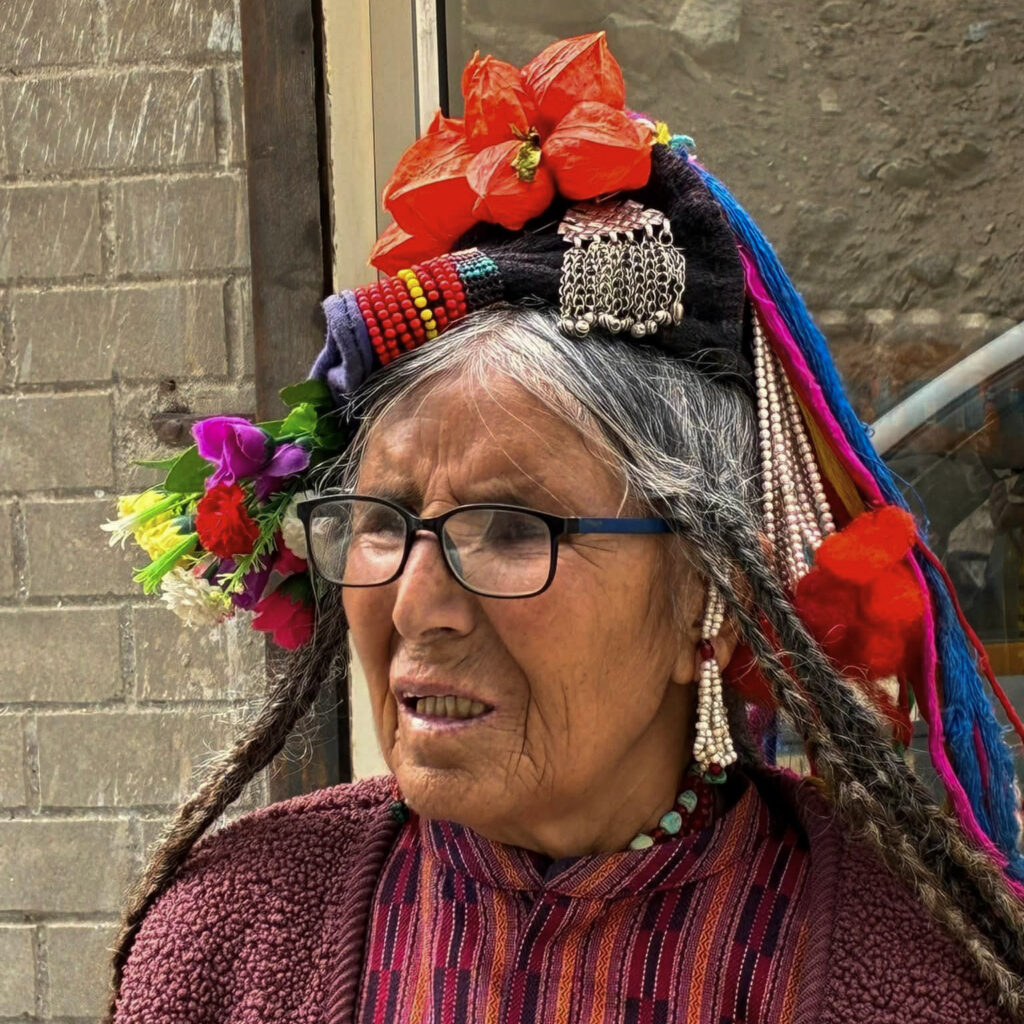
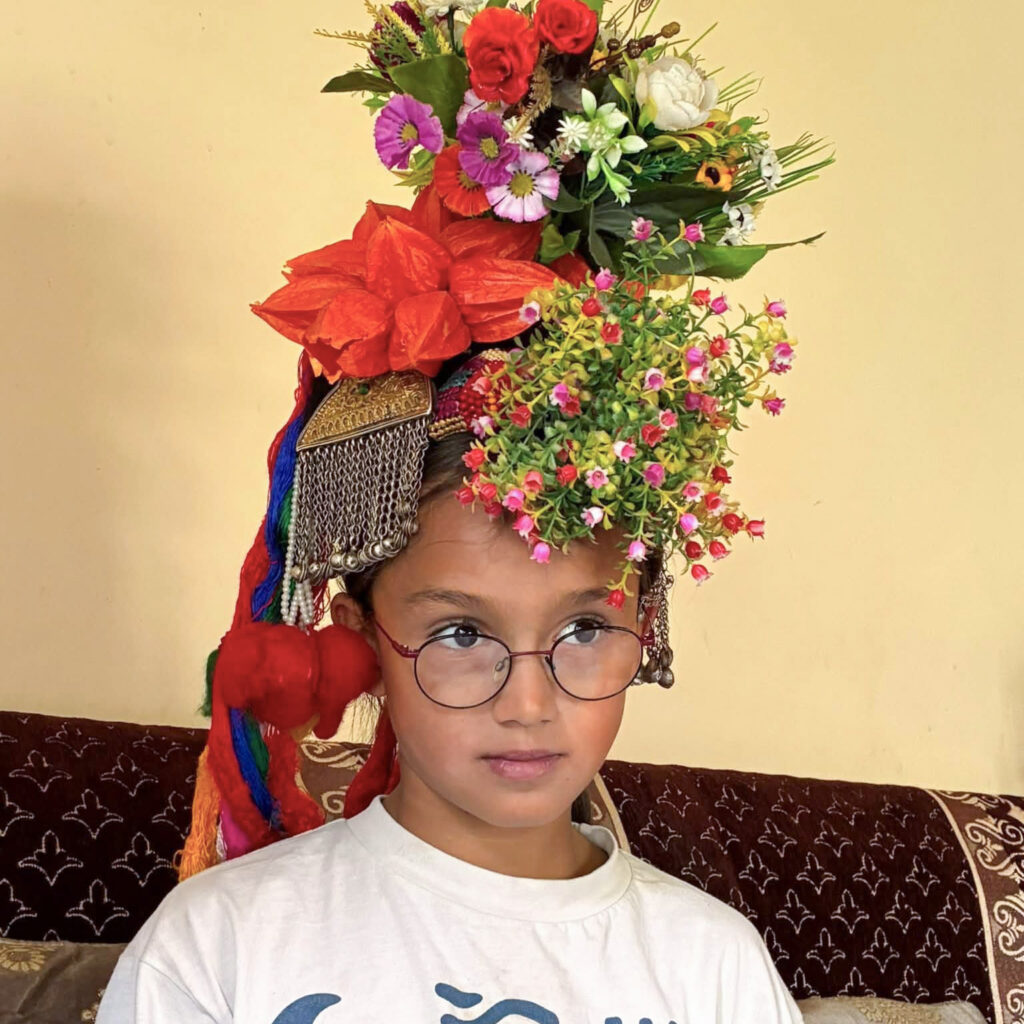
The Brokpa are a small ethnolinguistic community living primarily in the villages of Garkon, Darchik, Dha, and Hanu. Their language, often called Brokskat, belongs to the Dardic language group. Numerous romantic stories claim that the Brokpa are descendants of soldiers from Alexander the Great’s army. These legends have helped turn the villages into a tourist attraction, but there is no conclusive historical evidence supporting them. The community’s heritage is much more complex than the popular image of Ladakh’s “last pure Aryans”. Brokpa identity is expressed through language, agricultural traditions, festivals, music, and distinctive ceremonial clothing. Their elaborate floral headdresses, often decorated with fresh flowers, beads, coins and metal ornaments, are particularly famous. However, these clothes are generally associated with festivals and special occasions rather than everyday village life. Visitors should not arrive expecting to find residents permanently dressed for photographs. These are working agricultural communities, not living museums.
The four principal Aryan villages
The region consists of four main village clusters: Garkon, Darchik, Dha and Hanu. Garkon and Darchik lie on the Kargil side of the valley, while Dha and Hanu are approached from the Leh–Khalsi side. The villages are scattered along the narrow Indus Valley at approximately 2,700–3,000 metres above sea level. This is considerably lower than Leh, which gives the region a warmer and more fertile climate. Apricots, grapes, walnuts, apples, barley, buckwheat and millet can all be cultivated here. We visited Garkon and Darchik while travelling from the Batalik side towards Leh. Dha and Hanu can be included when following the road farther east towards Khalsi, although we did not explore them in depth during this journey.
| Village | Character |
| Garkon | A remote agricultural village surrounded by orchards and steep mountains |
| Darchik | A peaceful Brokpa settlement that felt more welcoming to us |
| Dha | One of the best-known and most frequently visited Brokpa villages |
| Hanu | A dispersed group of settlements surrounded by cultivated land and mountain scenery |
Arriving in Garkon
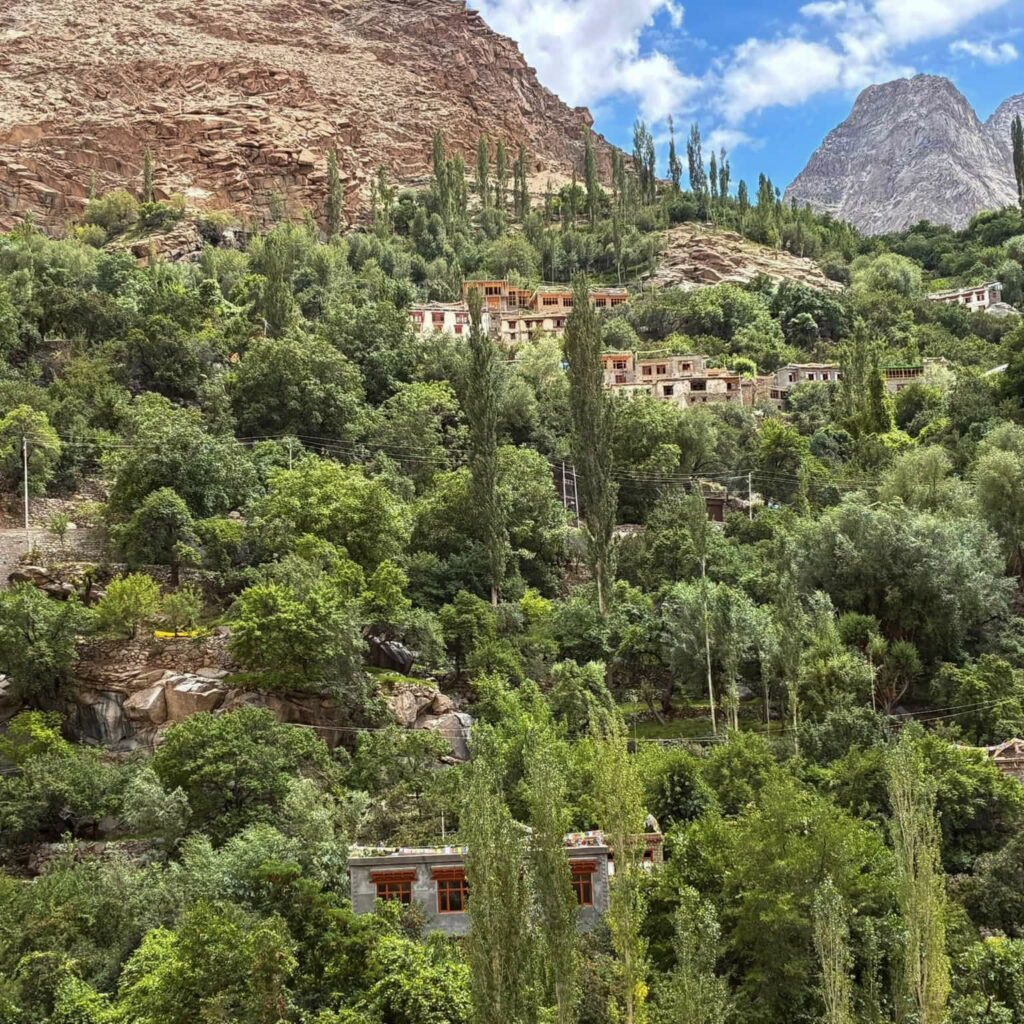
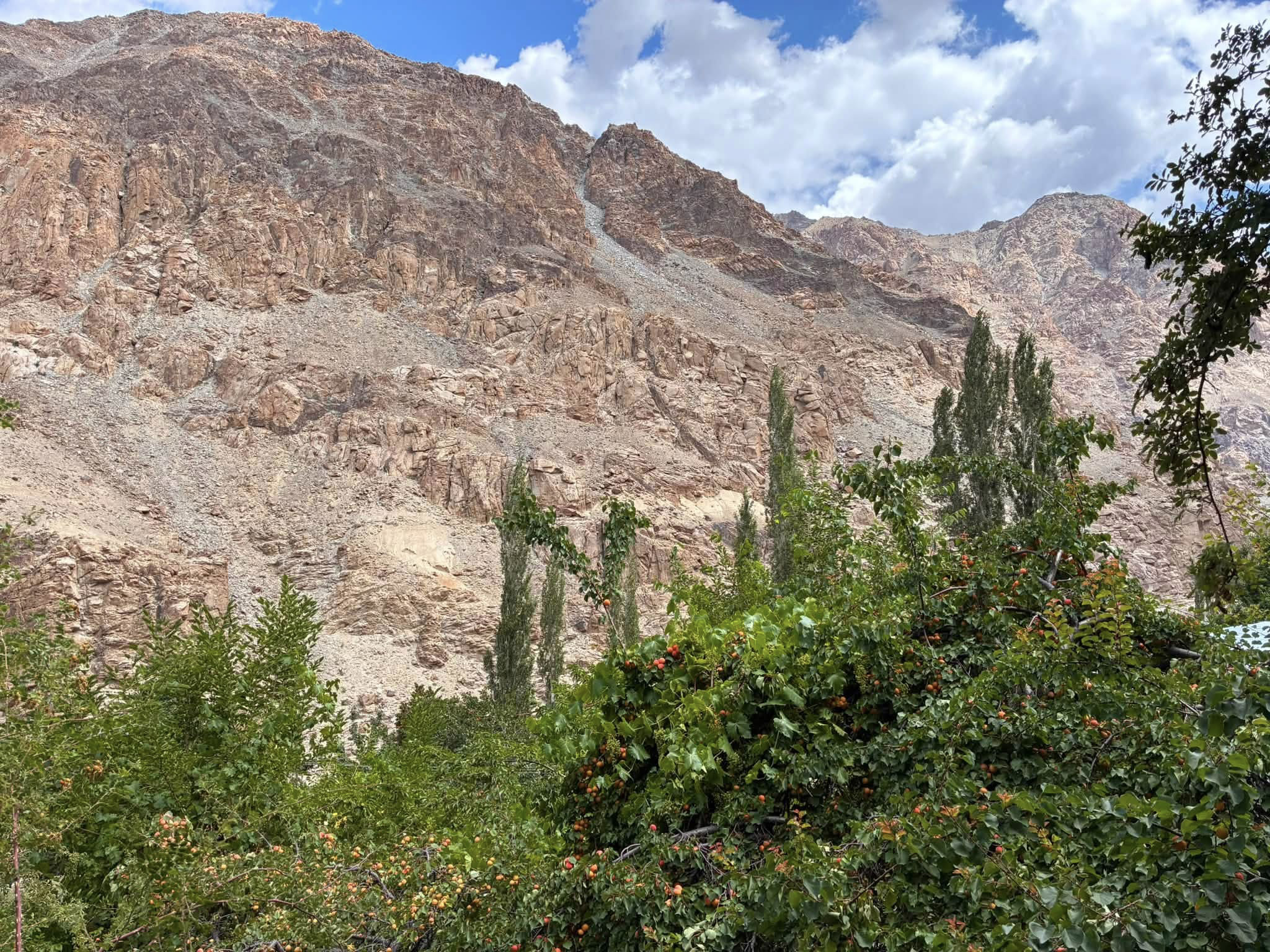
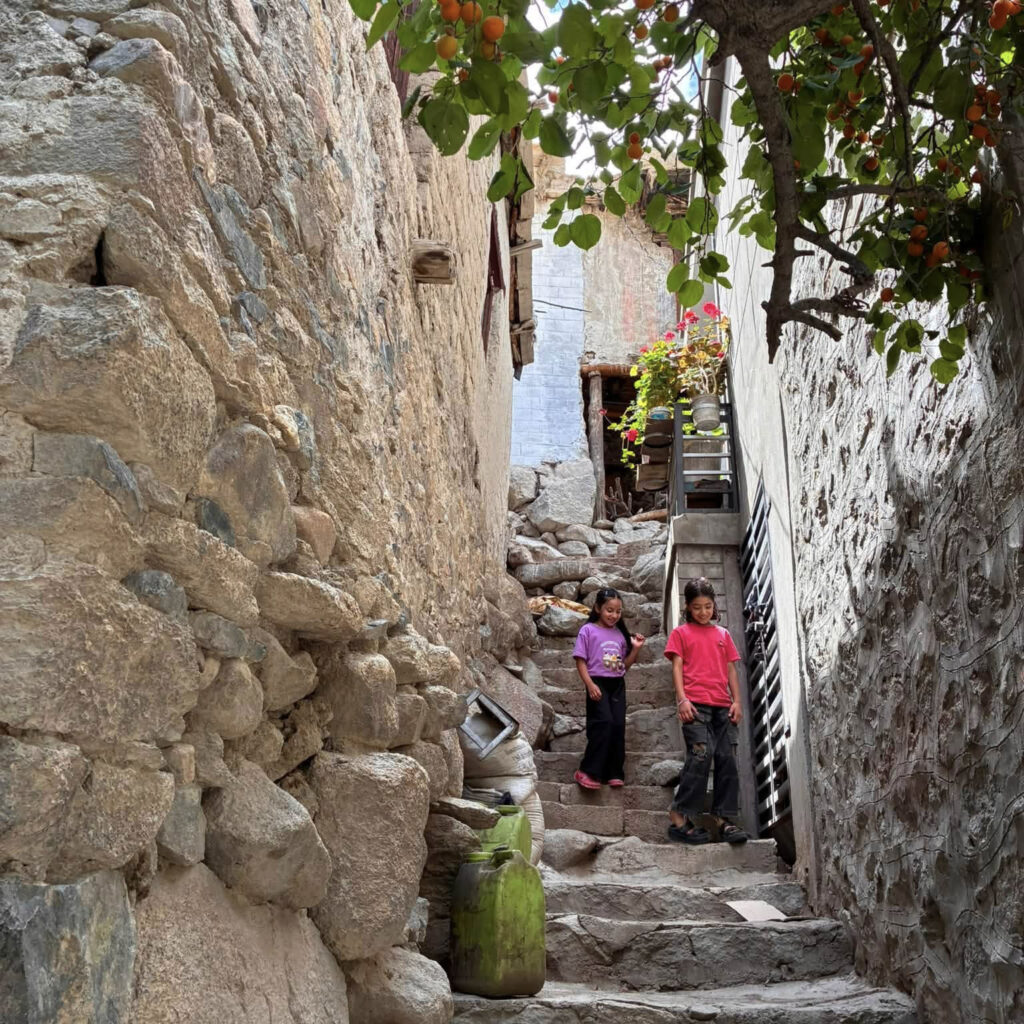
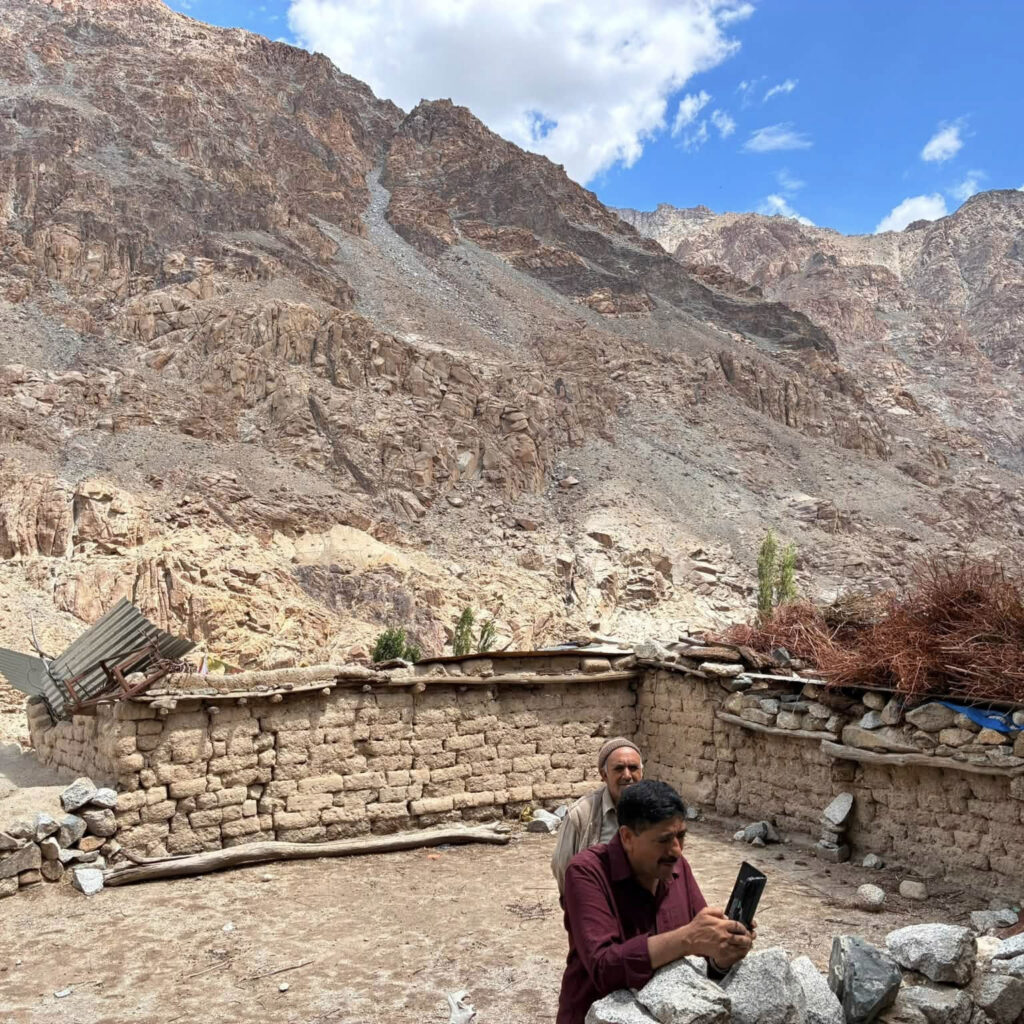
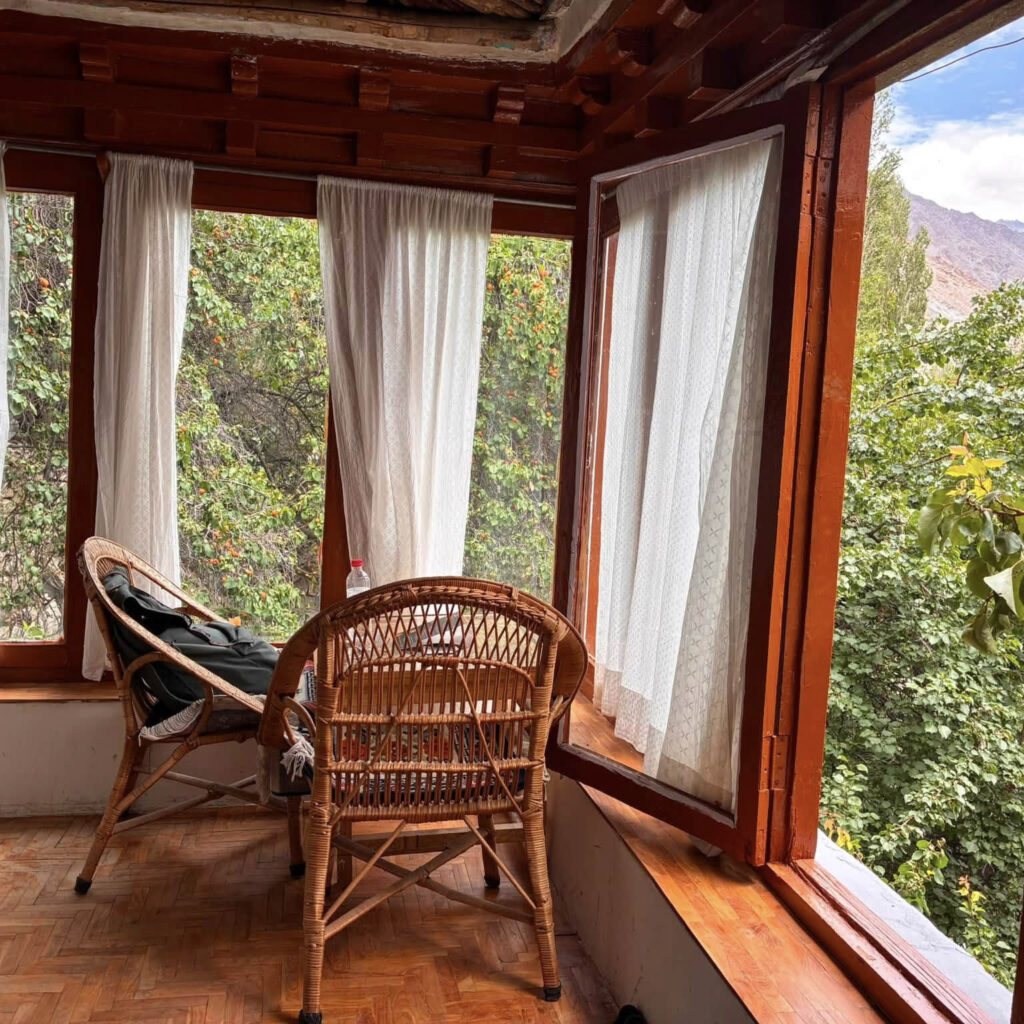
Garkon was our first base in the Aryan Valley. After the long drive from Mushkoh Valley through Drass, Kargil and Batalik, the village appeared like a small green island among the barren mountains. Apricot trees leaned over stone walls, narrow lanes wound between traditional houses, and carefully irrigated fields covered every available patch of fertile land. The village felt extraordinarily remote. There were few vehicles, almost no conventional tourist facilities, and little of the commercial activity found around Leh. Daily life seemed closely connected to farming, livestock and the changing seasons. Villagers moved between their homes, orchards and fields, while animals rested in the shade of fruit trees and courtyard walls. We had planned to spend two nights in Garkon and stayed at Payupa Guest House. Although the property itself was beautiful, the hospitality was unfortunately poor, and I suffered from bed bugs. We therefore left a day earlier than planned. Garkon was visually fascinating and culturally intriguing, but it became the least enjoyable stop of our Ladakh journey. Travel is not always composed of perfect homestays and carefully curated moments. Sometimes a beautiful destination can still produce an uncomfortable experience.
Darchik, the village we preferred
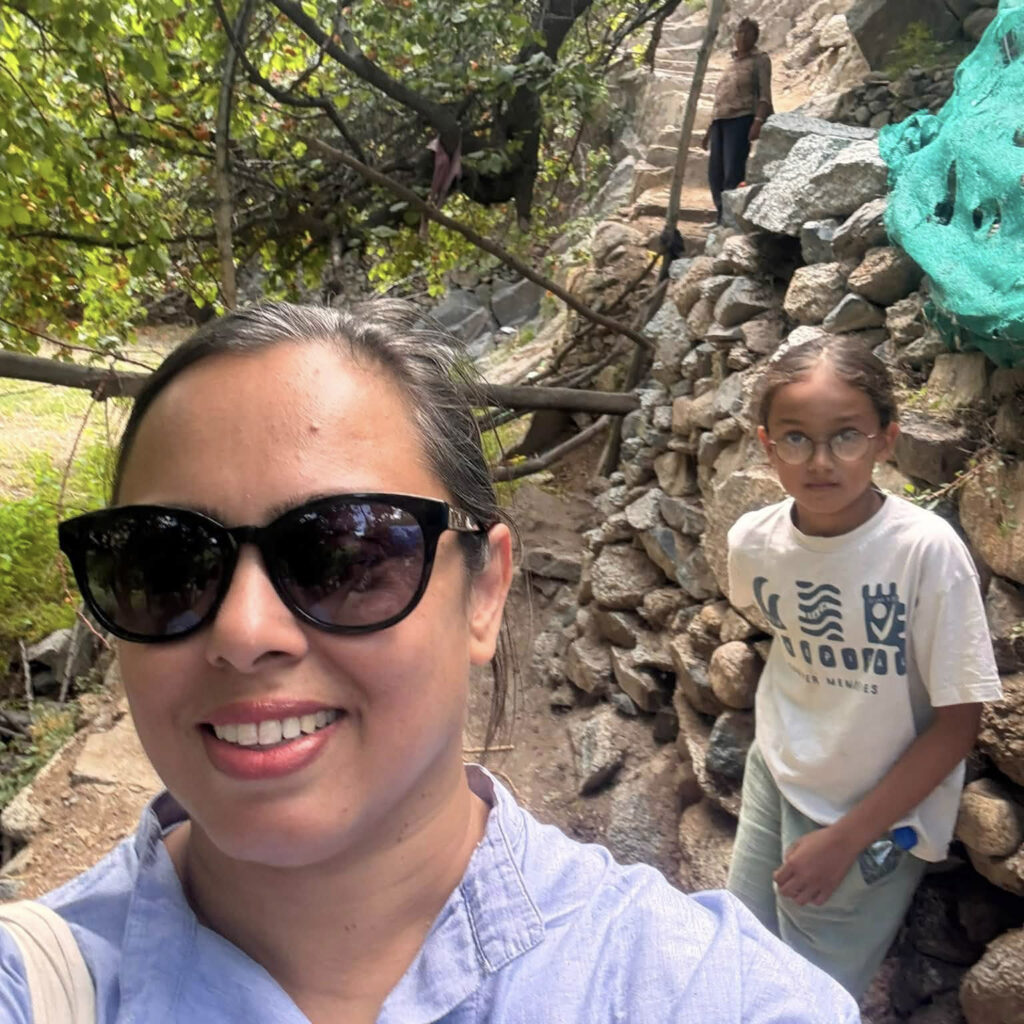
Neighbouring Darchik left a warmer impression on us. Like Garkon, it is inhabited by the Brokpa community and surrounded by apricot orchards, small fields and dramatic mountain scenery. The village felt quieter and more welcoming, and I would choose it as my base if I returned to the region. Staying in Darchik would allow travellers to experience village life at a slower pace while exploring Garkon and the surrounding Batalik area during the day. Darchik is not filled with conventional attractions. Its appeal lies in walking through the village, observing the agricultural landscape, meeting local families, and understanding how people live in this remote part of Ladakh. This is the kind of place where travellers need to slow down. The details – shaded courtyard, fruit drying outside a house, irrigation water running beside a path, or an orchard glowing in the afternoon light—are more memorable than any single monument.
Dha and Hanu
Dha and Hanu are the best-known Brokpa settlements on the Leh side of the region. They lie northwest of Leh and are usually reached by following the Srinagar–Leh highway to Khalsi before turning onto the smaller road running alongside the Indus. Dha receives more visitors and has a somewhat more established tourism infrastructure, including simple homestays and places selling locally produced apricot products. Hanu is more dispersed and consists of several settlements rather than one compact village centre. Travellers approaching from Leh often visit Dha and Hanu as an overnight excursion. However, long distances mean that the villages are better experienced slowly than as a rushed day trip.
Ladakh’s apricot country
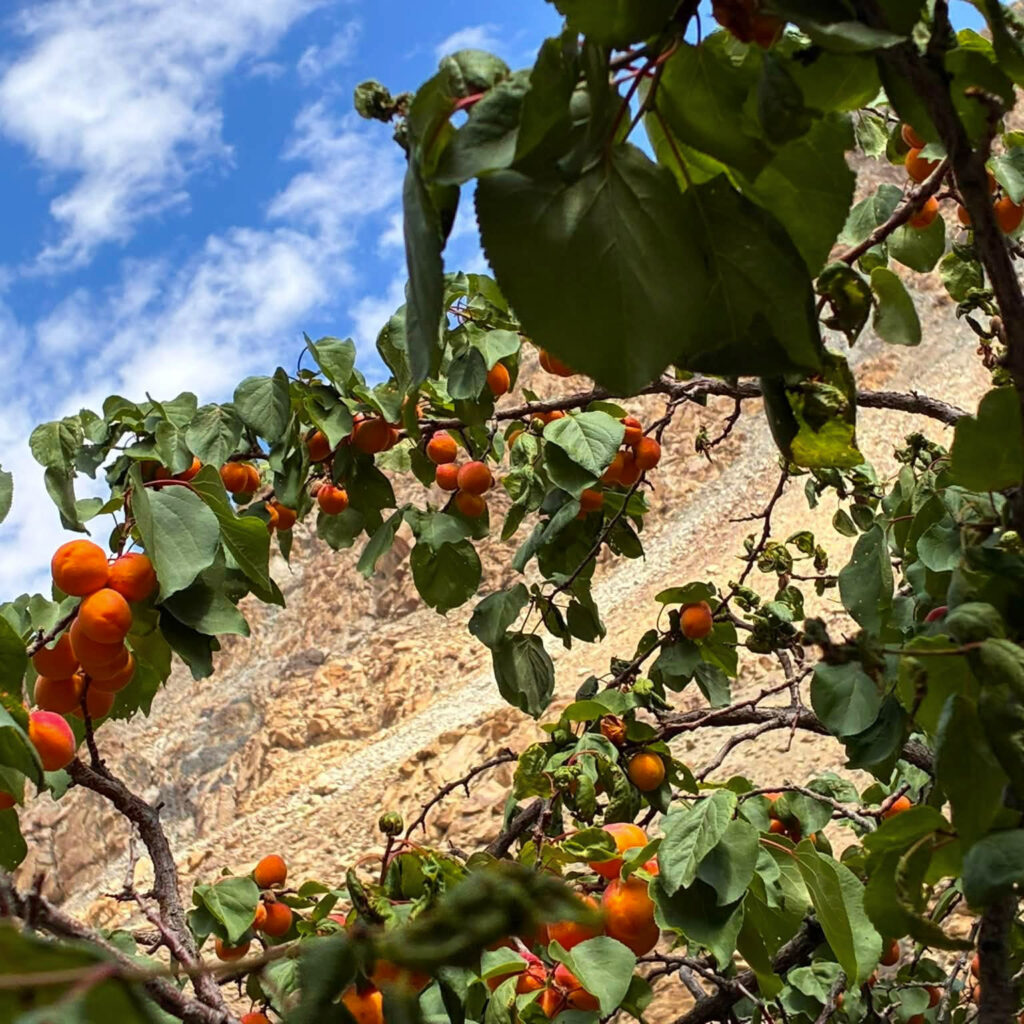
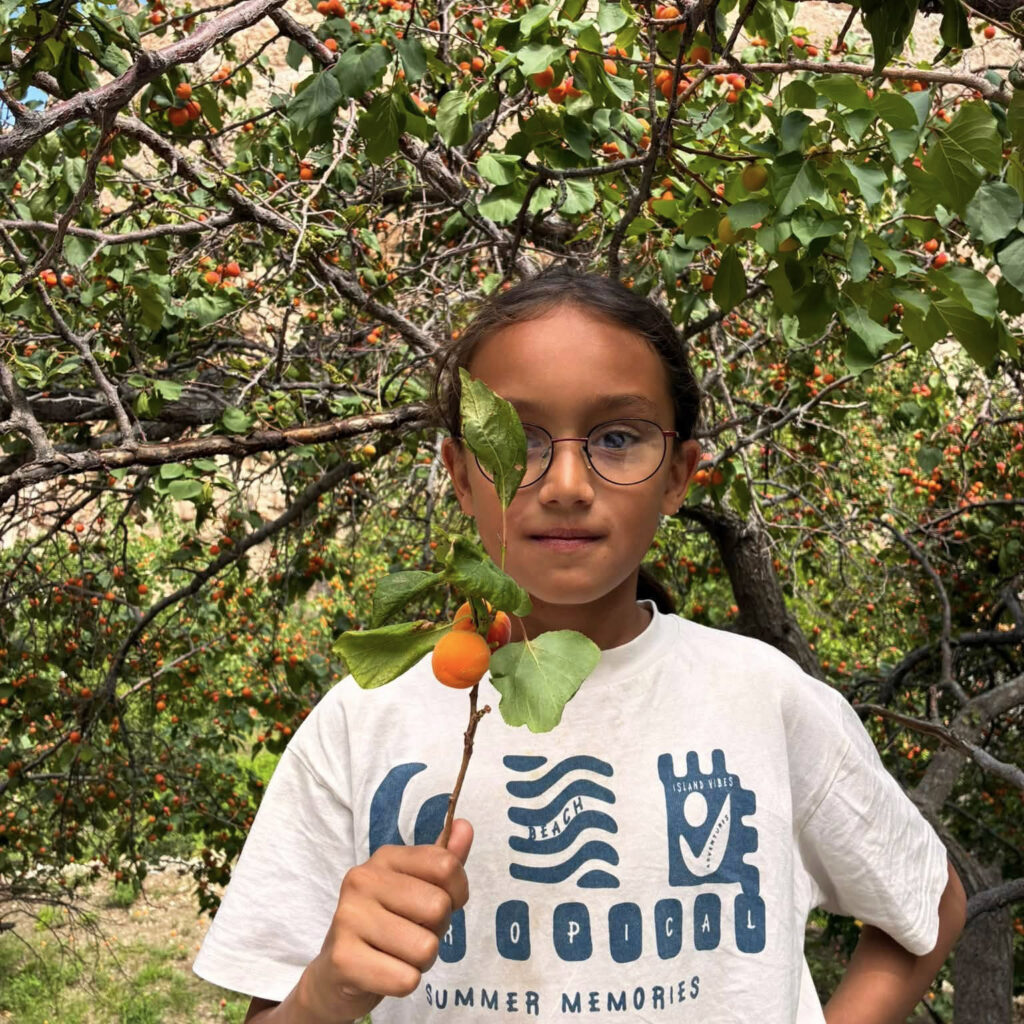
Apricots are one of the defining features of the Aryan villages. The comparatively low altitude and sheltered position of the valley create a warmer microclimate than that of Leh. We visited during the fruiting season, when the trees were heavy with ripe apricots. Their golden orange colour looked particularly vivid against the grey, brown and rust-coloured mountains. Apricots are eaten fresh, dried for winter or processed into juice, jam and oil. They are not merely a picturesque feature of the landscape. The orchards support household incomes, provide food and preserve agricultural knowledge that has been passed down through generations. Spring offers a completely different experience. During the apricot blossom season, the villages are filled with white and pale-pink flowers. Ladakh’s annual Apricot Blossom Festival is generally held in April, although the exact programme changes according to flowering conditions and should be confirmed before travelling.
Life in an isolated border region
The beauty of these villages cannot be separated from their isolation. The entire region lies close to the Line of Control and has considerable military sensitivity. Camps, checkpoints and restricted areas are part of travelling through the Batalik sector. Photography must be approached cautiously. Never photograph military camps, soldiers, bridges, checkpoints or sensitive infrastructure. Passport and permit checks may take place along the route. Mobile connectivity can be unreliable, accommodation is basic and medical facilities are limited. Landslides, rockfalls, road damage and sudden weather changes can interrupt travel, particularly after heavy rain or snow. Winter brings extreme cold and can leave settlements temporarily cut off. This remoteness has helped preserve certain aspects of local culture, but it also creates practical challenges for residents, including access to healthcare, education, employment and reliable transport.
Practical guide to visiting the Aryan villages
How to reach the villages
The region can be approached from two directions:
- From Kargil: Travel through the Batalik sector towards Garkon and Darchik before continuing along the Indus towards Dha, Hanu and Khalsi.
- From Leh: Follow the Srinagar–Leh highway to Khalsi and then take the smaller road through the lower Indus Valley towards Hanu, Dha and the other Brokpa settlements.
A private vehicle with an experienced local driver is the most practical option. Public transport is limited, and travelling times can change considerably because of checkpoints, road conditions and weather.
Permits
Parts of the region fall within a sensitive border zone. Permit requirements can differ according to nationality and may change at short notice. Foreign travellers should pay particular attention to Protected Area Permit regulations and confirm which villages and roads are currently accessible. Check the latest rules in Leh or Kargil before departure and carry several photocopies of your passport, visa and permit documents. Ladakh was considering changes to its foreign tourist permit system in August 2026, making current verification especially important.
Where to stay
Accommodation consists mainly of simple guest houses and family-run homestays. Facilities vary considerably, so check recent reviews and confirm the availability of clean bedding, meals, hot water, and electricity before booking. Based on our experience, I would choose Darchik rather than Garkon as an overnight base.
Best time to visit
- April: Apricot blossoms and spring celebrations
- July–August: Warm weather and fresh apricots
- September: Clearer skies, fewer visitors and the beginning of autumn colours
- Winter: Extremely cold, with possible snow closures and very limited facilities
Responsible travel in the Brokpa villages
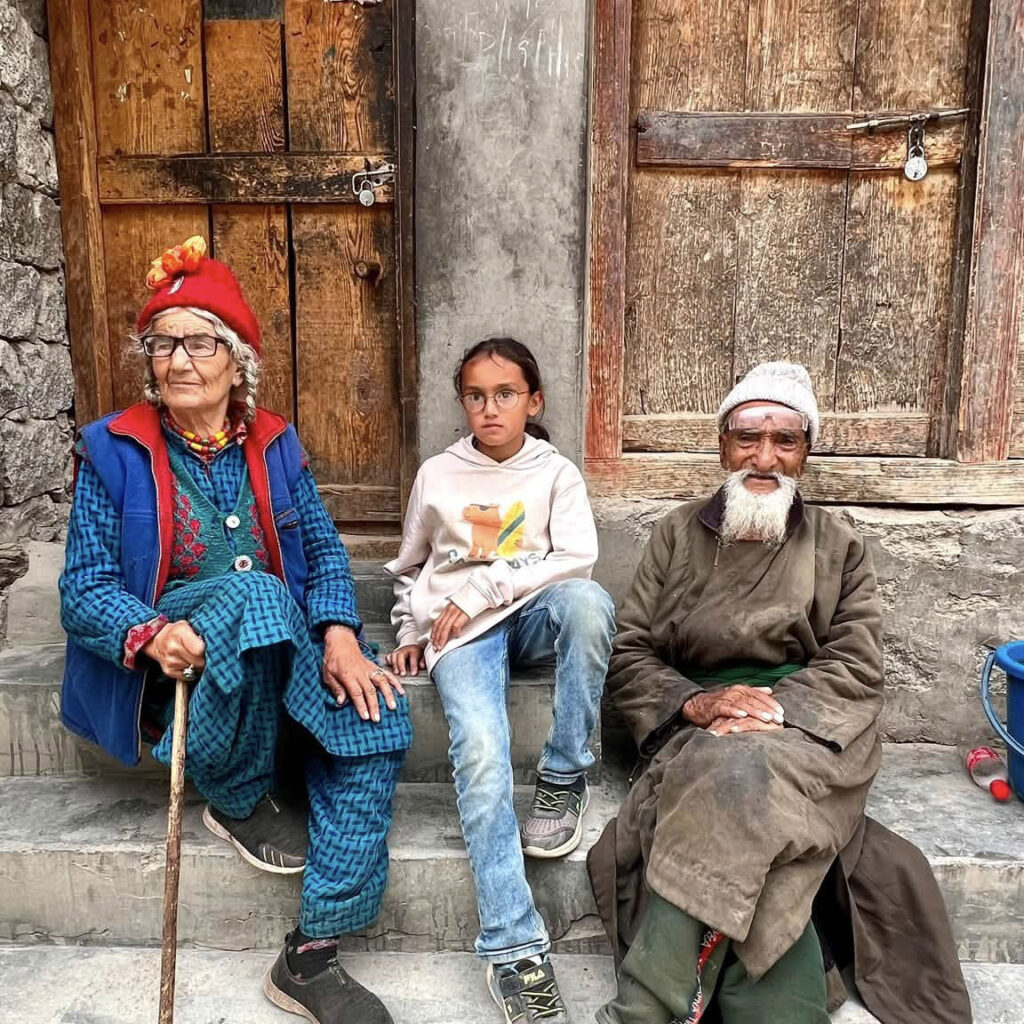
The cultural identity and physical appearance of the Brokpa people have often been romanticised by tourism. Visiting respectfully means looking beyond stories about “pure Aryans” and approaching residents as members of a living, changing community.
- Ask permission before photographing people.
- Do not expect residents to dress in traditional clothing for photographs.
- Never enter houses, orchards or religious spaces without an invitation.
- Avoid intrusive questions about ancestry, marriage or physical appearance.
- Buy dried apricots, oil, jam and other products directly from local families.
- Stay in locally operated accommodation wherever possible.
- Carry reusable bottles and take non-biodegradable waste away with you.
- Never photograph military installations or checkpoints.
Why visit the Aryan villages?
The Aryan villages revealed a side of Ladakh that felt far removed from the monasteries, cafés and popular sightseeing circuits around Leh. There were no major monuments to tick off and few organised activities. Instead, there were apricot orchards glowing beneath barren mountains, traditional houses hidden among trees, near-empty roads and small communities living beside the Indus. Our stay in Garkon was disappointing, but the region itself remained unforgettable. Darchik, in particular, made us wish that we had chosen it as our base and stayed longer. These villages should not be visited in search of an exoticised “lost Aryan tribe”. Their real fascination lies in their distinctive Brokpa heritage, agricultural traditions and ability to sustain life in one of Ladakh’s most remote border landscapes.
Our journey through the Aryan villages formed part of a longer route covering Delhi, Srinagar, Sonmarg, Mushkoh Valley, Garkon, Leh and Nubra Valley. The trip was planned and organised by my friend Shuib Kaw of Versatile Adventure Holidays. He is available at +91 76783 57621 or [email protected]. It should be noted that I paid for this trip myself. If I am promoting Versatile Adventure Holidays, it is simply because they did a great job.
Follow the Ladakh series
- AN OFFBEAT LADAKH TRIP
- KASHMIR TO KARGIL ON SRINAGAR LEH ROAD
- KARGIL TO LEH
- LEH (ED) IN LADAKH
- MOUNTAINS AND MONASTERIES
- THE LADAKH FESTIVAL
- THE BEAUTIFUL BLUE PANGONG LAKE
- THE WHITE DESERT AT NUBRA VALLEY
- 2012 LADAKH ITINERARY AND TRIP COSTS
- OFFBEAT LADAKH ITINERARY 2026
- MUSHKOH VALLEY TO BATALIK ROAD TRIP
- HIMALAYAN BEAR HABITAT OF MUSHKOH VALLEY
RESPONSIBLE TRAVELING-BECAUSE I CARE


