Autumn in Kashmir and snippets of mysticism
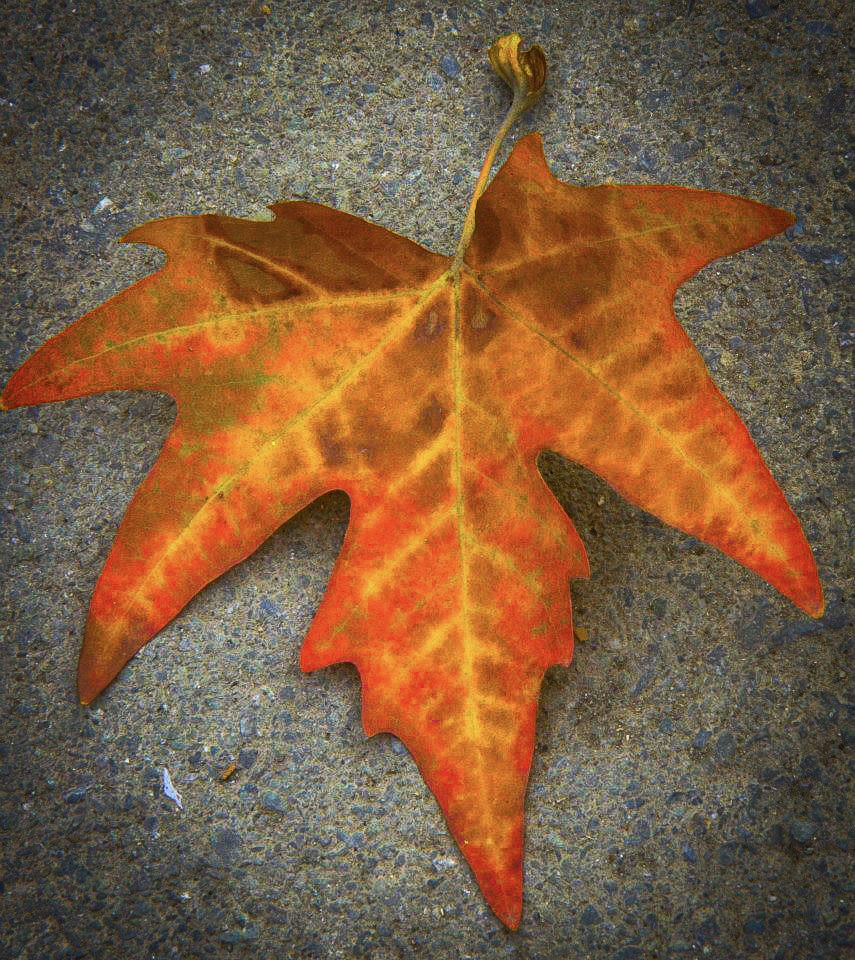
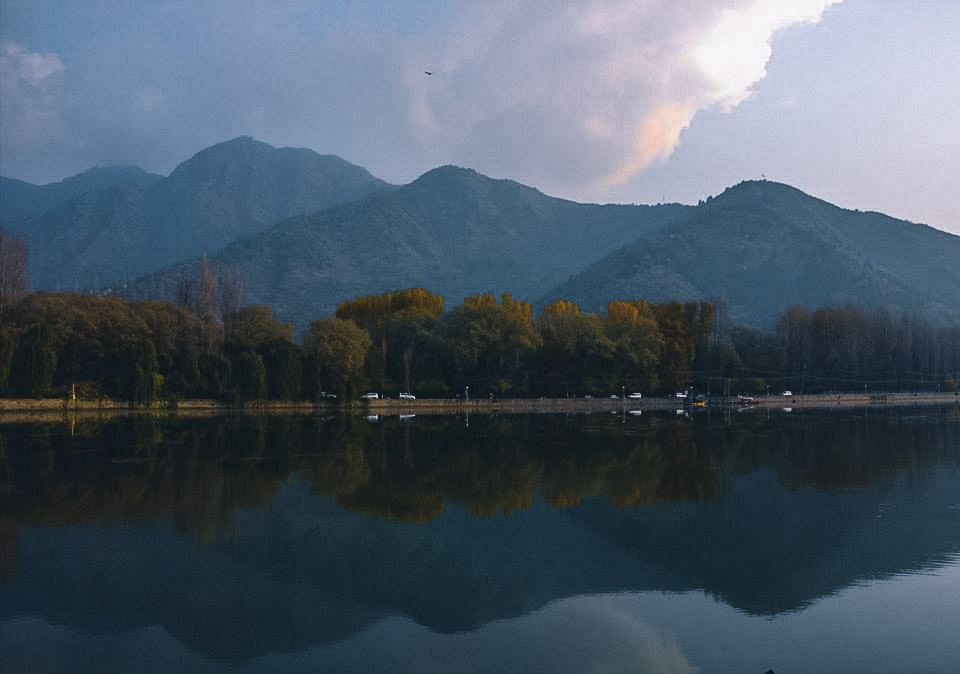
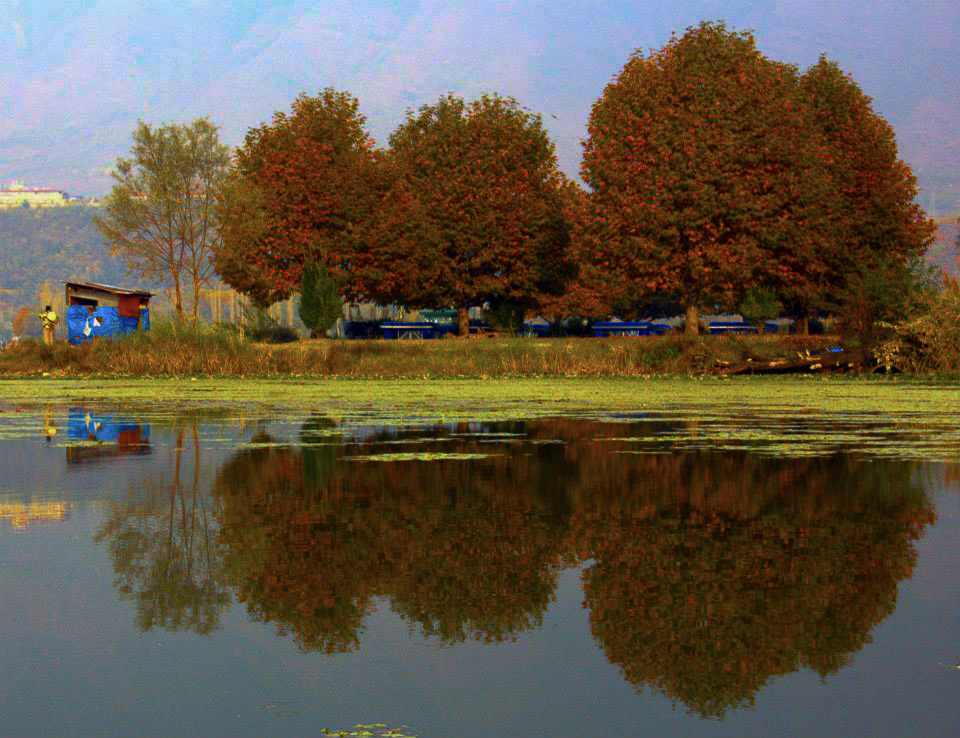
I discovered mysticism at every step in Kashmir. While some of these discoveries shook me up, others were quite entertaining. These pearls of wisdom were introduced to me by a friend in the Indian Army. He was an inquisitive soul and opened up a whole new mystical Kashmir for me. It was like opening Pandora’s box, and these beautiful mysteries came entangled with bloodshed and hatred. I remembered them as I drove down to Manasbal Lake one autumn morning. Autumn is one of the loveliest seasons in Kashmir, and the stunning beauty of the fall colours creates magic in the troubled paradise. Chinar trees turn golden and ruby red, and the ground gets covered with a rich brown carpet of fallen leaves. That morning, it was a quiet, peaceful, and uncrowded Kashmir, just the way I liked it. Tourist season was officially over, and tranquility descended on the valley like a luxurious sleep.
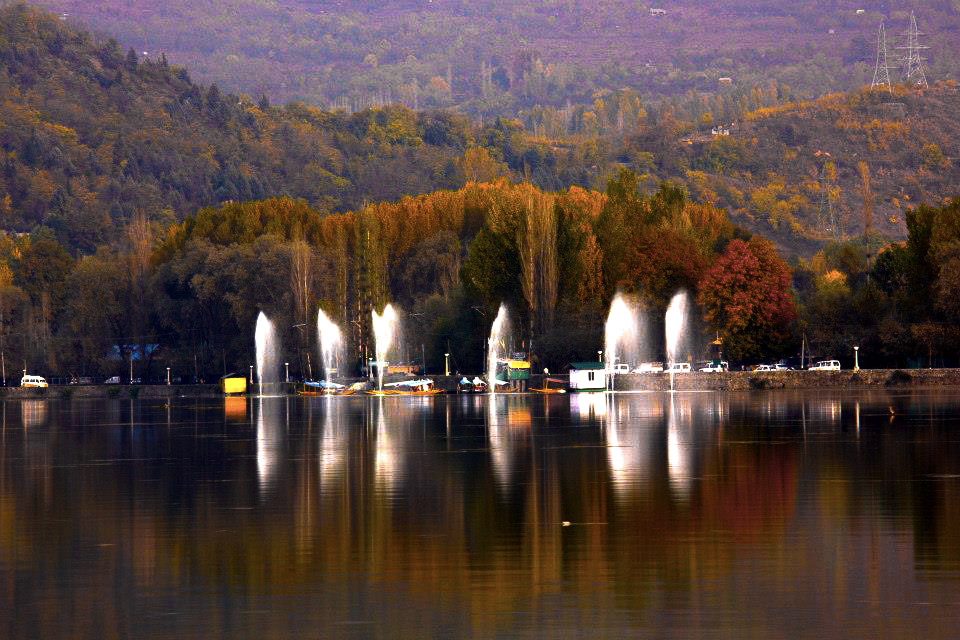
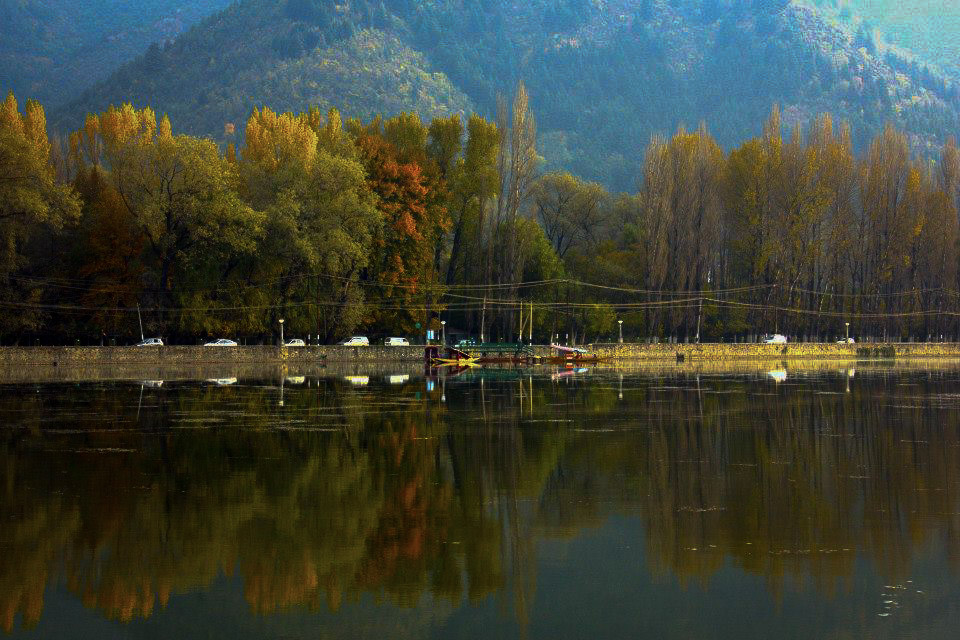
Manasbal in autumn
Manasbal is a very special lake. Located in the Gandarbal district, it is a popular haunt of aquatic and migratory birds. There are large lotus forests on the tranquil Manasbal Lake, which attracts them in hordes, but in autumn, only the golden chinar leaves float on its calm surface. Willows drooped down that morning on the crystal clear lake waters, and I paused by the ancient submerged Hindu temple on its shore. It was a cloudy day, and the pyramid-shaped temple reflected on the still green water of the surrounding pool. Colourful koi fish frisked in agreement as I made up my mind to follow my friend’s cues and discover the mystical side of Kashmir.
Kheer Bhawani Temple
My first step was Manasbal, and on my way there, I stopped briefly at the Kheer Bhawani temple. Dedicated to Goddess Bhawani, the most amazing part of this ancient temple is that its spring reportedly changes colour to red, pink, orange, green, blue, and white. Kashmiri Pandits(Hindu priests from Kashmir) have believed for centuries that the change of colour of the spring water from blue to black or red is inauspicious. According to them, whenever any horrifying and unfortunate event has to happen, the colour of the spring water turns black or red. Kashmiris claim to have observed a dark, murky tinge to the water just before the assassination of ex-Prime Minister Indira Gandhi and the eruption of militancy in the Valley in 1989. Some people say that in 1990, before the mass exodus of the Kashmiri Pandits(Kashmiri Hindus) from the Valley(during early militancy, they were getting slaughtered in masses), the colour of the spring had turned completely black.
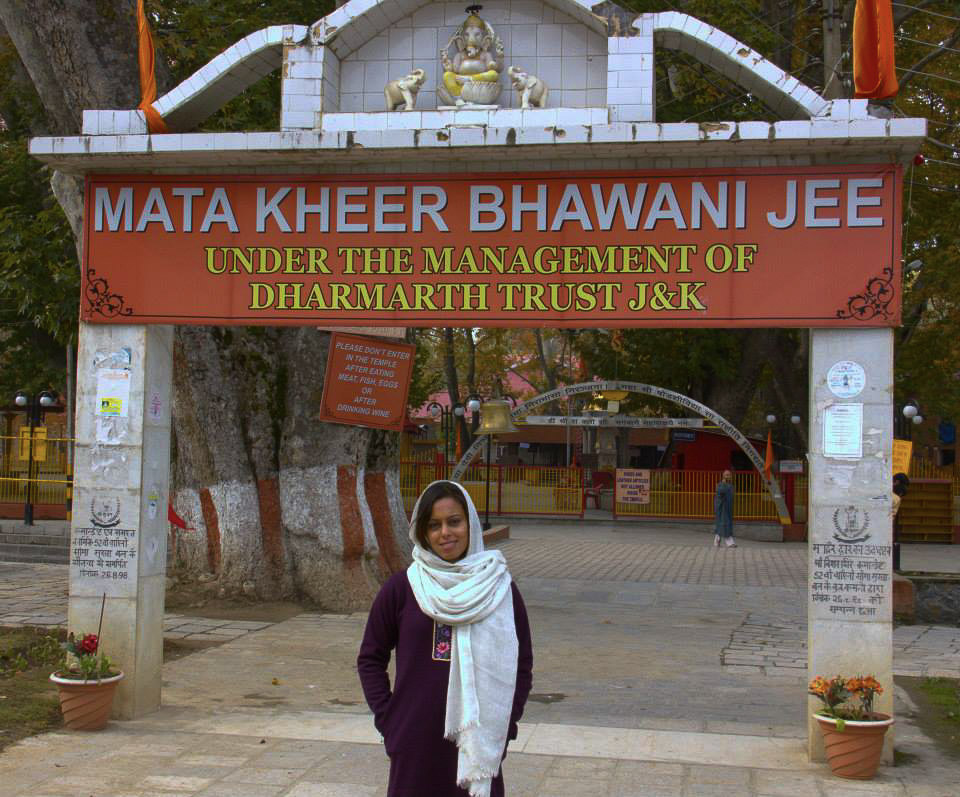
Autumn colours of Chinar
I found a lot of peace at Kheer Bhawani. Although I am not a very religious person, spirituality does affect me positively. Kheer Bhawani was peaceful, but strict security measures indicated that trouble brewed outside. Settled among aging golden Chinar trees with koi-filled pools and lonesome Indian soldiers, it struck a poignant picture. It wasn’t the first time that their loneliness and somewhat forgotten sacrifices had shaken me up, and my heart went out to the solitary soldier wistfully gazing at the temple spring that misty morning. I wondered what he thought, how he wanted his loneliness and insecurity of life to be compensated, and if the heavenly beauty of the valley seemed worthy to him anymore.
Rozabal Shrine and the myth of Jesus
Kashmir is a treasure house of mystical secrets, and I discovered some more in Srinagar. In the backstreets of downtown Srinagar, I stumbled upon a nondescript-looking building known as the Rozabal shrine. Locals have traditionally referred to the main sage buried there as Yuzasaf and Mir Sayyid Naseeruddin. Difficult to locate, it came into prominence in 1899 when the founder of the Ahmadiya Muslim Community, Mirza Ghulam Ahmad, claimed that it was actually the tomb of Jesus. According to Ahmadis, the tomb contains a rock carving that shows the feet of the body buried bearing crucifixion wounds. The body had been supposedly buried according to the Jewish tradition of directions and not according to the Islamic tradition. Rozabal was locked when I stumbled upon it, but the caretaker assured me that during tourist season, it received throngs of visitors, thanks to Lonely Planet and a recent feature on BBC radio.
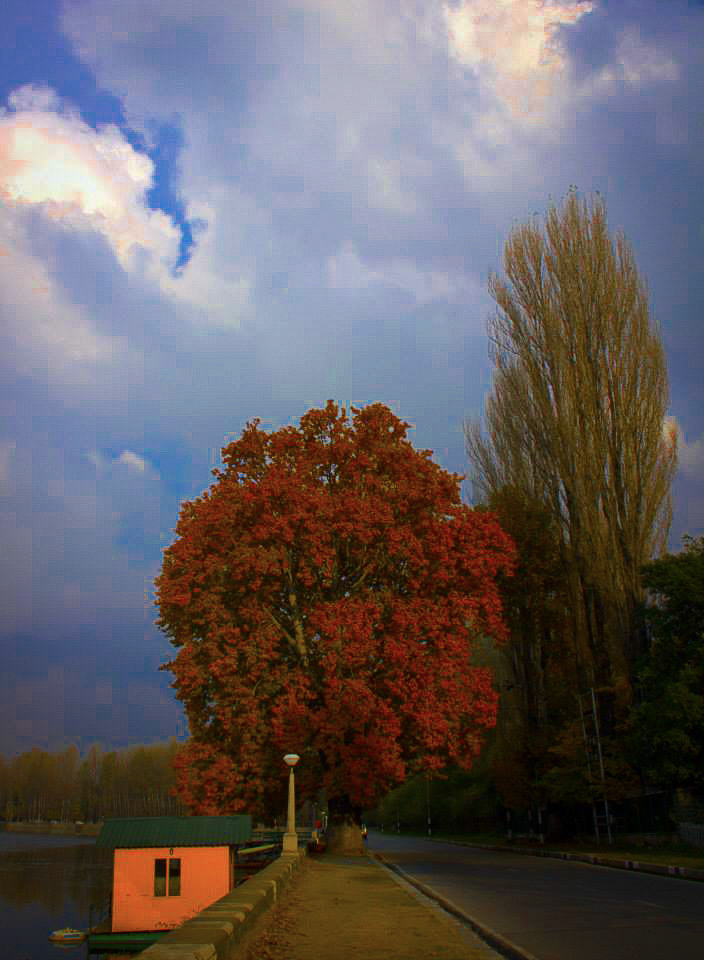
An autumn drive to Charar-i-Sharief
My next stop happened after a few days. It was at the Charar-i-Sharief shrine en route to picturesque Yousmarg. Charar-i-Sharif is considered one of the most important Muslim shrines in India and is approximately 600 years old. It enshrines the tomb of Sheikh Noor-u-din Noorani, a great Sufi saint who preached Islam through his poetry and is revered by both Hindus and Muslims. He preached communal harmony, non-violence, vegetarianism, and tolerance to the people. Unfortunately, the final resting place of this great saint itself became a site for violence and bloodshed. On Eid of 1995, the tomb along with the entire historic town was razed to the ground as a climax of a long 2-month standoff between Indian armed forces and militants hiding inside the shrine. Although very much controversial during the time of the event, today it is yet another incident when militants have used and desecrated a holy place, irrespective of religion. The town and the shrine had been rebuilt, but I did wonder at the pain the great saint himself must have felt to have his resting place misused to instigate violence and communal discord, when he himself, according to legends, was breastfed by a Hindu female saint as an infant.
Kashmir and the history of violence
For such a beautiful valley, Kashmir unfortunately was rocked with communal violence and all in the name of love of God. Even the holiest of the holy stunning domed mosque of Hazratbal, which contains the preserved hair of the Prophet Muhammad’s beard, did not escape from militancy. In December 1996, at least 4 people were injured in a militant grenade attack near the mosque while a former rebel leader, who was trying to resolve the Kashmir issue, was nearly murdered. The blast sparked panic and stampede among the worshipers inside the mosque as it was a Friday, but it was stemmed from becoming a horrible disaster. Militants took refuge in Hazratbal too, but thankfully, that siege by the Indian armed forces ended peacefully without bloodshed. I could not visit the 200-year-old Dastageer Sahib shrine in Khanyar, Srinagar, as it was also getting rebuilt. A major fire, followed by bloody clashes, surrounded this holy place with bloodshed, too. Kashmir underwent too much destruction and misuse of spirituality, and these evils somewhat marred its rosy picture in my eyes.
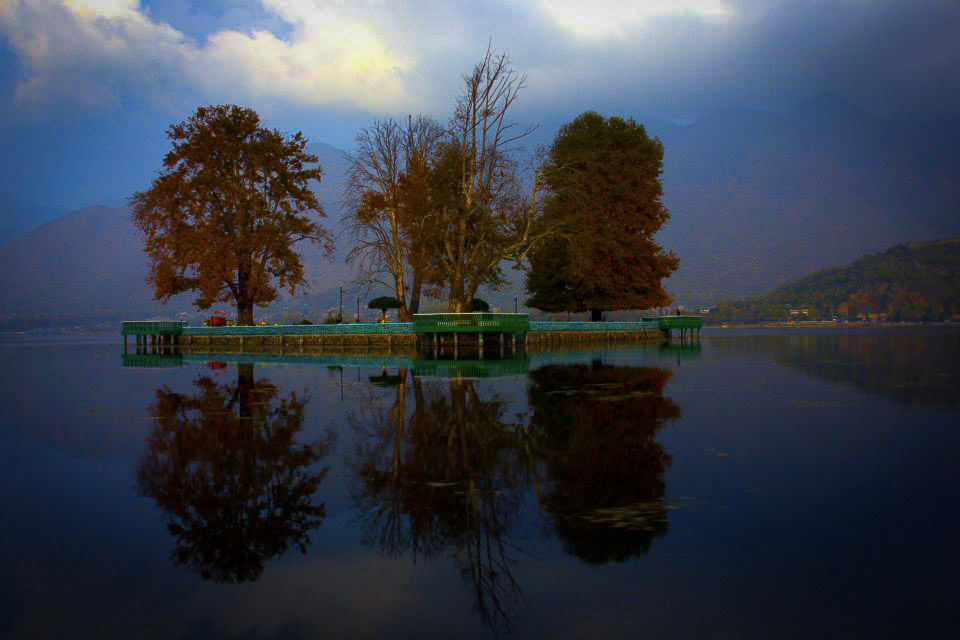
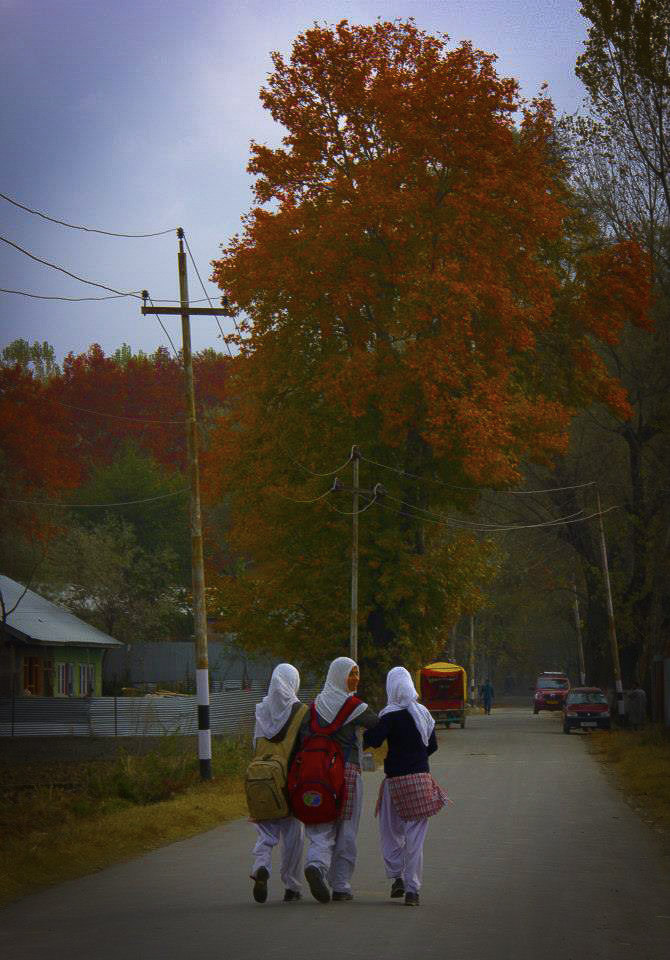
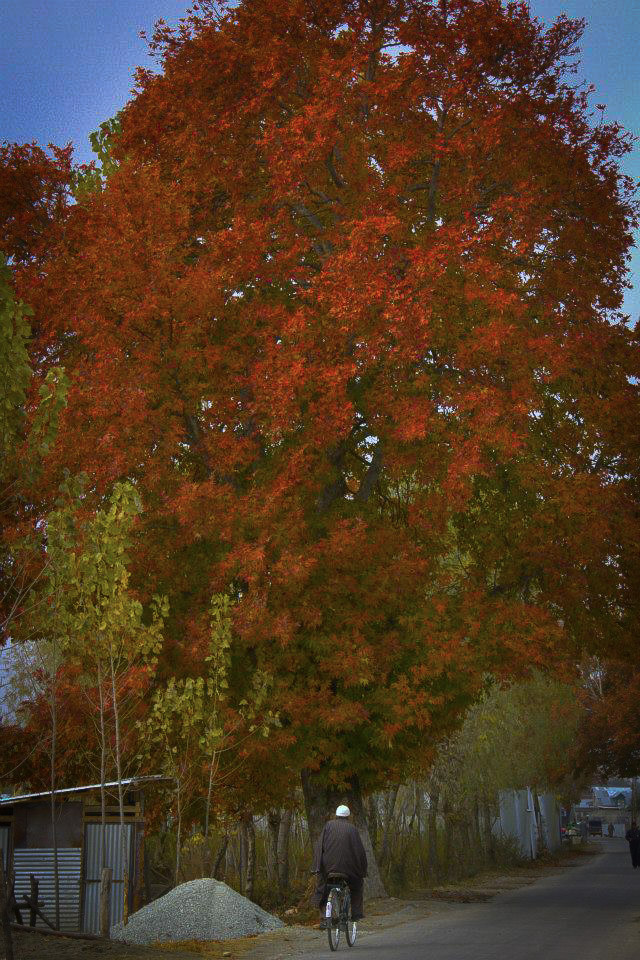
The colours of the Chinar in autumn
The only red I wanted to see in Kashmir was the autumn colour of the Chinar trees. I gave up my spirituality hunt soon because God, heartbroken with the sacrilege of his home, seemed to have left his heavenly abode in the valley. For me, he existed in his peaceful beauty, and so I sought him there among the flowers, streams, smiles, and Chinars of Kashmir.
TRAVEL TIP-Chinar trees are uniquely Kashmiri, and their beauty can be experienced best in the fall. A famous Srinagar landmark is an island on Dal Lake called Char(four) Chinar, which has four beautiful old Chinar trees. A 627-year-old Chinar tree was found at Chatargram, Badgam district in Kashmir, and for nature lovers, the newly opened Chinar Bagh or the Jhelum river cruise is a beautiful spot to spend a couple of hours.
Follow the rest of the Kashmir series
- KASHMIR GREATER LAKES TREK ITINERARY: TOSAMAIDAN-YUSMARG CIRCUIT
- GREATER LAKES TREK, KASHMIR: A PHOTO ESSAY
- FLOATING VEGETABLE MARKET OF SRINAGAR
- SPRING FESTIVAL, NAVREH, AND THE BLOOMING ALMOND TREES AT BADAMWARI
RESPONSIBLE TRAVELING-BECAUSE I CARE
FAQs
What are the best attractions in Kashmir?
This article, framed around autumn mysticism, highlights Manasbal Lake in the Gandarbal district (known for migratory birds, lotus forests, and an ancient submerged Hindu temple visible on its shore), the Kheer Bhawani Temple dedicated to Goddess Bhawani with its famous spring believed to change color before major events, the Rozabal Shrine tied to a local legend, and Charar-i-Sharief, historic seat of a revered Kashmiri saint.
Is Kashmir worth visiting?
The author clearly finds it so, describing autumn in Kashmir as one of the loveliest seasons, with Chinar trees turning golden and ruby red and creating ‘magic in the troubled paradise.’ The visit is portrayed as deeply moving, blending striking natural beauty with layers of local legend and history — though the article is candid that Kashmir’s beauty exists alongside a difficult history of communal violence.
How much time should I spend in Kashmir?
The article doesn’t specify a recommended duration, but it describes a single autumn day covering multiple stops — Manasbal Lake, Kheer Bhawani Temple, and a drive to Charar-i-Sharief — suggesting that a well-planned day trip can cover several of these sites, though a longer stay would allow more unhurried exploration.
What is Kashmir famous for?
Beyond its renowned natural beauty — especially the golden and ruby-red Chinar trees in autumn — the article highlights Kashmir’s rich layer of local legend and spiritual history, including the Kheer Bhawani spring’s folklore and the Rozabal Shrine’s associated myth. It’s also honest that Kashmir carries a difficult modern history of communal violence and militancy.
Is Kashmir tourist-friendly?
The author notes visiting outside the main tourist season, when ‘tranquility descended on the valley’ — suggesting Kashmir sees a clear seasonal tourist rhythm. The article also mentions visible security measures at sites like Kheer Bhawani, a reminder that some tension underlies the region even during peaceful visits.
I’m planning a trip to Kashmir — what should I prioritize seeing and doing there?
Based on this article, prioritize Manasbal Lake for its autumn scenery and ancient submerged temple, Kheer Bhawani Temple for its peaceful atmosphere among aging Chinar trees, and Charar-i-Sharief for its historical and spiritual significance. The author found particular value in having a knowledgeable local guide to unlock the region’s layered legends and history.
Can you give me an honest, first-hand take on what Kashmir is actually like to visit?
The author’s account is candid and reflective — they describe ‘discovering mysticism at every step,’ guided by a friend in the Indian Army, and call the experience like opening Pandora’s box: beautiful legends ‘entangled with bloodshed and hatred.’ They found real peace at Kheer Bhawani despite the presence of security forces, and were moved (though not conventionally religious) by the valley’s spiritual atmosphere set against its painful modern history.
What’s the best time of year to visit Kashmir, and why?
The article strongly favors autumn — it’s described as one of Kashmir’s loveliest seasons, when Chinar trees turn golden and ruby-red and blanket the ground in fallen leaves. The author also notes that autumn falls outside the main tourist season, offering a quieter, more tranquil experience of the valley.
What should a first-time visitor to Kashmir know before they go?
First-time visitors should know that Kashmir’s beauty comes layered with a complex and, at times, painful history — the article discusses episodes of communal violence and unrest tied to specific sites, including the 1995 destruction of the Charar-i-Sharief shrine during a standoff between Indian forces and militants. Approaching the region with both openness to its natural and spiritual beauty, and awareness of its difficult history, will give a fuller picture.
How does Kashmir compare to nearby destinations for someone deciding where to go?
The article doesn’t make direct comparisons to other destinations; it stays focused on Kashmir’s own distinctive character — a valley the author calls a ‘troubled paradise,’ where extraordinary natural beauty and rich local mysticism coexist with a difficult modern history.


Very interesting write up about Kashmir