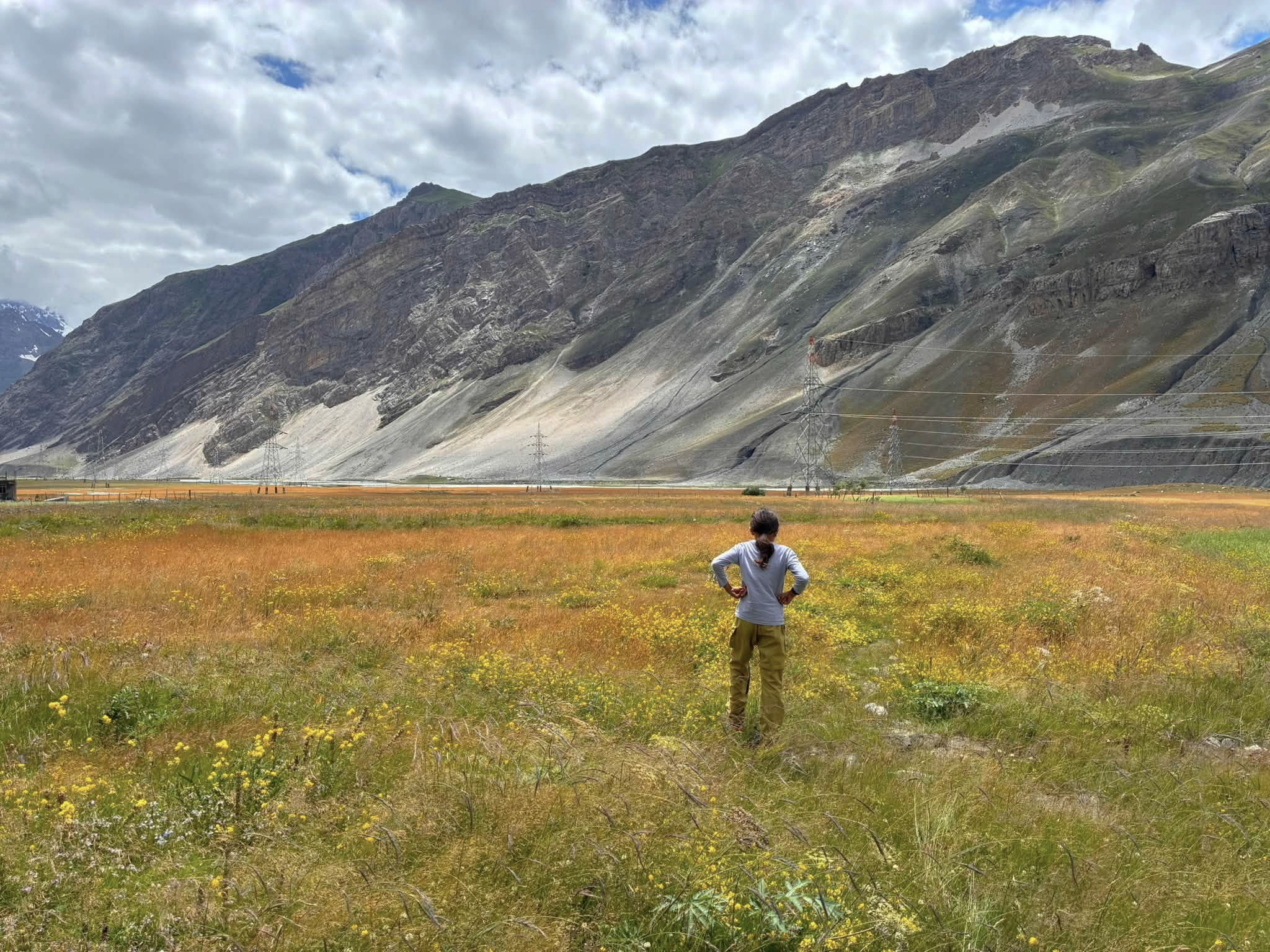
Offbeat Ladakh Family Road Trip: Highlights in Photos
Some journeys remain difficult to summarise because every stage feels like a separate adventure. Our offbeat Ladakh family road trip was one of them. The 21-day journey began in Delhi and continued through Srinagar, Sonmarg, Mushkoh Valley, Drass, Kargil, Batalik and the Brokpa villages before reaching Leh and, finally, Nubra Valley. The trip combined historic cities, Himalayan wildlife, sensitive military regions, remote villages, ancient Buddhist monasteries and some of the most extraordinary mountain landscapes I have seen. More importantly, I experienced it with my son. The long drives, simple accommodation and high altitudes were balanced by bear sightings, apricot orchards, colourful monasteries, Bactrian camels and the freedom to play barefoot on Nubra’s white dunes. Our complete route and daily programme are covered in this 21-day offbeat Ladakh itinerary.
Delhi: where our family road trip began
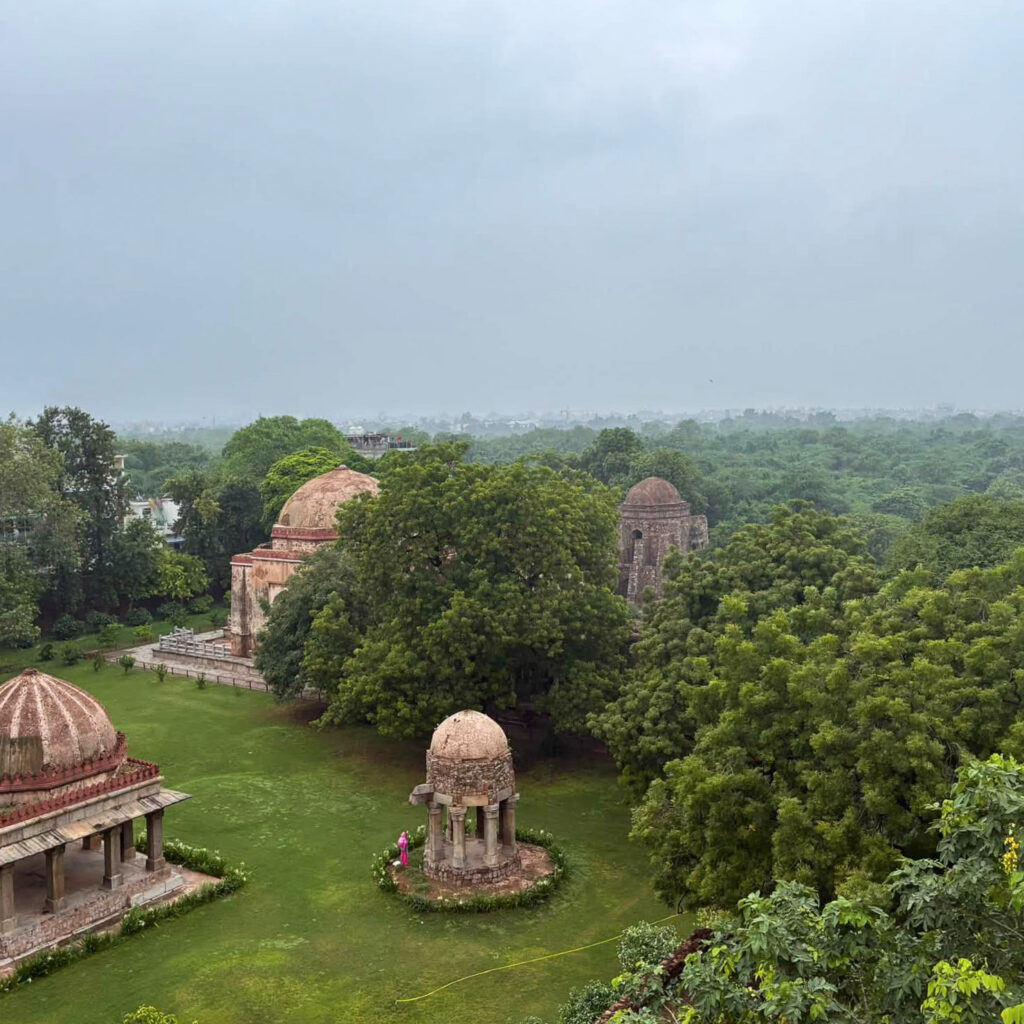
We spent two days in Delhi at the beginning of the journey, allowing ourselves time to recover from the international flight before travelling north. Instead of trying to cover the entire city, we explored at a relaxed pace and returned to Hauz Khas, where medieval ruins, tree-filled paths, an old reservoir and contemporary cafés coexist within one of Delhi’s most atmospheric neighbourhoods.
Srinagar: two days on Dal Lake
In Srinagar, we stayed on a houseboat on Dal Lake. The lake was a world of its own, filled with lotus gardens, floating shops, narrow waterways, and wooden shikaras carrying people and goods between the shore and the houseboats. Travelling with a child made the small details especially enjoyable. Watching boats arrive at the houseboat, moving through the canals and observing daily life on the water were experiences in themselves. We also explored the mosques, markets and traditional wooden buildings of Old Srinagar, discovering a part of the city that felt far removed from the ornamental Mughal gardens and busy lakefront.
Sonmarg: rain beneath the mountains
Our next stop was Sonmarg. The surrounding mountains were magnificent, but persistent rain changed our plans. Instead of remaining for the entire scheduled stay, we left a day earlier and continued towards Mushkoh Valley. The wet weather followed us along sections of the road, darkening the mountains and filling the rivers. It was an early reminder that Himalayan itineraries must remain flexible, particularly when travelling with a child.
Mushkoh Valley: searching for Himalayan brown bears
Mushkoh Valley was one of the wildest and most isolated parts of our journey. We stayed with Mr Ghulam Hasan and his family at Border View Homestay and spent our days exploring a landscape known for its Himalayan brown bears. The bears descend closer to the villages in search of food, particularly after the long winter. During the colder months and early spring, deep snow can isolate the valley, and bears may roam close to houses and cultivated land. Our time there was about patience rather than conventional sightseeing. We watched the slopes, walked beside the river, and waited for movement among the rocks and vegetation. For my son, searching for the bears brought an element of real wilderness to the journey. This was not a zoo or organised wildlife park. It was their natural habitat, and sightings could never be guaranteed. Mushkoh was quiet, green and deeply cut off from the established Ladakh tourism circuit. Read more in The Himalayan Brown Bear Habitat of Mushkoh Valley.
From Mushkoh Valley to Batalik
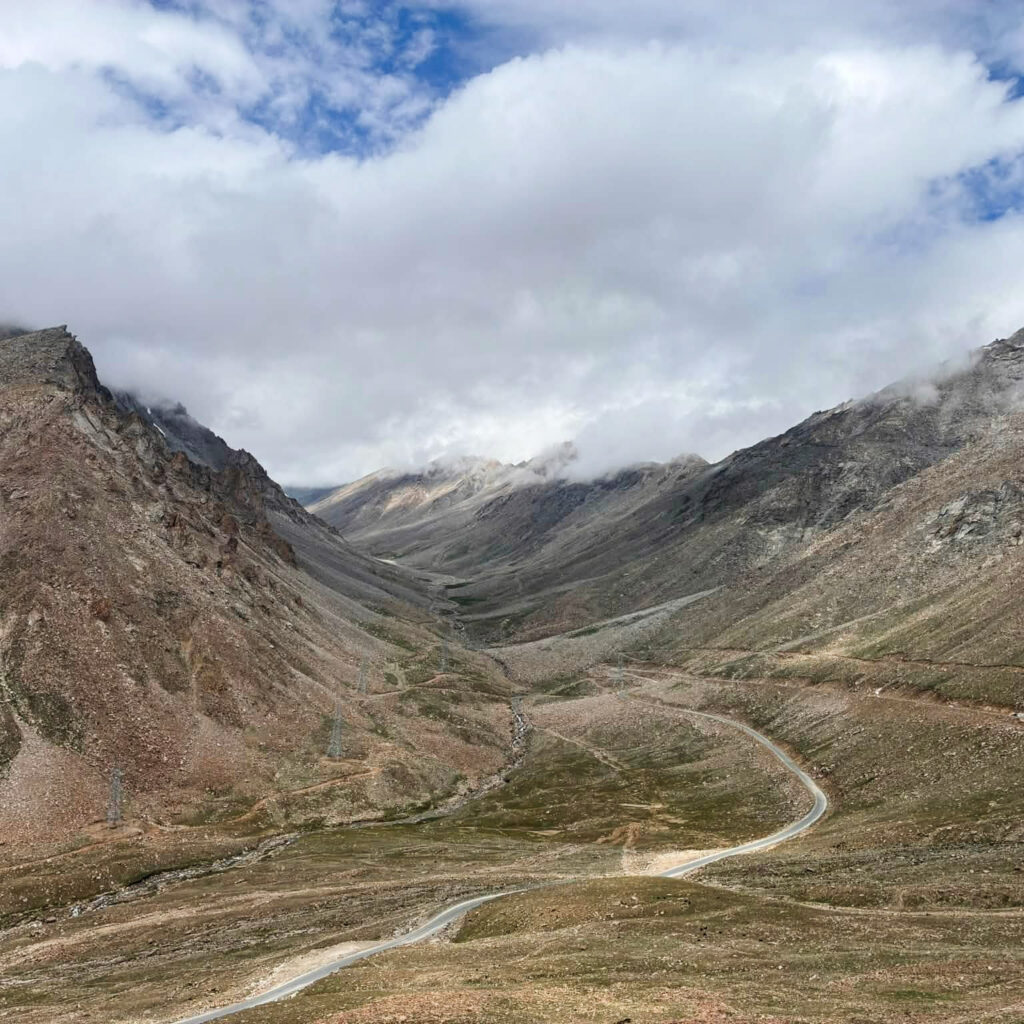
The road from Mushkoh took us back through Drass and Kargil before entering the sensitive Batalik region. It was one of the longest and most remote driving days of our offbeat Ladakh family road trip. Military camps, checkpoints, and reminders of the 1999 Kargil War appeared along the way. Villages became smaller, traffic diminished, and the broad highway gradually gave way to narrower mountain roads. The scale of the landscape was overwhelming. Roads clung to exposed slopes, rivers rushed beneath eroded cliffs, and settlements appeared impossibly small against the mountains. Travelling with an experienced local driver was essential. It allowed us to concentrate on the scenery and my son’s comfort instead of dealing with narrow roads, military checks and changing conditions ourselves.
The colourful stone mountains of Batalik
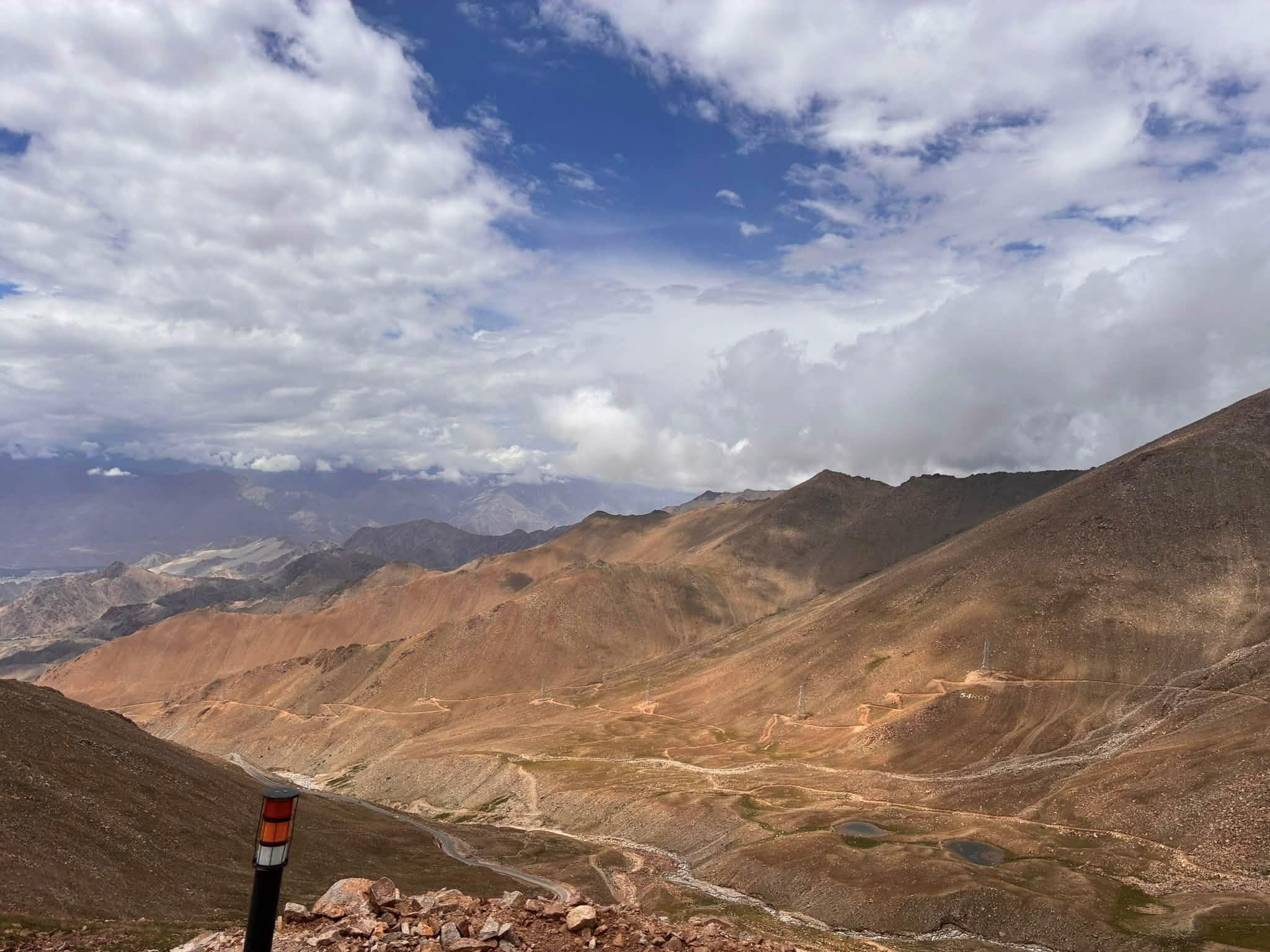
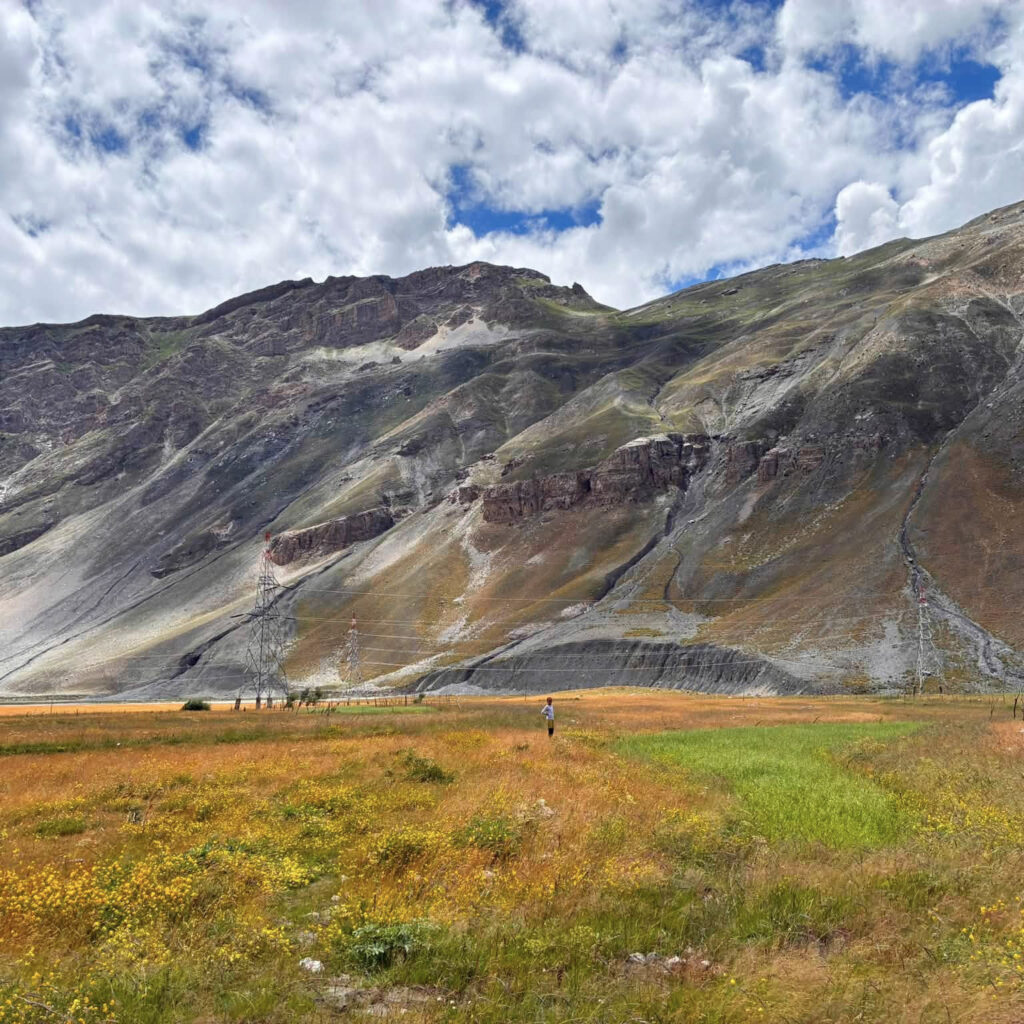
The mountains between Batalik and Leh were among the greatest visual surprises of the journey. They were not simply brown or grey. Their exposed layers appeared in shades of rust, copper, violet, charcoal, ochre and muted green. With almost no vegetation to conceal their structure, every geological fold and fracture remained exposed. Passing clouds continually altered their colours, turning the road into a moving gallery of stone. Read the complete journey in The Road from Batalik to Leh.
Garkon and Darchik: the Brokpa villages
Garkon and Darchik introduced us to the Brokpa region, popularly promoted as Ladakh’s “Aryan Valley”. Apricot orchards, vegetable gardens, and traditional houses formed green pockets between the barren mountains. Our stay in Garkon was uncomfortable because of poor hospitality and bed bugs, and we left a day earlier than planned. Darchik, however, felt warmer and more welcoming and would be my preferred base if I returned. The experience reminded us that an offbeat Ladakh family road trip is rarely perfect. A destination can be culturally fascinating and visually beautiful while the actual stay remains disappointing. Flexibility became one of the most important parts of travelling with my son. Read more about the Aryan villages of Garkon and Darchik.
The Indus as our companion
The Indus River accompanied us through much of western Ladakh. Sometimes it flowed directly beside the road; elsewhere, it disappeared beneath steep cliffs before reappearing around another bend. Mountain streams brought a different palette to the landscape. Their clear blue water rushed through pale stones, supporting narrow ribbons of trees and cultivated land. These streams also offered welcome breaks during the long driving days. Even a short stop beside the water allowed us to stretch our legs, breathe the cold mountain air, and enjoy a few moments away from the vehicle.
Leh and its monasteries
After the isolation of Mushkoh, Batalik and the Brokpa villages, Leh felt surprisingly busy. We used it as a base for exploring some of the most important Ladakh monasteries, including Thiksey, Likir, Alchi and Mangyu. Each monastery offered something different. Thiksey impressed us with its monumental hilltop architecture and panoramic views. Likir felt quieter and more contemplative. Alchi concealed extraordinary early Buddhist murals behind modest village walls, while Mangyu rewarded the detour with seclusion and fragile artistic treasures.
The colour of Ladakh’s monasteries
From a distance, Ladakh’s monasteries often appear austere and predominantly white. Inside their courtyards, however, we found walls of brilliant red and yellow, painted wooden balconies, dark prayer halls and sculptures covered with intricate patterns. The monastery visits were easy to adapt for a child. Rather than attempting to explain every historical and religious detail, we concentrated on the colours, statues, painted doors, courtyards and mountain views.
Monumental Buddhist art
Thiksey’s enormous Maitreya statue was one of the most memorable works of religious art we encountered. Its serene face, elaborate crown and richly painted surfaces filled the dim temple interior. The monasteries also connected this journey with my earlier travels through the Tibetan Buddhist regions of China. Thiksey recalled the great monastery of Shangri-La, while Likir’s rural setting reminded me of the monastic landscapes around Tagong in western Sichuan.
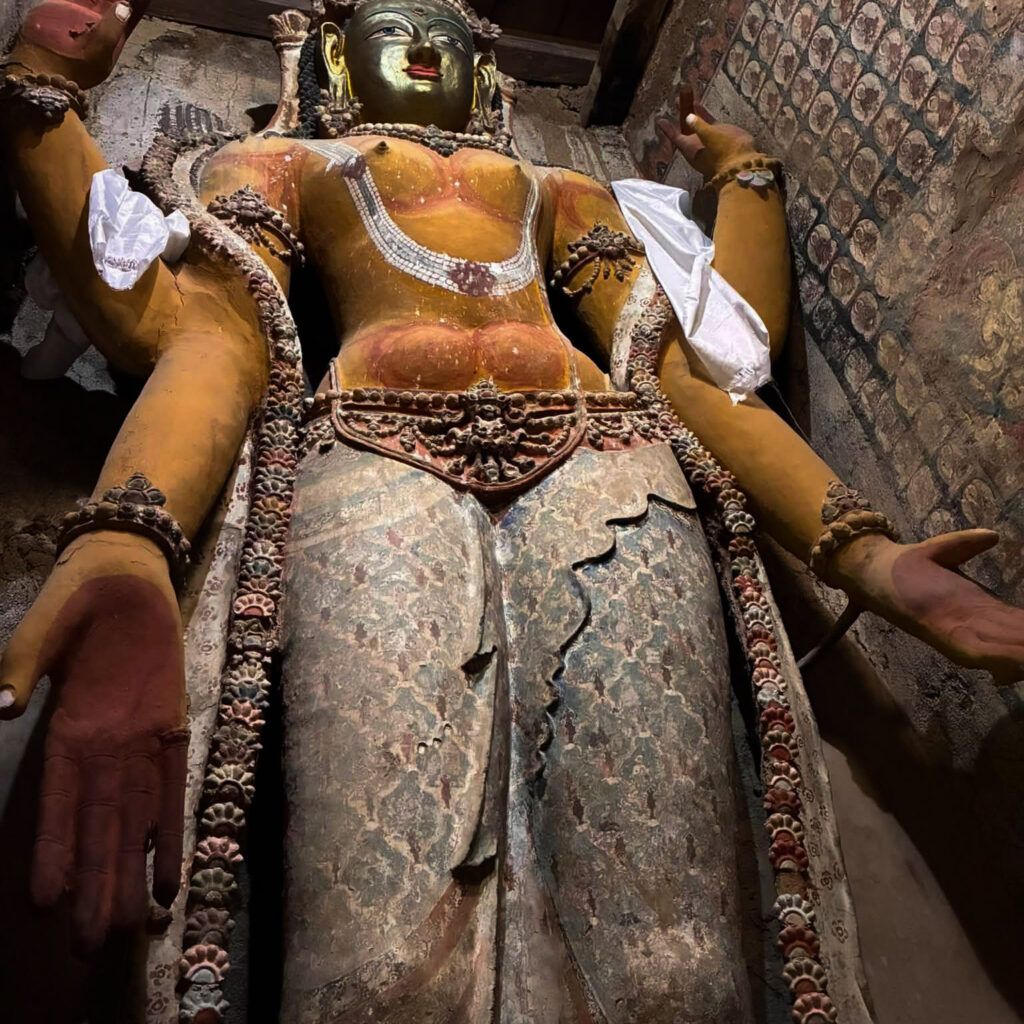
Ancient paintings at Alchi and Mangyu
Alchi and Mangyu revealed a different artistic world. Their old paintings preserve the influence of medieval Kashmir and reflect a period when Ladakh was linked with Tibet, Central Asia and the Indian subcontinent through religion and trade. Mangyu was particularly quiet and remote. Its fragile paintings and modest temples felt far removed from Ladakh’s busier sightseeing circuit.
The final leg to Nubra Valley
Our final journey took us from Leh across the high mountains to Nubra Valley. The descent revealed a broad landscape of barren peaks, green riverbanks and pale dunes. This was my second visit to Nubra, but the experience was completely different. On my first journey, I had travelled with a small group, suffered from altitude sickness at Khardung La, and found the camel safari bumpy and disappointing. This time, travelling with my son changed the way I experienced the valley.
Seeing the Bactrian camels through a child’s eyes
The camels that had failed to impress me during my previous trip became fascinating when seen through my son’s eyes. He watched them resting among the seabuckthorn bushes, observed them up close, and rode one across the cold desert. The camel ride became one of Nubra’s most memorable child-friendly experiences.
Playing in Nubra’s white desert
The white dunes of Hunder became a vast natural playground. My son ran barefoot across the rippled sand, climbed the slopes, rolled down them, and stretched out as though making a snow angel. The white desert offered space to run, climb and play beneath the mountains. Sometimes the simplest experiences became the most memorable parts of the journey. The soft white sand of Hunder became our Himalayan version of snow.
Water, desert and mountains
Nubra’s beauty comes from its contrasts. Streams curve through green meadows, camels walk across pale dunes, and bare mountains rise above everything. Clear water and green meadows formed an oasis within the high-altitude desert. Late in the day, the lowering sunlight transformed the mountains. Grey slopes turned gold, rose, and violet, and shallow pools reflected the changing sky. For detailed information about Hunder, Diskit and the Bactrian camels, read The White Desert of Nubra Valley. Permit, altitude, and route information is available in my Ladakh Travel Guide.
An offbeat Ladakh family road trip of contrasts
Looking back, the journey feels like a sequence of contrasts: Delhi’s dense urban energy and Dal Lake’s quiet waterways; the rain-soaked mountains of Sonmarg and the green isolation of Mushkoh; Kargil’s Shia culture and the Brokpa villages of Batalik; ancient monastery interiors and vast, empty roads; the stony mountains of western Ladakh and the soft white dunes of Nubra. Travelling with my son changed the rhythm of the trip. We moved more slowly, allowed time for rest and focused less on completing a sightseeing checklist. His favourite moments were often the simplest ones: watching bears from a safe distance, examining apricots, climbing monastery stairs, meeting camels and rolling down the dunes.
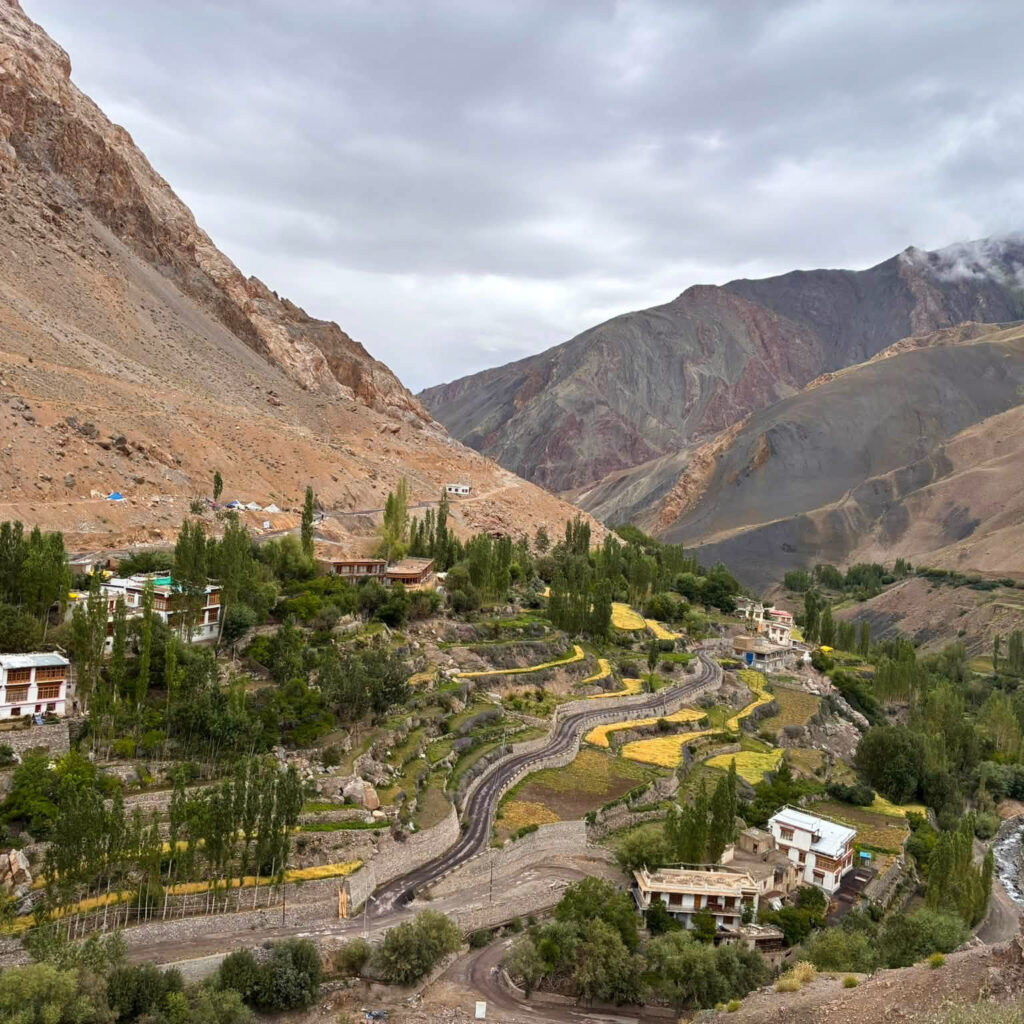
The end of our offbeat Ladakh family road trip
This was not the conventional Ladakh circuit. Our offbeat Ladakh family road trip took us through brown-bear habitat, sensitive border regions, little-visited villages and ancient monasteries before ending in Nubra’s white desert. Some stays were wonderful, and others were disappointing. Roads were long, weather disrupted our plans, and the altitude demanded care. Yet those imperfections became part of the journey. They made the beautiful moments feel more immediate and genuine.
Discovering lesser-known places like Matayan Valley
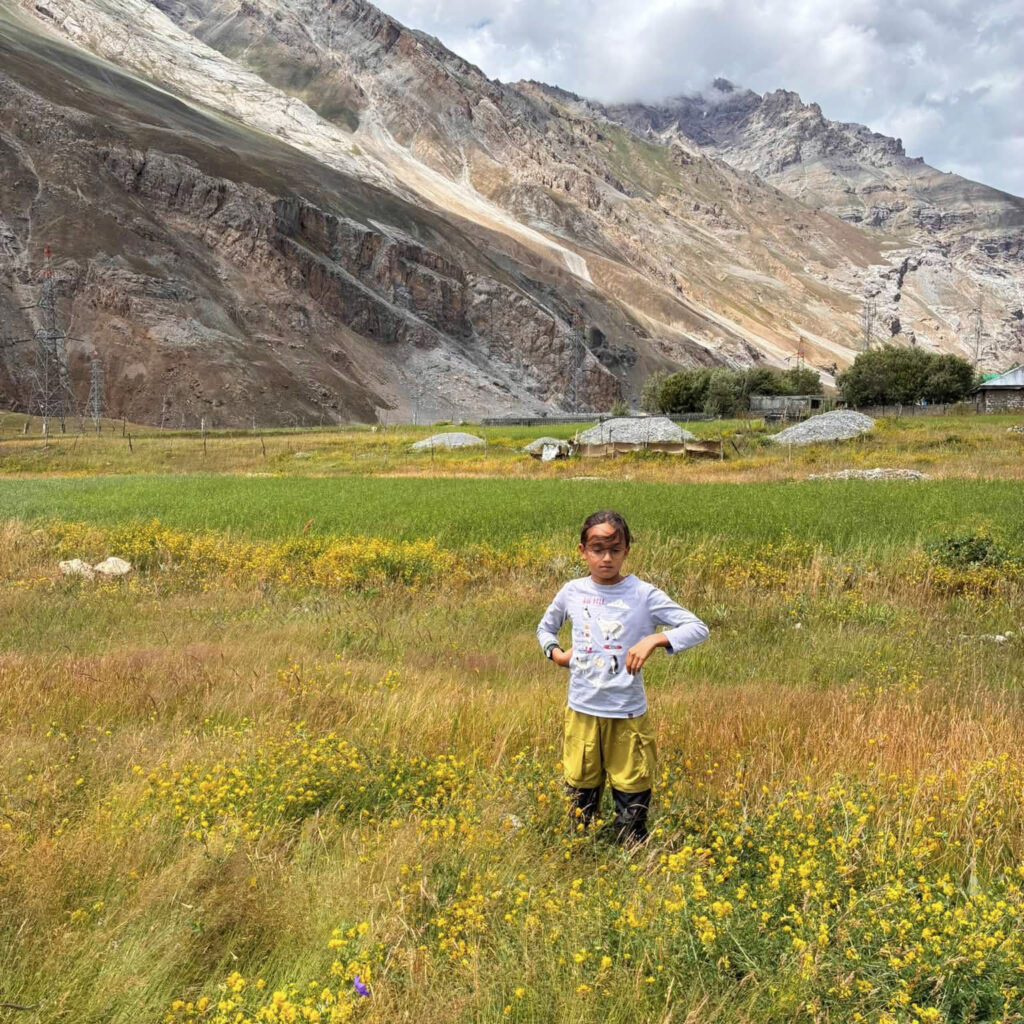
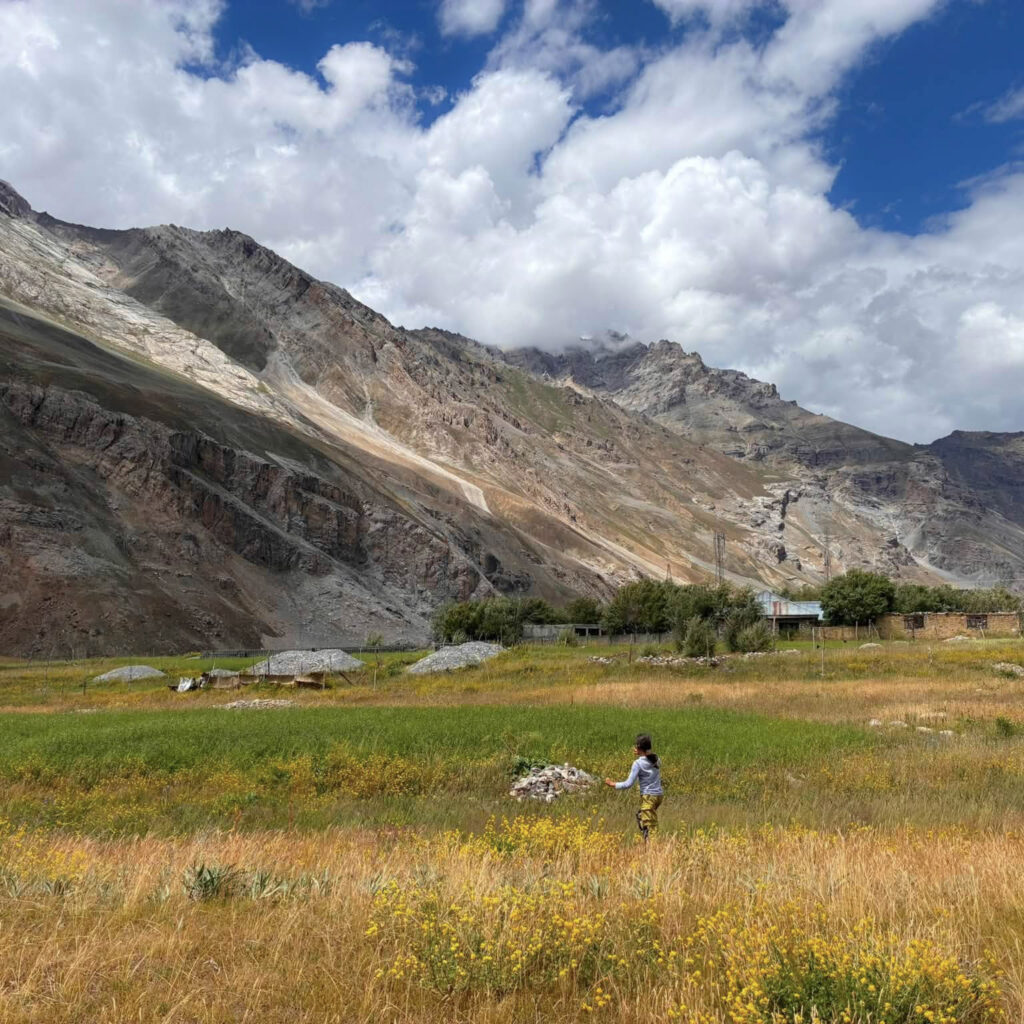
One of the greatest pleasures of our offbeat Ladakh family road trip was discovering places that rarely feature in standard itineraries. Matayan Valley was one of them. After crossing Zoji La from Sonmarg, we entered a wide, unexpectedly green valley enclosed by steep mountains. Matayan—also written as Matayen—is a small settlement on the Srinagar–Leh highway, approximately 21 kilometres before Drass. Most travellers pass through without stopping, eager to reach Drass or Kargil, yet its meadows, streams, scattered houses and rugged mountain backdrop make it worth slowing down. The landscape felt like a transition between Kashmir and Ladakh. It retained the water, grasslands, and softer greenery of Kashmir, but the mountains were already becoming barer, sharper, and more severe. The Drass River flowed through the valley, while grazing animals and cultivated fields brought small signs of life to the enormous landscape. Matayan is also frequently described as Ladakh’s only predominantly Kashmiri-speaking village, adding another cultural layer to this transitional region. There were no famous monuments or organised activities, and that was precisely its appeal. Travelling with my son encouraged us to appreciate these quieter places. A short stop gave us time to stretch our legs, watch the water, look at the animals and absorb the mountain scenery before continuing towards Drass and Mushkoh Valley. Matayan reminded me that an offbeat journey is not defined only by remote destinations. Sometimes it is about noticing the beautiful places that other travellers simply drive past.
Brief Matayan Valley travel guide
Location: On NH1 between Zoji La and Drass, in the Kargil district of Ladakh
Distance from Drass: Approximately 21 kilometres
Distance from Kargil: Approximately 80 kilometres
Distance from Sonmarg: Roughly 40–45 kilometres, depending on the route measurement
Altitude: Approximately 3,200–3,300 metres
Driving time from Sonmarg: Around 1.5–3 hours, depending heavily on Zoji La traffic
Driving time from Drass: Approximately 30–45 minutes
Best time to visit: May to September or early October
Time required: Around 30–60 minutes for a short stop
Matayan is located directly on the Srinagar–Leh highway, so no separate detour is necessary. The road is generally paved, but the journey across Zoji La may be slow because of construction, convoys, mud, poor weather, or traffic restrictions. Leave Sonmarg early and keep your schedule flexible. There is limited tourist infrastructure in Matayan, so carry drinking water, snacks, and warm clothing. Drass is the better place for fuel, meals and accommodation. Even in summer, the weather can change quickly, and the valley may become cold when clouds gather. No special border permit is normally required simply to travel through Matayan on NH1, although travellers should carry identification and follow any local instructions. Ask permission before photographing residents, houses or agricultural activities. For families, Matayan works best as a gentle scenic break rather than a major sightseeing stop. Supervise children beside the river and road, avoid strenuous activity immediately after crossing Zoji La, and keep the visit relaxed while everyone adjusts to the increasing altitude.
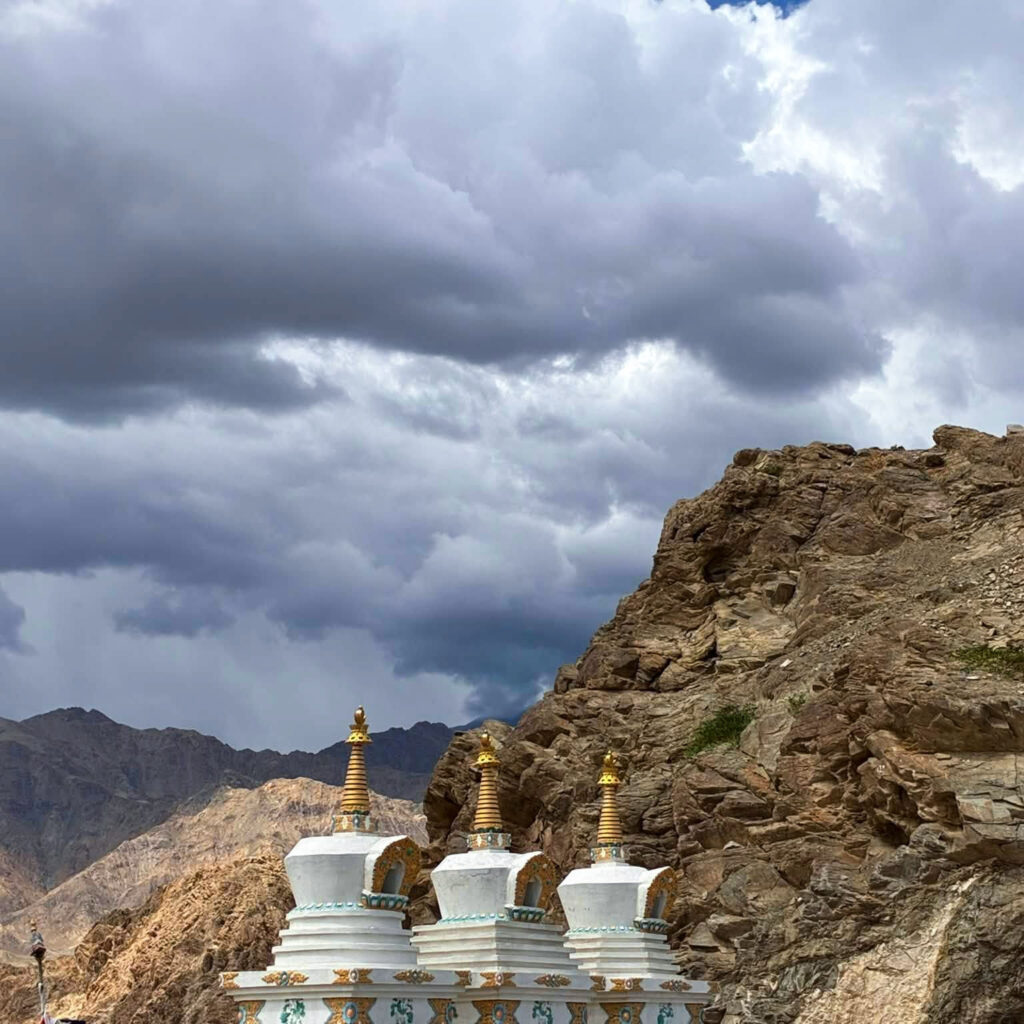
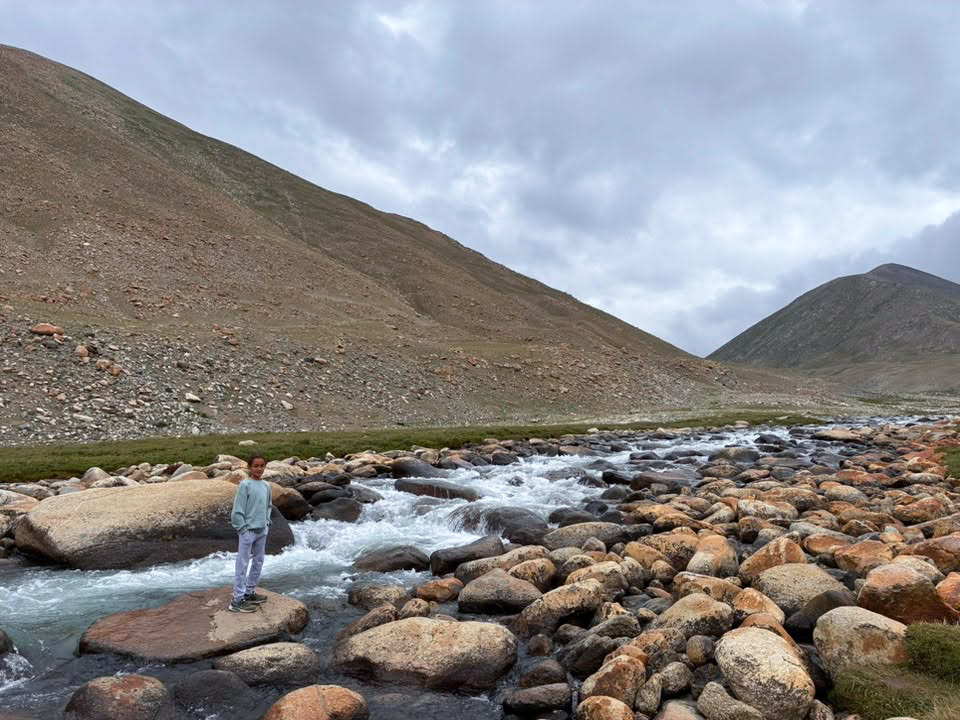
The trip was planned and organised by my friend Shuib Kaw of Versatile Adventure Holidays. He is available at +91 76783 57621 or [email protected]. I paid for this trip myself, and if I am promoting Versatile Adventure Holidays, it is because they did an excellent job organising a complicated journey through some of the remotest parts of Ladakh. Read the complete story in An Offbeat Ladakh Trip with Versatile Adventure Holidays.
Follow the Ladakh series
- AN OFFBEAT LADAKH TRIP
- KASHMIR TO KARGIL ON SRINAGAR LEH ROAD
- KARGIL TO LEH
- LEH (ED) IN LADAKH
- MOUNTAINS AND MONASTERIES
- THE LADAKH FESTIVAL
- THE BEAUTIFUL BLUE PANGONG LAKE
- THE WHITE DESERT AT NUBRA VALLEY
- 2012 LADAKH ITINERARY AND TRIP COSTS
- OFFBEAT LADAKH ITINERARY 2026
- MUSHKOH VALLEY TO BATALIK ROAD TRIP
- HIMALAYAN BEAR HABITAT OF MUSHKOH VALLEY
- BATALIK TO LEH ROUTE
- THIKSEY, ALCHI, LIKIR, MANGYU MONASTERIES
- NUBRA VALLEY WITH A CHILD
RESPONSIBLE TRAVELING-BECAUSE I CARE


