Thiksey, Alchi, Likir and Mangyu: Exploring Ladakh Monasteries
Ladakh monasteries are inseparable from the region’s extraordinary landscape. Some crown barren hilltops like fortresses, their whitewashed buildings visible from kilometres away. Others hide at village level behind mud walls and carved wooden doors, revealing their treasures only after you step inside. During our journey, we visited four very different Ladakh monasteries: Thiksey, Alchi, Likir and Mangyu. Thiksey impressed us with its monumental architecture and sweeping views across the Indus Valley. Likir combined an active monastic tradition with a magnificent mountain setting. Alchi concealed some of the finest early Buddhist paintings in the western Himalayas, while remote Mangyu offered silence, seclusion and a rare glimpse of Ladakh’s more fragile religious heritage. Together, these four Ladakh monasteries revealed the remarkable diversity of the region’s Buddhist architecture and art. Our visits formed part of a 21-day offbeat Ladakh itinerary.
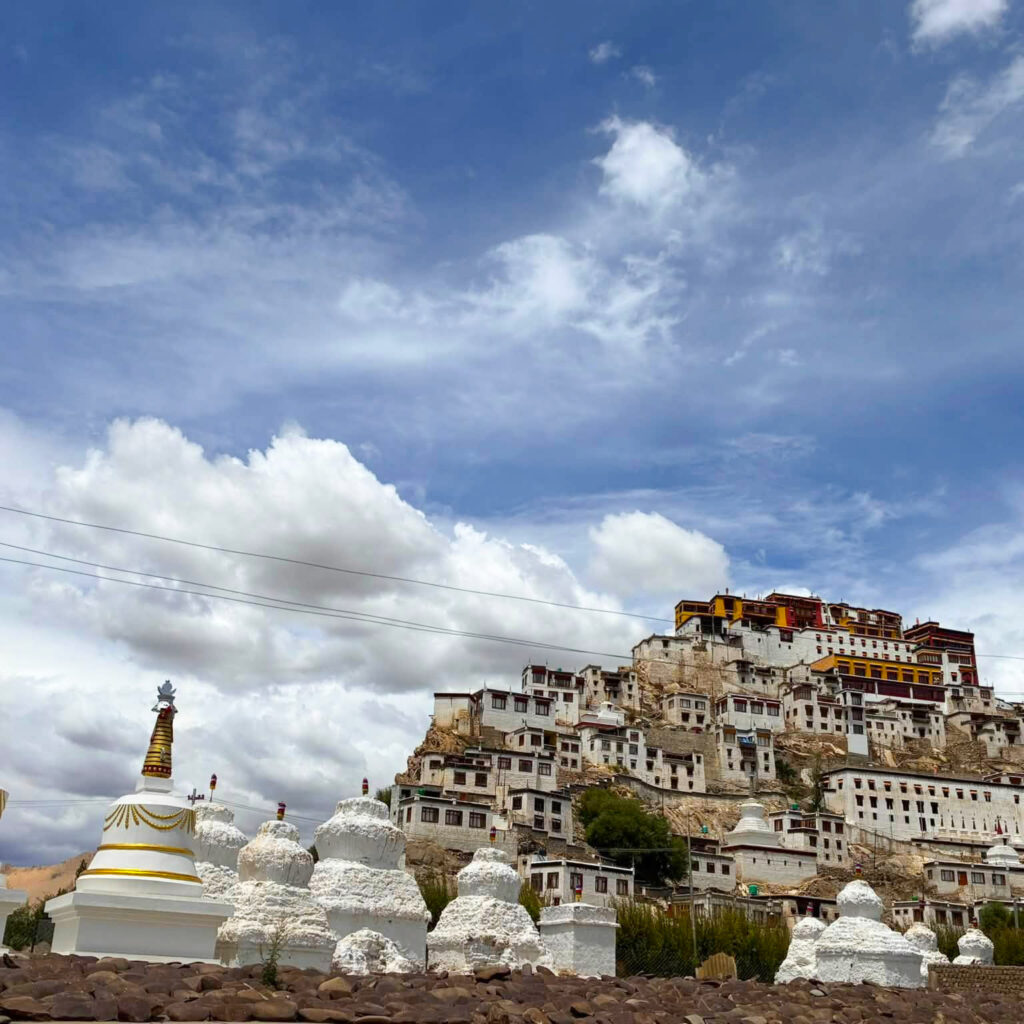
Thiksey Monastery rising above the valley
Visiting the Ladakh monasteries: route at a glance
Thiksey lies southeast of Leh, while Likir, Alchi and Mangyu are west of the city. Although it is technically possible to cover all four Ladakh monasteries in one long day, dividing them over two days creates a much more enjoyable experience.
Day 1: Thiksey Monastery
Route: Leh–Thiksey–Leh
Distance: Approximately 40 kilometres return
Driving time: Around 1–1.5 hours in total
Recommended time: Half a day
Day 2: Likir, Alchi and Mangyu monasteries
Route: Leh–Likir–Alchi–Mangyu–Leh
Distance: Approximately 150–180 kilometres
Driving time: Around 4–5 hours
Recommended time: One full day
Visiting all four in one day
Total distance: Approximately 210–240 kilometres
Driving time: At least 6–7 hours
Total excursion: Approximately 10–12 hours with sightseeing
A single-day circuit would be extremely rushed, particularly if you want to appreciate Alchi’s murals and make the worthwhile detour to Mangyu.
Thiksey: the most monumental of the Ladakh monasteries
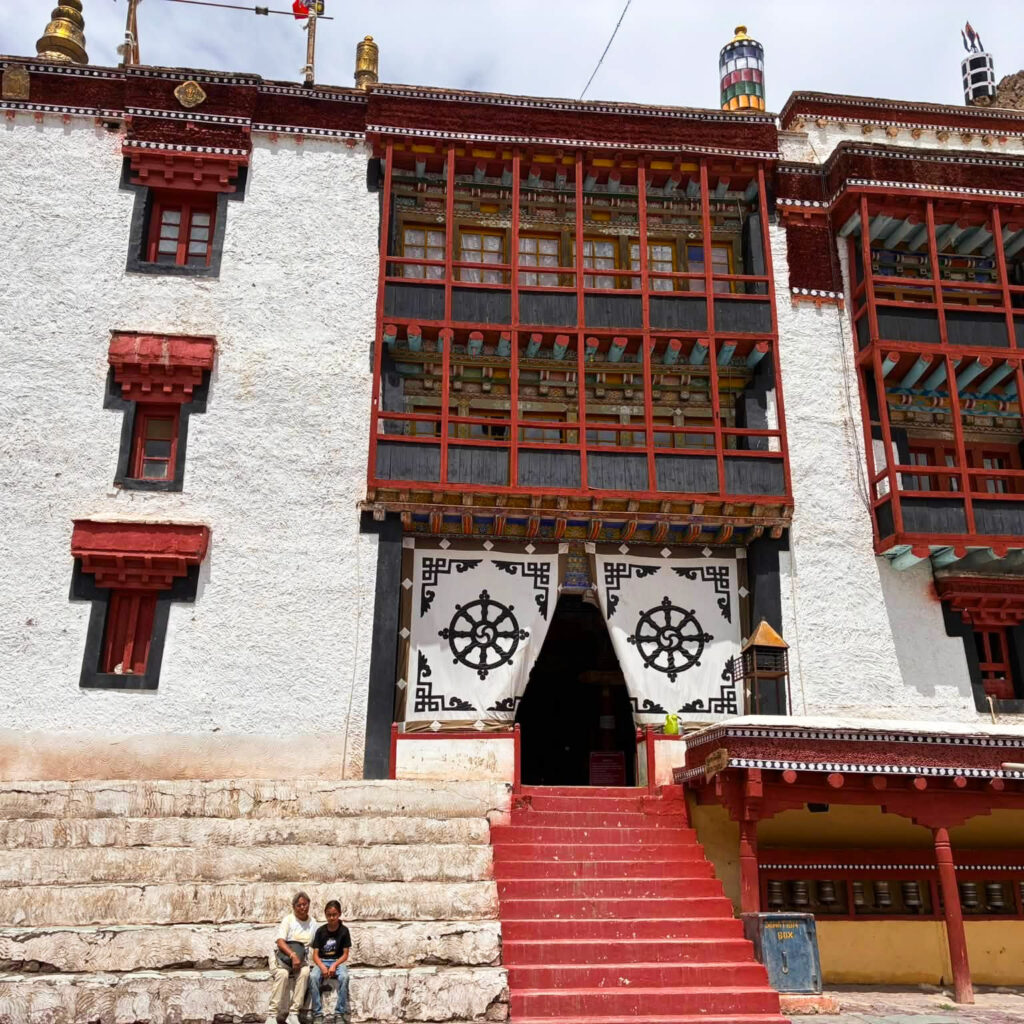
Thiksey lies approximately 19 kilometres southeast of Leh and is one of the most visually impressive Ladakh monasteries. Its buildings rise in ascending tiers along a rocky hill, creating a composition often compared to the Potala Palace in Lhasa. From a distance, the complex resembles a small white city, with monastic residences, temples, prayer halls and courtyards climbing towards the principal buildings at the summit. The approach alone was magnificent. White chortens stood in the foreground, the monastery rose beyond them, and enormous clouds moved across the blue Ladakhi sky. Thiksey belongs to the Gelugpa school of Tibetan Buddhism. It is an active monastery, with monks living, studying, and conducting daily prayers within the complex. Visitors climb through a succession of stone stairways, narrow passages and courtyards. Each level reveals a different perspective of the monastery or the valley below. Thiksey’s monumental hilltop architecture reminded me of the Tibetan monasteries I visited during my travels through Shangri-La in China.
The colours of Thiksey Monastery
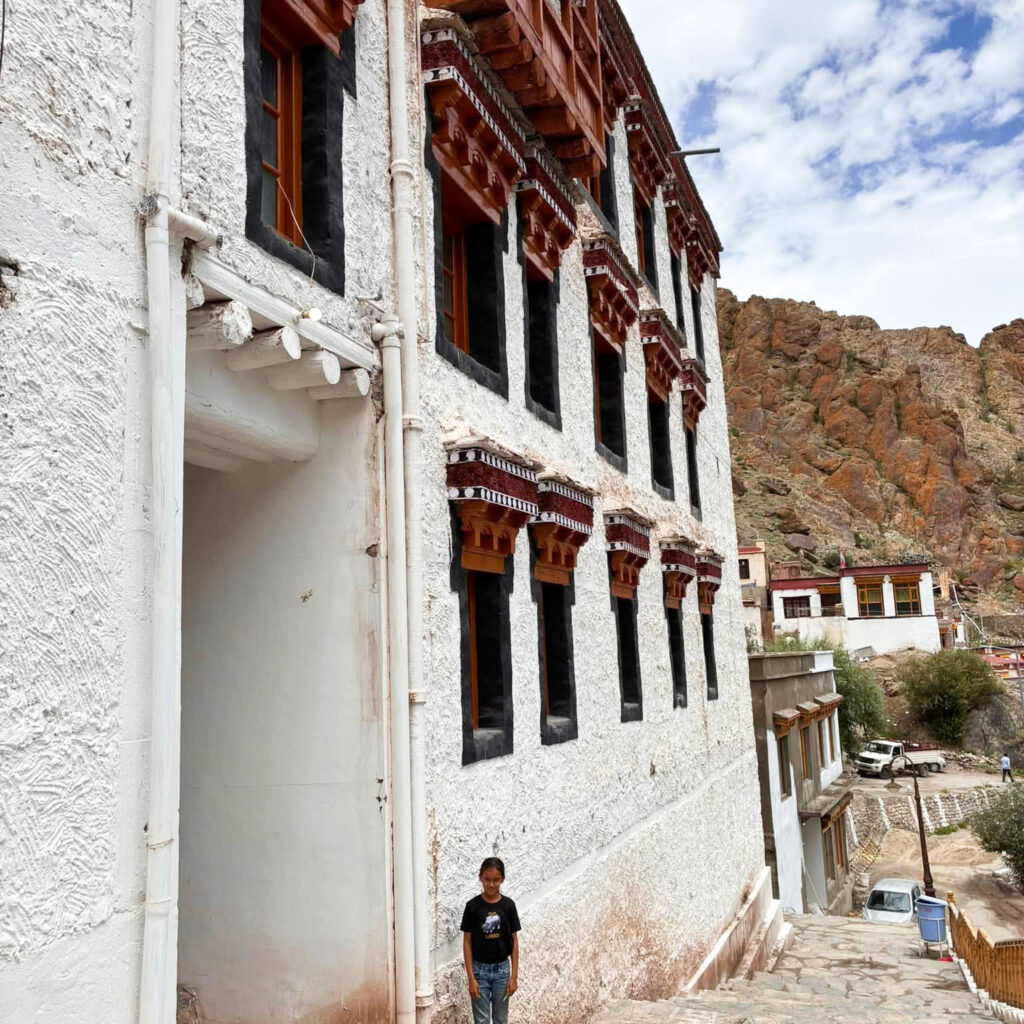
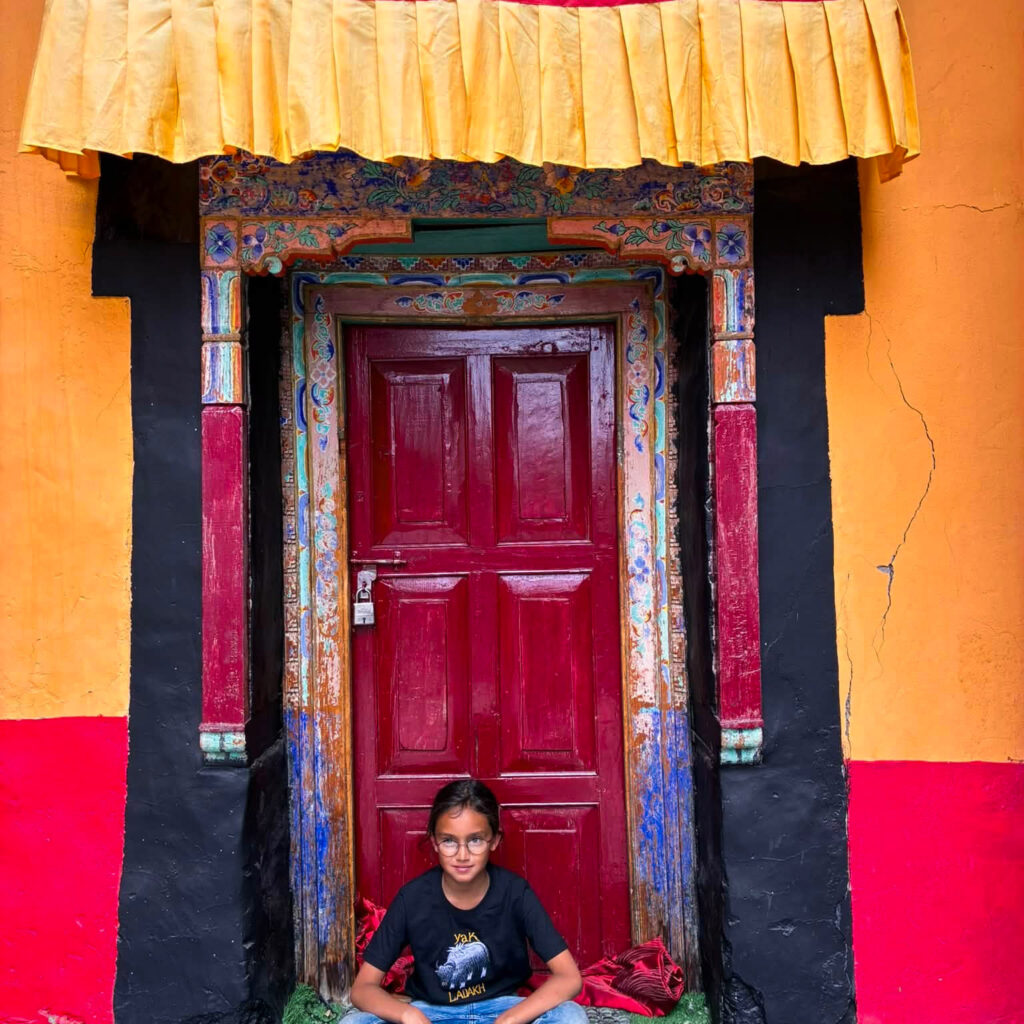
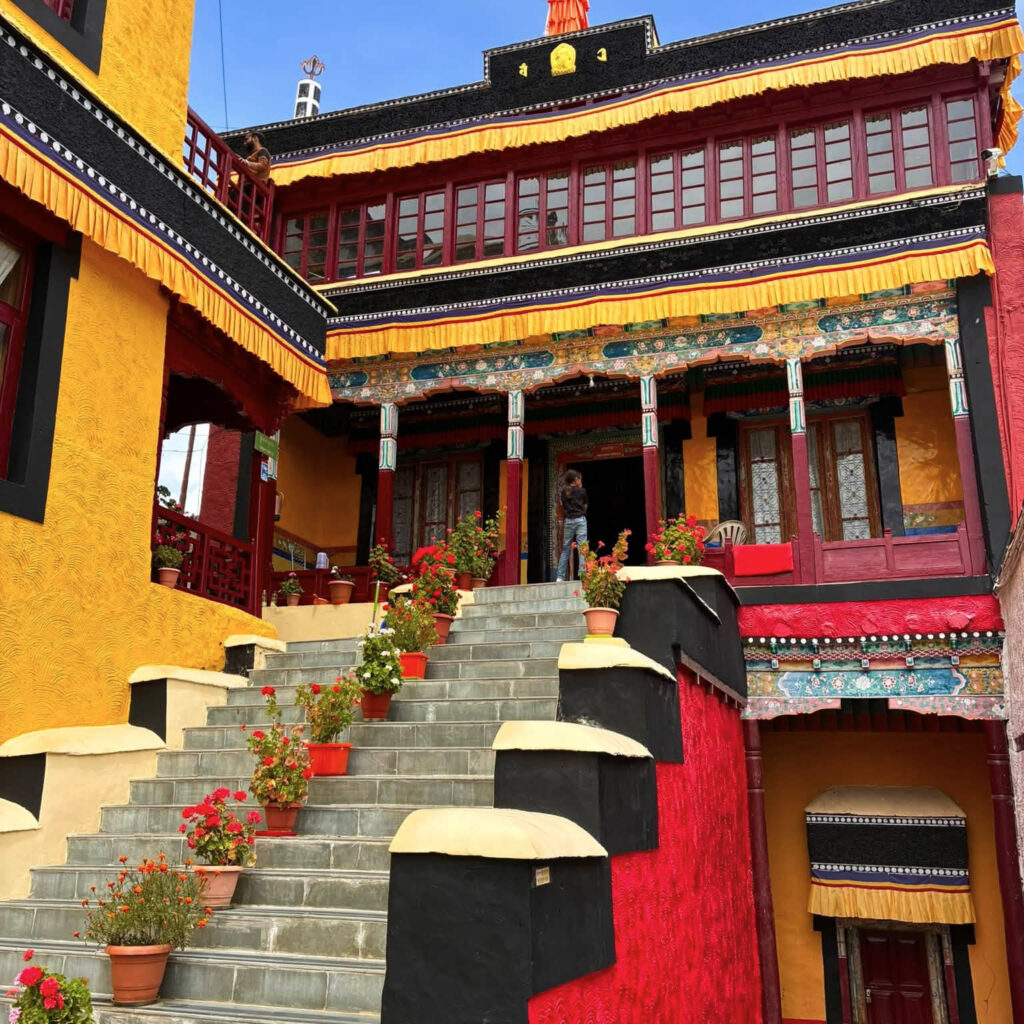
Although Thiksey appears predominantly white from the valley, its courtyards are filled with colour. Deep red walls, yellow façades, black window frames and elaborately painted wooden balconies create a vivid contrast with the pale mountains. Every doorway seemed carefully framed and decorated. Painted beams displayed Buddhist symbols and floral patterns, while rows of windows overlooked the courtyards below.
The Maitreya Temple at Thiksey
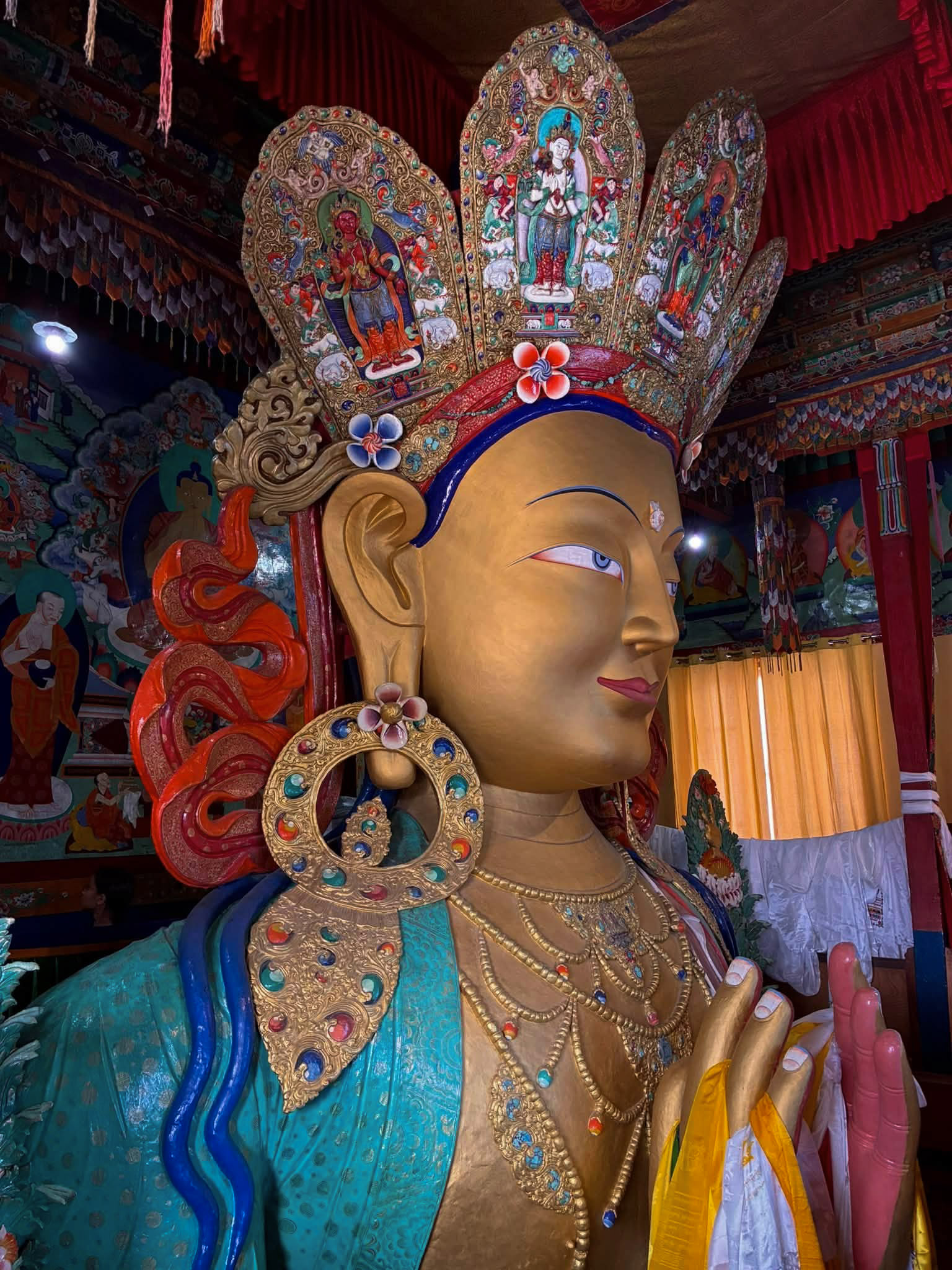
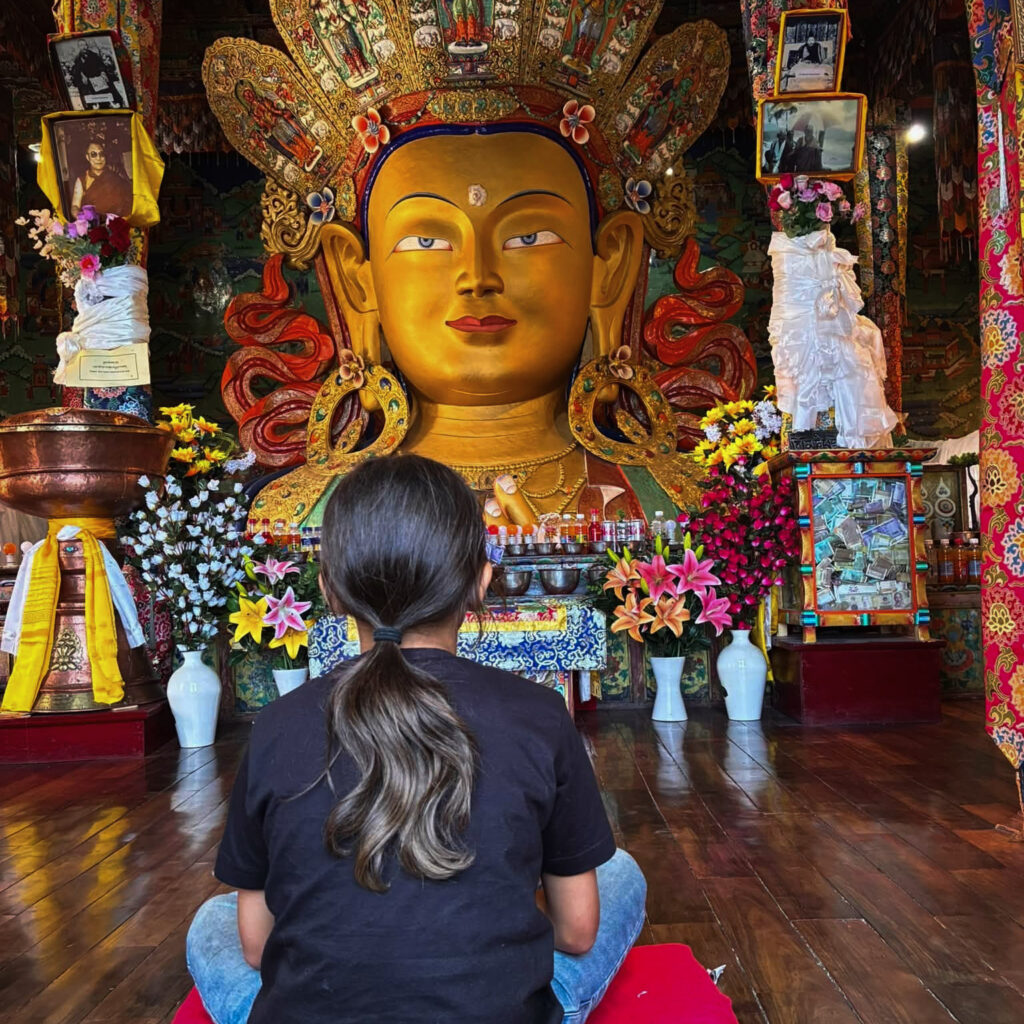
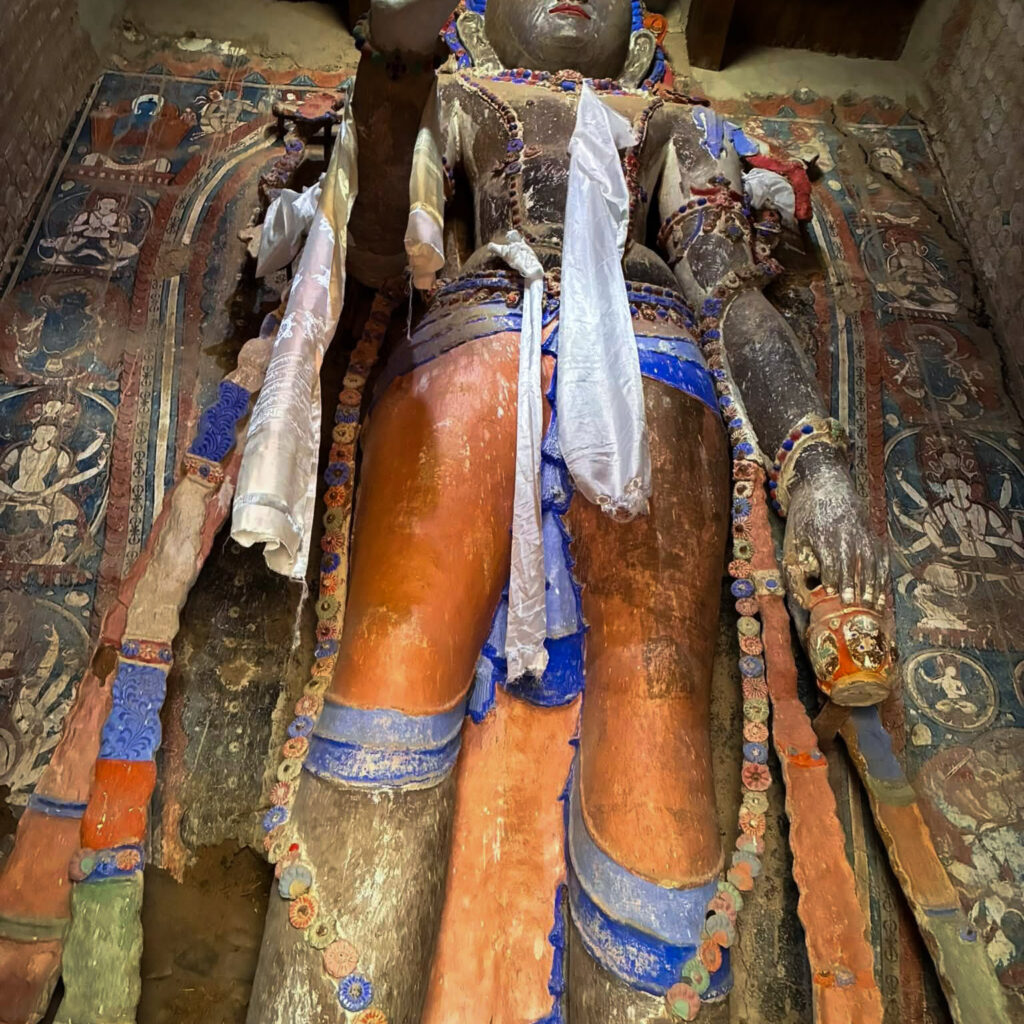
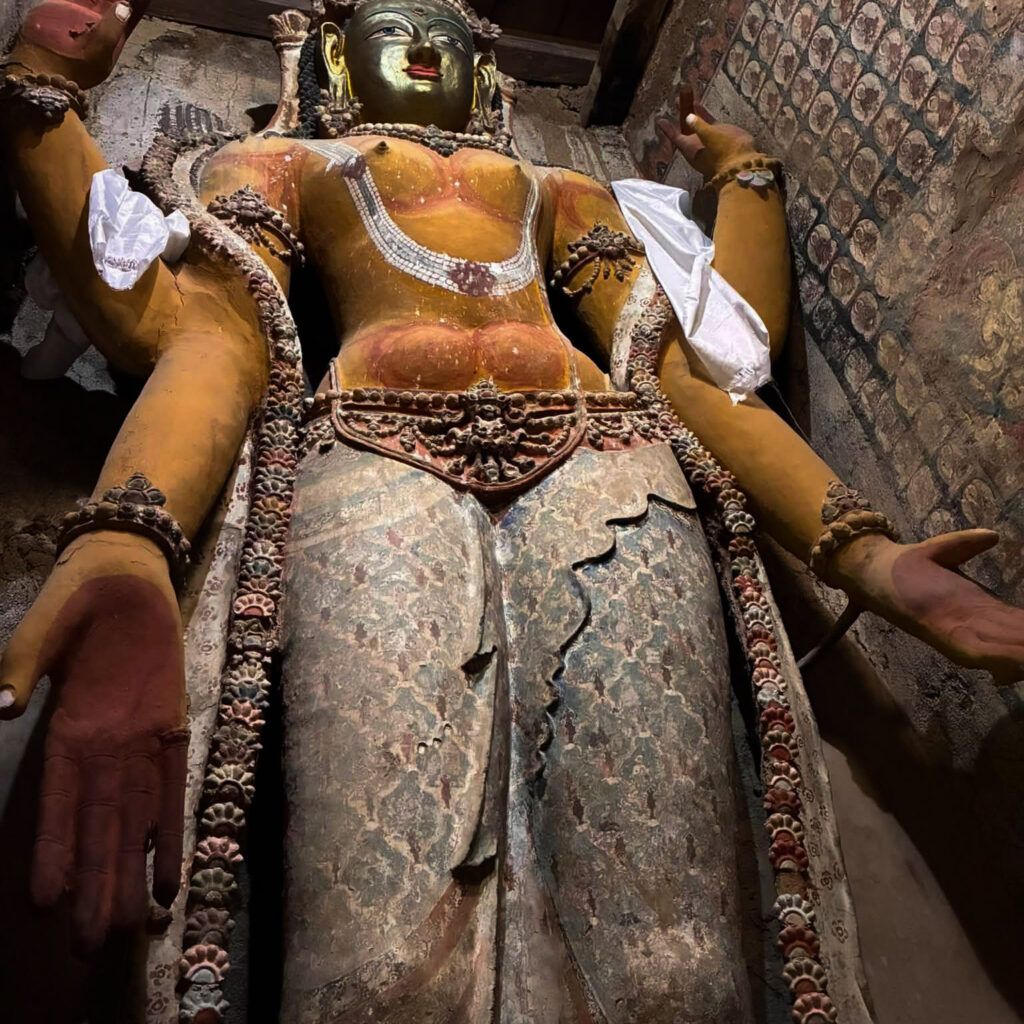
One of Thiksey’s greatest treasures is its approximately 15-metre-high statue of Maitreya, the Buddha of the future. The enormous figure occupies two storeys of the temple. Its serene face is surrounded by an elaborate crown, painted decorations and finely worked details. Despite its size, the statue has a remarkable sense of calm. Thiksey also contains assembly halls, shrines, thangkas, manuscripts and images of Buddhist teachers and protective deities. It remains a living religious centre rather than a monument maintained solely for visitors.
Panoramic views from Thiksey
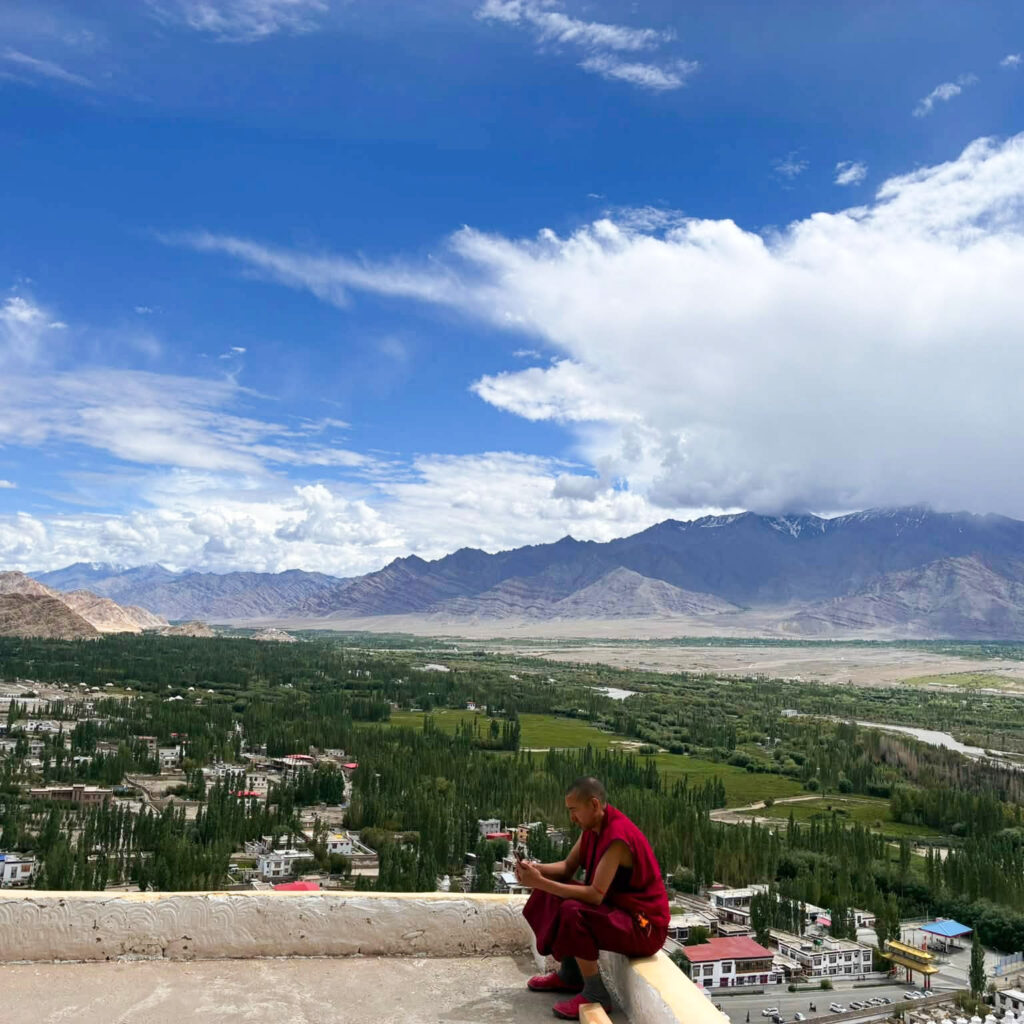
From the upper terraces, the Indus Valley stretched beneath us in shades of green, brown and grey. Poplar trees and cultivated fields marked the villages, while barren mountains filled the horizon. The view alone would have made Thiksey worth visiting. The contrast between the fertile valley and the surrounding high-altitude desert captured the essence of Ladakh.
Likir Monastery: tranquillity in western Ladakh
Likir lies approximately 50–55 kilometres west of Leh. A smaller road leaves the main Srinagar–Leh highway and climbs through Likir village towards the monastery. The monastery occupies a beautiful position at an elevation of approximately 3,700 metres, surrounded by bare mountains and overlooking the cultivated valley below. Likir was founded in the 11th century and later became associated with the Gelugpa school of Tibetan Buddhism. Although parts of the complex have been reconstructed, it remains one of the historically important Ladakh monasteries. Likir contains two assembly halls, religious sculptures, old manuscripts, thangkas, ceremonial costumes and ritual objects. Its best-known feature is a monumental outdoor statue of Maitreya. At approximately 23 metres high, Likir’s gilded Maitreya is considerably taller than the indoor statue at Thiksey. It sits above the monastery, facing the valley and surrounding mountains. Likir’s remote setting, colourful interiors and surrounding mountains recalled my visit to Tagong in western Sichuan, another centre of Tibetan Buddhist culture.
Quiet courtyards and painted walls at Likir
The courtyards were filled with painted beams, dark wooden doors and walls in warm shades of red, ochre and yellow. Likir felt quieter than Thiksey. There were fewer visitors, and its position away from the main road added to its sense of seclusion. The atmosphere invited us to slow down, sit in the courtyard, and observe the details instead of rushing from one prayer hall to another.
Alchi: the artistic treasure among Ladakh monasteries
Alchi lies approximately 65–70 kilometres west of Leh, close to the southern bank of the Indus. Unlike Thiksey and Likir, Alchi does not crown a dramatic hilltop. Its ancient temples stand at village level, surrounded by trees, mud-brick walls, narrow lanes, cafés and guest houses. Their plain exteriors provide little indication of what lies inside. Alchi is not a single monastery building but a complex of temples, chortens and courtyards. Its principal structures include the Dukhang or Assembly Hall, the three-storeyed Sumtsek and the Manjushri Temple. Local tradition associates Alchi with the great translator Rinchen Zangpo, who lived between 958 and 1055. More recent scholarship generally dates the principal surviving temples to the 12th and early 13th centuries. Inscriptions link their construction to members of the local Dro clan, while the paintings and sculptures demonstrate strong artistic connections with medieval Kashmir.
The ancient paintings of Alchi Monastery
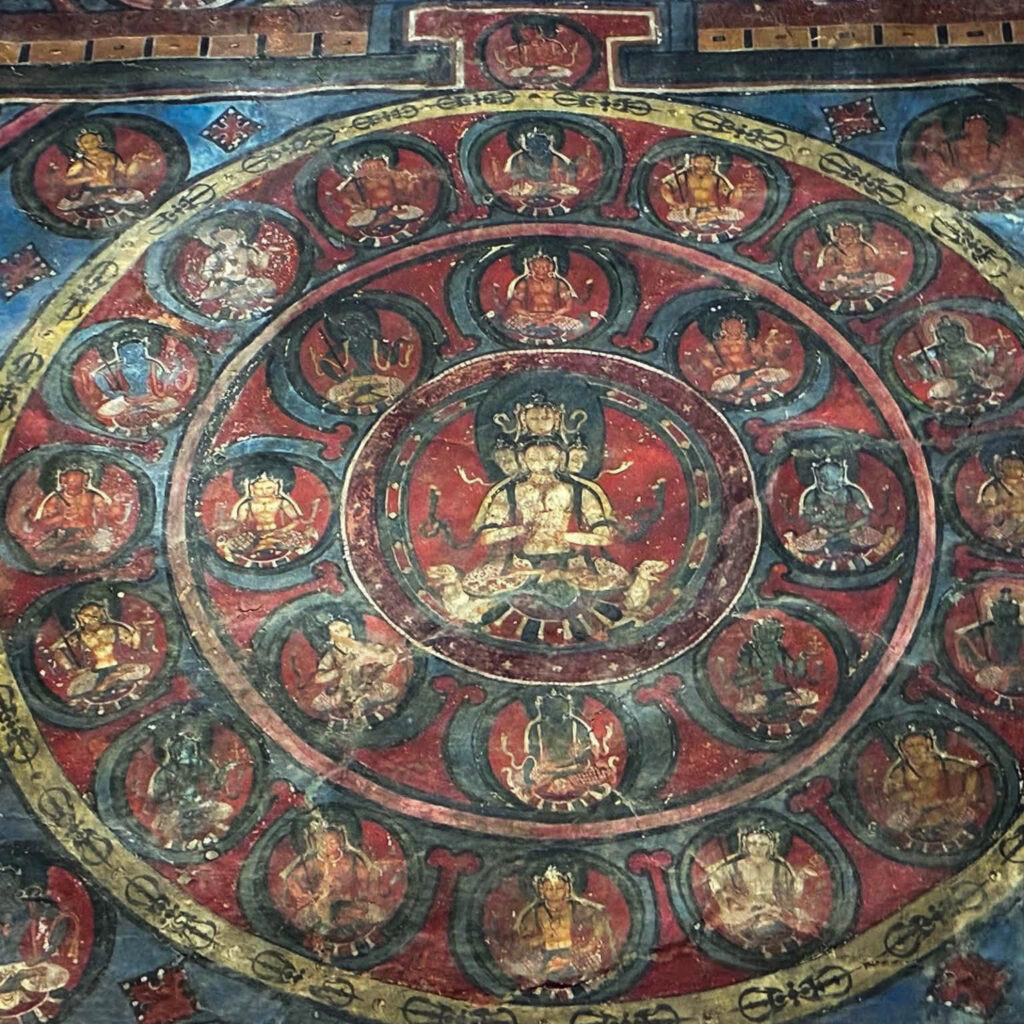
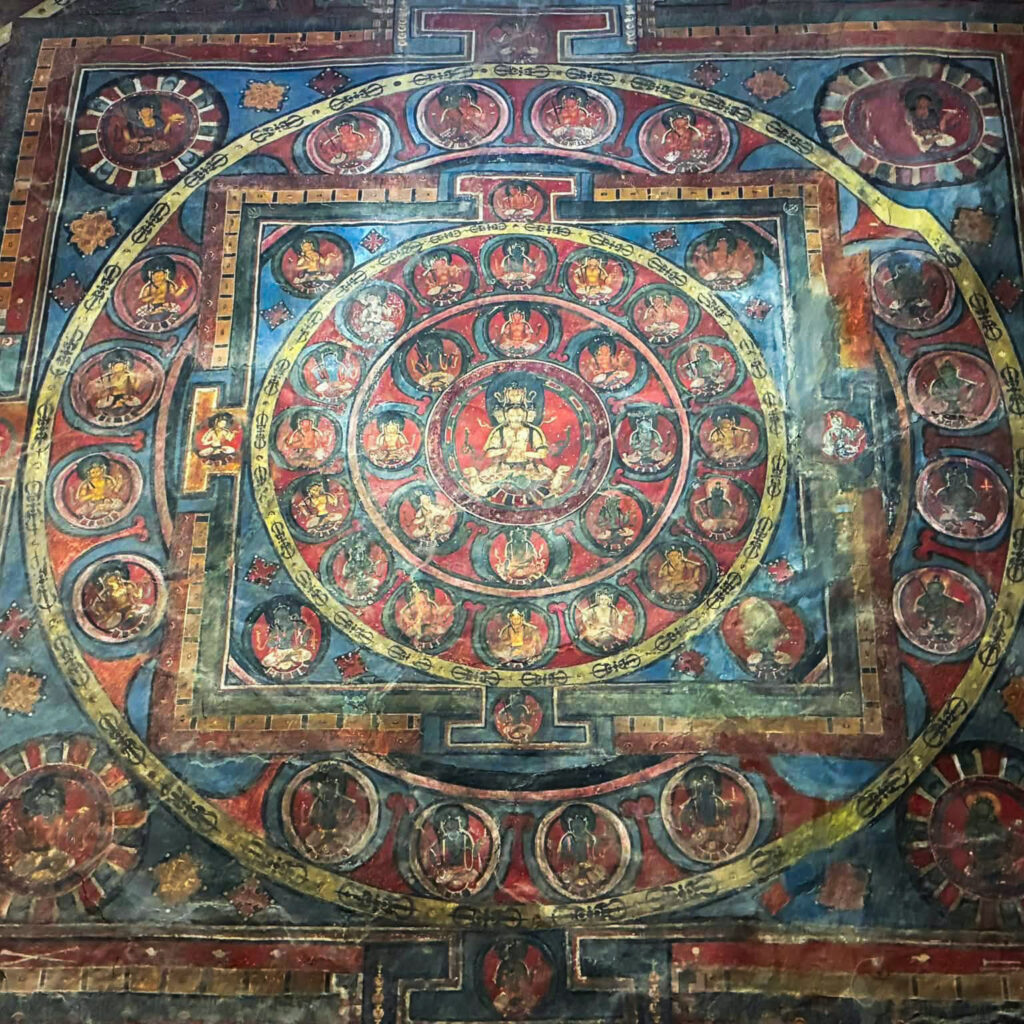
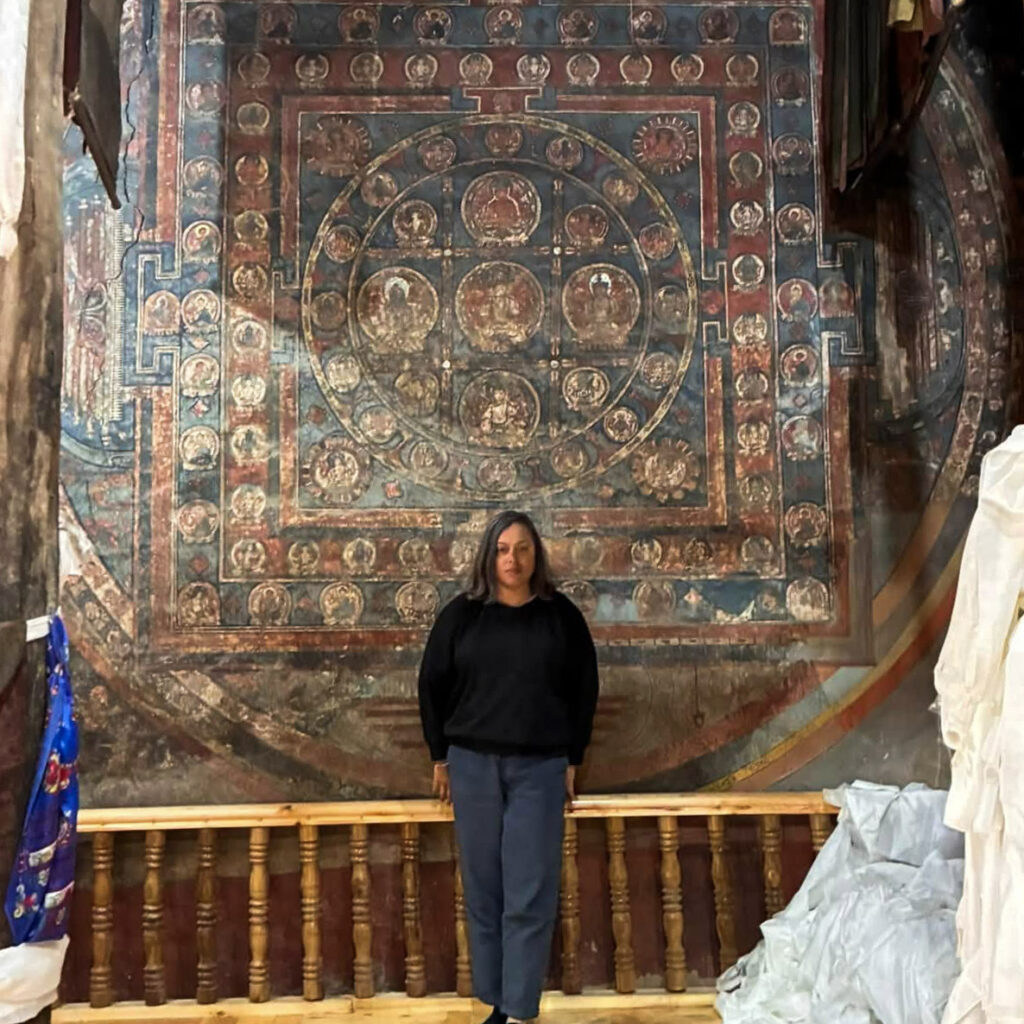
The real treasures of Alchi are concealed within its dark temples. The walls are covered with Buddhas, bodhisattvas, mandalas, goddesses, protective deities and miniature narrative scenes. Unlike the later Tibetan-style paintings found in many Ladakh monasteries, Alchi’s murals reveal a powerful Kashmiri influence. Their faces, jewellery, clothing and decorative details preserve traces of a cultural world in which Ladakh, Kashmir, Tibet and Central Asia were linked by trade, religion and artistic exchange. The paintings contain an extraordinary amount of detail. Textile patterns, palaces, jewellery, sacred places and tiny human figures are incorporated into much larger religious compositions. The monumental clay sculptures inside the Sumtsek are dressed in painted garments containing miniature scenes and elaborate patterns. Their scale is impressive, but it is the delicacy of the decoration that makes them unforgettable. Photography is prohibited inside Alchi’s principal temples. The old pigments are extremely fragile and vulnerable to light, moisture, and increasing visitor pressure.
Alchi rewards patience
Alchi cannot be understood properly during a hurried visit. Its beauty emerges gradually as your eyes adjust to its dark interiors. Painted ceilings, carved columns, wooden doorframes and shadowy figures reveal themselves slowly. A knowledgeable guide is useful here because the complex symbolism can otherwise be difficult to interpret. After visiting the temples, Alchi is also the best place on the route to stop for lunch. The village has simple cafés, restaurants, guest houses and small shops close to the monastery complex.
Mangyu: a hidden Ladakh monastery
Mangyu was the most secluded of the four Ladakh monasteries. Reaching it required leaving the main highway and following a smaller road into a narrow mountain valley. The detour was beautiful. Cultivated terraces curved across the slopes, poplar trees marked the village, and streams brought unexpected greenery to an otherwise dry landscape. Colourful stone mountains rose on both sides, their red, purple and grey layers exposed beneath the clouds. There were few visitors, little commercial activity and none of the busy infrastructure found around the better-known Ladakh monasteries. Mangyu felt less like a tourist attraction and more like a fragile repository of village history. The temple complex belongs to the same broad artistic tradition as Alchi and Sumda Chun. Its paintings and sculptures preserve important examples of early western Himalayan Buddhist art.
Mangyu’s fragile artistic heritage
Mangyu’s complex contains temples associated with Vairocana, Shakyamuni and Avalokiteshvara. One of its important works is an eleven-headed representation of Avalokiteshvara, the bodhisattva of compassion. Some of Mangyu’s paintings have deteriorated, making their preservation increasingly urgent. The surviving murals are particularly valuable because they help scholars understand the relationship between Mangyu and the better-known temples at Alchi. Mangyu’s vulnerability made the visit especially moving. It reminded us that the historic Ladakh monasteries are not indestructible. Their mud-brick walls, wooden structures, and ancient pigments face changing weather, water damage, temperature fluctuations, and the effects of tourism.
Four Ladakh monasteries, four different experiences
Although these four Ladakh monasteries share a Buddhist heritage, they should not be treated as different versions of the same attraction.
| Ladakh monastery | What makes it special |
|---|---|
| Thiksey | Monumental hilltop architecture, a large indoor Maitreya statue and panoramic valley views |
| Likir | A peaceful mountain setting, active monastic community and enormous outdoor Maitreya |
| Alchi | Early murals, Kashmiri-influenced artwork, monumental sculptures and village-level temples |
| Mangyu | Seclusion, fragile early paintings and a beautiful mountain-village setting |
Thiksey impressed us with its scale. Likir offered space and tranquillity. Alchi demanded close observation, while Mangyu gave us the feeling of discovering a place still outside Ladakh’s conventional tourist circuit.
Practical guide to the Ladakh monasteries
How far are the monasteries from Leh?
- Thiksey: Approximately 19 kilometres southeast of Leh
- Likir: Approximately 50–55 kilometres west of Leh
- Alchi: Approximately 65–70 kilometres west of Leh
- Mangyu: Approximately 70–80 kilometres from Leh, depending on the road used
Because Thiksey lies in the opposite direction from the other three monasteries, it is more practical to visit it separately.
How many days are required?
Two days are ideal:
- Spend half a day visiting Thiksey.
- Use one full day for Likir, Alchi, and Mangyu.
Travellers with limited time can visit all four in one long day, but the itinerary will feel rushed.
What are the road conditions?
The main roads from Leh are generally paved and in good condition. The approaches to Thiksey, Likir and Alchi are manageable in a normal car. The road to Mangyu is narrower and may contain broken asphalt, gravel, tight bends, or temporary construction. Heavy rain can cause rockfalls or minor landslides, so recent conditions should be checked locally.
Where should you eat?
Alchi is the easiest lunch stop. It has several simple cafés, restaurants, and guest houses near the monastery complex. Food choices at Likir and Mangyu are limited, so carry drinking water and snacks. Thiksey may have basic refreshments nearby, but these should not be assumed outside the main travel season.
Do you need a guide?
A guide is not compulsory, but a knowledgeable local guide makes an enormous difference at Alchi and Mangyu. Without an explanation of the imagery and artistic history, it is easy to miss important details.
Do you need permits?
Special border-area permits are generally not required for these four Ladakh monasteries. However, visitors should carry identification, and foreign travellers should confirm current requirements locally.
Tips for visiting Ladakh monasteries
- Dress modestly and cover your shoulders and knees.
- Remove hats before entering prayer halls.
- Walk clockwise around chortens and sacred structures.
- Ask before photographing monks or residents.
- Check photography rules before entering each temple.
- Never use flash around old paintings.
- Do not touch murals, sculptures, manuscripts or ritual objects.
- Keep conversations quiet inside prayer halls.
- Carry small-denomination cash for entrance fees and donations.
- Bring water, sun protection and a light jacket.
- Wear shoes that can be removed easily.
- Allow your eyes time to adjust to dark interiors.
- Visit Thiksey early in the morning for a quieter atmosphere.
- Allow at least 90 minutes for Alchi.
- Confirm that Mangyu’s temples will be open before making the detour.
- Remember that Ladakh monasteries are active sacred places, not merely sightseeing attractions.
These Ladakh monasteries also brought back memories of my journeys through the Tibetan regions of China. You can explore those stories in my China travel archives
Frequently asked questions about Ladakh monasteries
Can Thiksey, Alchi, Likir and Mangyu be visited in one day?
Technically, yes, but it would be a long and rushed excursion involving at least six to seven hours of driving. Two days are strongly recommended.
Which Ladakh monastery should I visit first?
Visit Thiksey early in the morning on a separate day. On the western circuit, visit Likir first, followed by Alchi and Mangyu.
Which is the most beautiful Ladakh monastery?
That depends on your interests. Thiksey has the most dramatic architecture, Likir offers a peaceful mountain setting, Alchi contains the most celebrated historic artwork, and Mangyu provides the greatest sense of seclusion.
Which monastery has the largest Maitreya statue?
Likir’s outdoor Maitreya is approximately 23 metres high. Thiksey’s indoor Maitreya is approximately 15 metres high and occupies two storeys of its temple.
Which Ladakh monasteries have the oldest paintings?
Alchi and Mangyu preserve some of Ladakh’s earliest surviving Buddhist paintings. Their artwork belongs to an early western Himalayan tradition with strong Kashmiri influences.
Is photography allowed inside Ladakh monasteries?
Rules vary between monasteries and individual temples. Interior photography is frequently prohibited at Alchi. Always ask permission and never use flash near historic paintings.
Are the monasteries suitable for children?
Yes, although children should be supervised inside the temples because the spaces are sacred and the artworks are fragile. The steep steps at Thiksey and Likir may also require care.
Is Mangyu worth the detour?
Yes, especially for travellers interested in early Buddhist art, traditional villages and places outside the main tourist circuit. Its isolation is a large part of its appeal.
Are the Ladakh monasteries difficult to visit at high altitude?
Thiksey, Alchi and Mangyu involve relatively moderate walking, although Thiksey has numerous stairs. Likir is situated at approximately 3,700 metres, and the altitude can make climbing more tiring. Travellers should acclimatise in Leh before attempting a full day of sightseeing.
Why these Ladakh monasteries are worth visiting
Thiksey, Alchi, Likir and Mangyu offered much more than a conventional day of monastery sightseeing. Thiksey presented the monumental face of Ladakhi Buddhism: a vast religious complex rising above the Indus Valley. Likir combined an active monastic tradition with a peaceful mountain setting. Alchi revealed an intimate world of ancient paintings, monumental sculptures and artistic connections stretching from Kashmir to Tibet. Mangyu took us farther from the familiar tourist trail, into a quiet village where fragile temples preserve an extraordinary cultural inheritance. These historic Ladakh monasteries also reminded us how vulnerable the region’s heritage is. Traditional mud-brick buildings and ancient paintings face increasing pressure from heavy rainfall, water seepage, changing temperatures and growing visitor numbers. Travelling responsibly means moving slowly, respecting photography restrictions and remembering that these are not simply monuments. They are sacred places, community institutions and irreplaceable records of Himalayan history. Our monastery visits formed part of a longer journey covering Delhi, Srinagar, Sonmarg, Mushkoh Valley, Garkon, Leh and Nubra Valley. The trip was planned and organised by my friend Shuib Kaw of Versatile Adventure Holidays. He is available at +91 76783 57621 or [email protected]. I paid for this trip myself, and if I am promoting Versatile Adventure Holidays, it is because they did a great job organising our journey through some of the remotest parts of Ladakh. You can read more about the complete experience in An offbeat Ladakh trip with Versatile Adventure Holidays.
Follow the Ladakh series
- AN OFFBEAT LADAKH TRIP
- KASHMIR TO KARGIL ON SRINAGAR LEH ROAD
- KARGIL TO LEH
- LEH (ED) IN LADAKH
- MOUNTAINS AND MONASTERIES
- THE LADAKH FESTIVAL
- THE BEAUTIFUL BLUE PANGONG LAKE
- THE WHITE DESERT AT NUBRA VALLEY
- 2012 LADAKH ITINERARY AND TRIP COSTS
- OFFBEAT LADAKH ITINERARY 2026
- MUSHKOH VALLEY TO BATALIK ROAD TRIP
- HIMALAYAN BEAR HABITAT OF MUSHKOH VALLEY
- BATALIK TO LEH ROUTE
RESPONSIBLE TRAVELING-BECAUSE I CARE


