
How Weather Can Change Football Matches
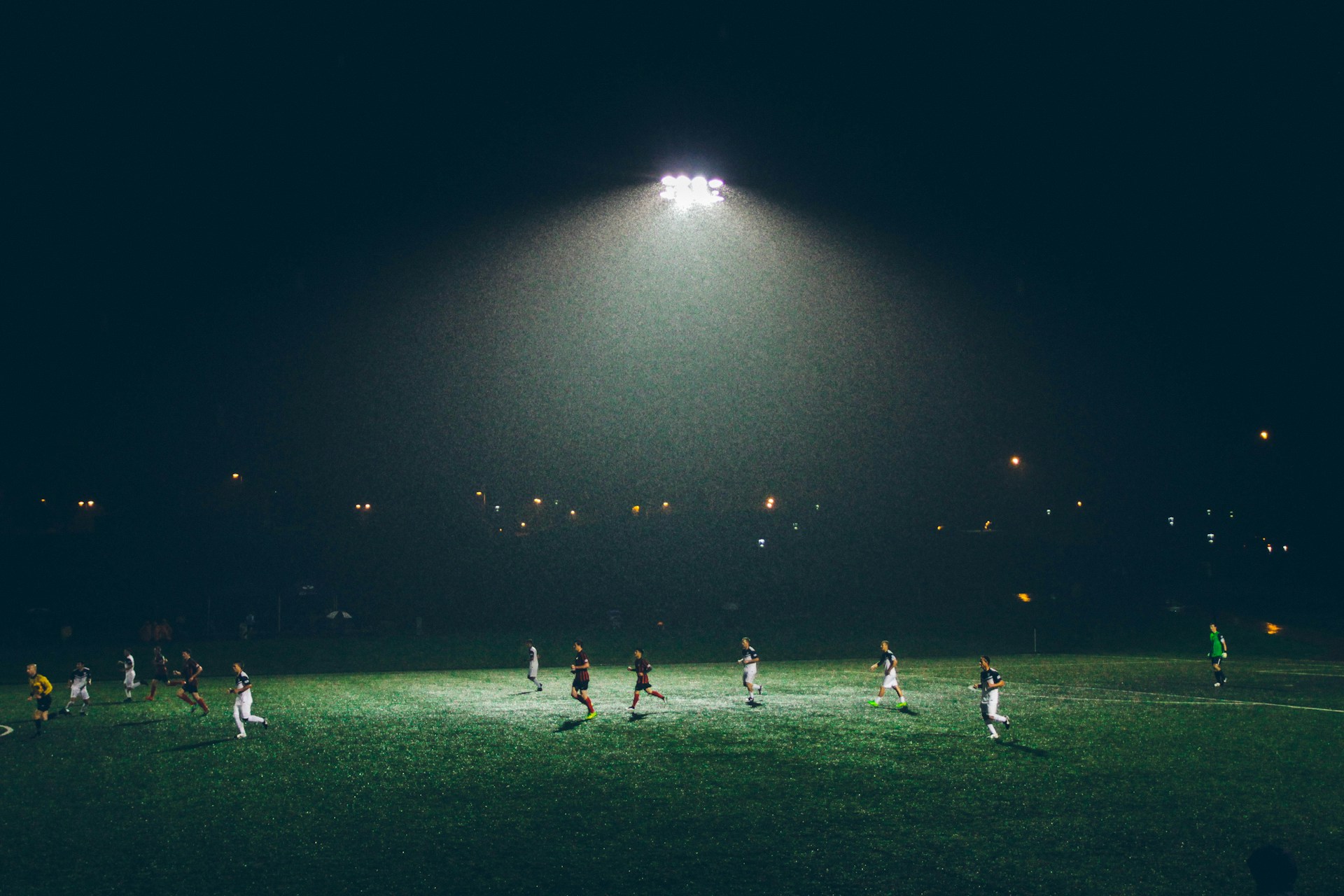
Managers spend weeks studying an opponent’s shape, pressing triggers, and set-piece routines. Then a squall rolls in from the coast and none of it matters as much as expected. Weather doesn’t just make a match uncomfortable to watch; it measurably changes how the ball moves, how football players cover ground, and how many goals actually go in. Researchers have been quantifying this for years, and the numbers are far more specific than “it was a bit blustery out there.”
Wind and Rain Turn Football Into a Different Sport
Wind is the most disruptive single variable in outdoor football, and the threshold at which it starts to matter is well documented. A widely cited study by Bray and colleagues (2008) found that wind speeds above roughly 20 km/h (about 12 mph) significantly affect both passing accuracy and shooting precision. The 2023 Premier League clash between Chelsea and Manchester City is a clean real-world example. Played in gusts reported around 30 mph, the match ended 0-0, with both sides visibly unable to string together their usual passing sequences.
| Condition | Documented Effect |
| Wind above 20 km/h (~12 mph) | Significant drop in passing accuracy and shooting precision |
| Wind above 15 to 20 mph | Teams shift toward shorter passes and run-heavy strategies |
| Rainy conditions | Passing production falls by roughly 12% |
| Wet 2023-24 Premier League matches | League averaged 0.3 fewer goals per game compared to dry matches |
| Indoor/dome stadium matches | Scoring averages run notably higher than comparable outdoor games |
| 2023-24 Premier League season | Around 35% of matches had measurable wind or rain |
| Chelsea vs Manchester City (2023) | Played in ~30 mph gusts, finished 0-0 |
| High humidity (NFL research, transferable logic) | Linked to unexpected shifts in scoring versus pre-match projections |
None of this is really a surprise once you think about the physics involved. A ball moving through heavy crosswind behaves differently than the same pass in still air, and coaches know it, which is exactly why tactics change mid-match once conditions shift.
How Teams Actually Adapt to Wind and Rain:
- Wingers get instructed to cut passing lanes shorter rather than attempt long diagonals.
- Goalkeepers reduce long distribution and favor safer, shorter build-up play.
- Set-piece takers adjust technique entirely, since a normal in-swinging corner can behave unpredictably in crosswind.
- Managers favor direct, run-heavy approaches over intricate passing sequences.
- Full-backs are told to prioritize simple, safe clearances over risky overlapping runs.
- Pressing intensity often drops, since chasing a slick, unpredictable ball wastes more energy than usual.
- Substitutions get planned earlier, anticipating fatigue accelerated by wet-pitch conditions.
- Analysts increasingly treat weather as a genuine tactical modifier rather than background noise.
Rain and wind rarely cancel a match outright anymore, but they quietly rewrite the game plan of both benches within the first ten minutes.
Heat, Cold, and the Physical Limits of a 90-Minute Match
Temperature affects football differently than wind does. Instead of changing the ball’s flight, it changes what a human body can sustain for a full match. Researchers Mohr, Krustrup, and Bangsbo found that in the final 15 minutes of matches played around 30°C, high-intensity running dropped sharply, with some players’ muscle temperature exceeding 41°C by full time. That physiological reality was part of why the 2022 World Cup in Qatar was moved to November and December, away from the region’s punishing summer heat, and played in cooled stadiums.
| Scenario | Documented or Reported Effect |
| Matches near 30°C, final 15 minutes | Marked drop in high-intensity running; muscle temperature exceeding 41°C recorded |
| Extreme heat above 40°C (relevant to Qatar 2022 planning) | Physiological responses largely unstudied at that intensity before the tournament |
| Bundesliga/Serie A matches below about -4°C (25°F) | Roughly 7% lower scoring and a 22% increase in reported muscle injuries |
| Bayern Munich vs Borussia Dortmund (December 2022) | Reported xG around 35% below historical average for the fixture |
| High humidity matches | Linked to reduced sprint capacity and altered late-game intensity |
| Cold-weather leagues generally | Higher rate of soft-tissue injuries tied to reduced muscle elasticity |
| Well-acclimatized, hydrated teams in heat | Better maintain performance and create more scoring chances late in matches |
| Poorly acclimatized teams in heat | Greater fatigue onset, particularly affecting speed over endurance |
The Bayern-Dortmund example is a useful reminder that cold weather doesn’t just slow players down physically; it visibly changes the quality of chances created, not only the running totals in a post-match report.
Why Temperature Extremes Reshape a Match:
- Heat primarily damages speed and explosiveness rather than raw stamina.
- Cold weather stiffens muscles, raising the risk of strains and tears during sudden sprints.
- Substitution patterns shift earlier in extreme heat to manage player safety.
- Hydration strategy becomes a genuine tactical factor, not just a medical footnote.
- Cooling breaks, introduced at several major tournaments, directly interrupt game rhythm and momentum.
- Teams from hot-climate leagues often cope better when temperatures spike unexpectedly elsewhere.
- Referees have discretion to add cooling stoppages once wet-bulb temperature crosses certain thresholds.
- Late-match fatigue in heat correlates with a measurable rise in defensive errors.
A cold snap and a heatwave produce opposite symptoms, sluggish muscles versus drained legs, but both end up costing teams the same thing: control in the final third.
Altitude and the Fixture That Statistics Still Can’t Explain
Altitude is the strangest weather-adjacent variable in football, because it isn’t weather at all. It’s oxygen, or the lack of it, and visiting teams have never fully solved it. Just as analysts at RajBet Casino factor in countless variables when evaluating sporting events, altitude remains one of the few elements that can dramatically alter expectations. The clearest example remains Bolivia’s 6-1 win over Argentina in a 2009 World Cup qualifier, played in La Paz at roughly 3,600 meters above sea level. Argentina, a squad packed with players who had dominated at sea level all season, simply ran out of oxygen.
FIFA briefly banned international matches above 2,500 meters in 2007 before reversing the decision after fierce objections from Bolivia, Ecuador, and other high-altitude nations.
| Factor | Documented Impact |
| Bolivia vs Argentina, La Paz (2009 qualifier) | Bolivia won 6-1 against a heavily favored Argentina squad |
| La Paz altitude | Approximately 3,600 meters above sea level |
| FIFA’s 2007 altitude ban attempt | Restricted matches above 2,500 meters, later overturned |
| Reduced oxygen availability | Documented to impair both physical and technical performance in visiting players |
| Acclimatization period | Sports scientists generally recommend arriving well before matchday to adjust |
| Atalanta’s Bergamo home fixtures | Cited as a milder example where altitude compounds fatigue, especially combined with cold or dry air |
| Home teams at altitude | Consistently show a measurable competitive advantage over unacclimatized visitors |
| Cardiovascular strain at altitude | Elevated heart rate for equivalent physical output compared to sea level |
The Bolivia result isn’t really an upset in the usual sense. Altitude is one of the only weather-related factors where a form guide becomes almost irrelevant the moment the away team steps off the plane.
Why Altitude Is Different From Every Other Weather Factor:
- It affects every player on the visiting side identically, regardless of individual quality.
- Short acclimatization periods provide only partial physiological adjustment.
- Home teams effectively gain a built-in structural advantage that has nothing to do with tactics.
- Reduced oxygen impairs decision-making speed, not just physical output.
- Unlike rain or wind, altitude cannot be adapted to mid-match through tactical changes.
- Governing bodies have repeatedly debated banning it, unlike any other environmental factor.
- Long-term altitude training can partially offset the disadvantage for elite squads that plan ahead.
- The effect is consistent enough that statisticians treat it as a near-permanent home advantage multiplier.
Wind ruins a single afternoon. Heat drains a single half. Altitude, by contrast, has been shaping results in specific cities for generations, and no amount of scouting has ever fully cancelled it out.
Conclusion
Weather isn’t a footnote to football, it’s one of the sport’s most consistent variables, and the data behind it keeps getting more precise. Wind changes how the ball moves, heat changes what the body can sustain, and altitude changes the rules of the contest entirely before kickoff. The pitch may look the same every week. The conditions rarely are.
Follow the rest of the Top Experiences series
- TOP TWENTY THINGS TO DO IN EGYPT
- WHY YOU SHOULD VISIT MALTA
- TOP FUN THINGS TO DO IN HAMPI
- 10 HISTORICAL PLACES TO ROAM ACROSS THE WORLD
- 10 HISTORICAL MARVELS OF ITALY
- 10 BEST SHOWS IN EUROPE YOU MUST SEE
- DUBAI THRILLS: 7 MUST-DO ACTIVITIES
- 10 HISTORICAL MARVELS IN TURKEY TO ENJOY WITH KIDS
- MOST ENCHANTING PALACES IN EUROPE
- IN‑BETWEEN MOMENTS IN ASPEN
- BRECKENRIDGE SKI ITINERARY
RESPONSIBLE TRAVELING-BECAUSE I CARE