
Coastal Cities Were Built to Be Seen From the Water
I have arrived in most places by air, and for years I did not think of that as a choice. It was simply how getting somewhere worked. Then I came into a harbour on a boat, and the city arranged itself in front of me in a way no taxi ride from an airport has ever managed. It took me a while to understand why the difference felt so large. It is not about romance or slowness, though both are pleasant. It is that a great many coastal cities were designed to be looked at from exactly that angle, and arriving any other way means seeing the back of something built to be seen from the front.
The Facade Was Always Facing the Sea
For most of human history, the sea was the road. Goods, armies, plague and news all came by water, and a port city organised itself accordingly. Its most impressive buildings faced the harbour. Its fortifications faced the harbour. Its churches and customs houses and merchant palaces were positioned so that a ship approaching would understand, before it docked, what kind of place this was. That was not decoration. It was communication, and often intimidation. Some of these harbour fronts are now recognised precisely for that composition. Malta’s capital is one. UNESCO describes the City of Valletta as one of the most concentrated historic areas in the world, built by the Knights of St John on a peninsula between two natural harbours. You cannot read that peninsula from inside it. The shape of the thing, the reason it is where it is, only makes sense from the water it was built to command. The same is true of Dubrovnik. Its walled old city sits on the Dalmatian coast with its fortifications intact, and those walls were oriented toward the threat, which came by sea. Approach from the landward side and you arrive at a car park. Approach from the water and you arrive at the argument.
What Luxury Mediterranean Cruises Change About the First Look
I was sceptical about this for a long time, mostly for the reasons everyone is sceptical. What changed my mind was the size question rather than the comfort question. Silversea runs smaller vessels through the region, and the practical difference with luxury Mediterranean cruises at that scale is which harbours they can physically enter, because the historic ports were built for historic ships. That matters more than it sounds. The old harbour of a Mediterranean city is usually small, shallow and right in the middle of the place. A vessel that fits into it delivers you into the historic core. A vessel that does not delivers you to an industrial terminal and a shuttle bus. Bonifacio in Corsica is the clearest example I know. The citadel sits on white limestone cliffs above a narrow inlet, and the approach from the sea is the whole point of the town. From the land, you see a car park and a gate. Trapani in western Sicily is another. A low working port, salt pans stretching along the coast, and a city that reveals itself gradually rather than all at once. I am not going to pretend a ship is the only way to see these places. It is simply the way they were designed to be seen.
Why the First Impression Sticks
There is something about the order in which you receive a place. Arrive by air and your first hour is an airport, a road, a sequence of suburbs, and then eventually a centre. By the time you see anything intended to impress you, you have already formed an impression from the least interesting part. Arrive by water and the sequence inverts. You see the composition first, then the detail, then the ordinary streets behind it. I find I remember cities I arrived at by sea with a clearer structure in my head. I know where the water is, which way the land rises, where the old part sits relative to the new. That mental map is harder to build from a taxi. Historians have made a version of this argument about the region as a whole. Britannica notes that the Mediterranean has been a highway of commerce, war and travel for millennia, connecting three continents. Every port on it was built with that traffic in mind.
The Cities That Reward It Most
If I were planning a route around this idea rather than around a list of sights, these are the arrivals I would prioritise.
- Valletta. Two harbours, a fortified peninsula, and an approach that explains four hundred years of Mediterranean history in about twenty minutes.
- Dubrovnik. The walls from the water, ideally early enough that the light is still low.
- Bonifacio. Cliffs, citadel, and a channel so narrow it feels like a mistake.
- Marseille. The Vieux-Port opening up with Notre-Dame de la Garde above it. France’s oldest port, doing what it has done since the Greeks founded it.
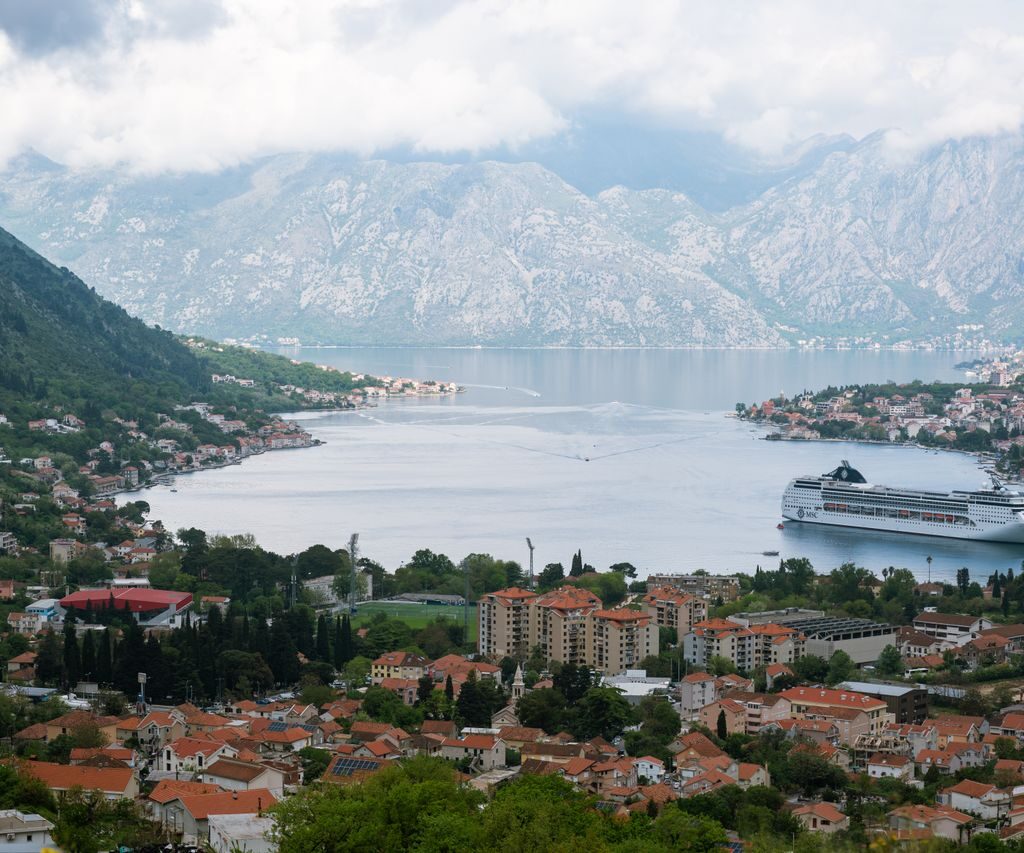
- Kotor. Technically a fjord-like bay rather than open sea, and the slow approach through it is among the most dramatic in Europe.
- Trapani. The least famous on this list and the one I would most want to see again.
- Naples deserves a mention too, though for the opposite reason. The bay is magnificent, and the city is honest about being a working port rather than a picture.
What I Take From It
I have stopped treating the journey as a cost and the destination as the value. When the two are the same thing, which is what a sea arrival at an old port actually is, the trip changes shape. You are not travelling to see something. You are seeing something while you travel. That is worth doing at least once in a region where nearly every city on the coast was built with a view of the water in mind, and a view from it in mind too. Next time I plan a Mediterranean trip, I am choosing the arrivals first and the sights second. I suspect the sights will sort themselves out.
Follow the rest of the Top Experiences series
- TOP TWENTY THINGS TO DO IN EGYPT
- WHY YOU SHOULD VISIT MALTA
- TOP FUN THINGS TO DO IN HAMPI
- 10 HISTORICAL PLACES TO ROAM ACROSS THE WORLD
- 10 HISTORICAL MARVELS OF ITALY
- 10 BEST SHOWS IN EUROPE YOU MUST SEE
- DUBAI THRILLS: 7 MUST-DO ACTIVITIES
- 10 HISTORICAL MARVELS IN TURKEY TO ENJOY WITH KIDS
- MOST ENCHANTING PALACES IN EUROPE
- IN‑BETWEEN MOMENTS IN ASPEN
RESPONSIBLE TRAVELING-BECAUSE I CARE


