
Top Villages to Explore on the Annapurna Circuit Trek: From Chame to Marpha
Trekking the Annapurna Circuit is more than a physical adventure; it’s a cultural journey woven through Nepal’s most charming mountain communities. Each village you pass offers its own rhythm of life, unique traditions, and memorable interactions. Whether it’s sipping tea in a cozy teahouse or watching prayer flags flutter beside ancient monasteries, these stops along the trail create the heart and soul of the trek.
The trail itself may lead you through some of the world’s most breathtaking landscapes, towering peaks, deep valleys, and dramatic passes, but it’s the human connections that make this trek unforgettable. Villages like Chame, Manang, and Marpha serve as cultural landmarks, each revealing a different layer of Himalayan life. You’ll hear the soft chants of monks, taste local dishes passed down for generations, and witness daily life unfolding against a backdrop of snow-capped mountains.
These villages also offer rest and recovery, both physically and spiritually. After a long day of trekking, there’s nothing like arriving in a warm village where locals greet you with a smile and a hot meal. Exploring these communities helps trekkers understand the rhythm of mountain life while also supporting the people who live there, making your journey meaningful for everyone involved. Exploring these communities helps trekkers understand the rhythm of mountain life while also supporting the people who live there.
Chame: The Gateway to the Upper Circuit
Chame, located at around 2,670 meters, is often the first major village on the upper Annapurna Circuit Trek where the environment begins to feel truly Himalayan. As the district headquarters of Manang, Chame is more than just a stopover; it’s a bustling, welcoming town nestled beside the Marsyangdi River and backed by dramatic cliffs and pine forests.
It has hot springs where tired trekkers can soak their legs and a collection of teahouses offering comfort and care. Views of Lamjung Himal dominate the skyline here, and the cultural shift becomes noticeable as Tibetan-influenced traditions start to appear. Trekkers often use Chame to recharge, resupply, and adjust to the rising altitude before pushing higher.

Pisang: Where the Scenery Turns Majestic
A day’s walk from Chame brings you to Pisang (3,200 meters), a village where the scenery becomes more open and dramatic. Pisang is split into two parts: Lower Pisang, which sits near the road and river, and Upper Pisang, perched higher on the hillside with traditional Tibetan homes and spectacular views.
Upper Pisang is the more scenic and culturally rich option, featuring a beautiful monastery that overlooks the valley. From here, you’ll start seeing grand Himalayan peaks like Annapurna II and IV up close. Pisang marks the transition into the dry, rugged landscapes typical of the Manang region and is a great place to begin exploring the higher, quieter trails of the Circuit.
Ghyaru and Ngawal: Hidden Gems Above the Road
For trekkers who choose the high route between Pisang and Manang, Ghyaru and Ngawal are absolute treasures. Located at over 3,500 meters, these villages offer a more remote, authentic Himalayan experience. Ghyaru is known for its medieval charm, stone houses, prayer wheels, stunning viewpoints, and a feeling of total serenity.
Ngawal, slightly larger, has a beautiful monastery and several comfortable lodges, making it a pleasant place to rest. These villages are often missed by trekkers taking the road route, but they’re worth the extra climb for the cultural depth and sweeping views of the Annapurnas and the Marsyangdi Valley.
Manang: Acclimatization Hub with Alpine Charm
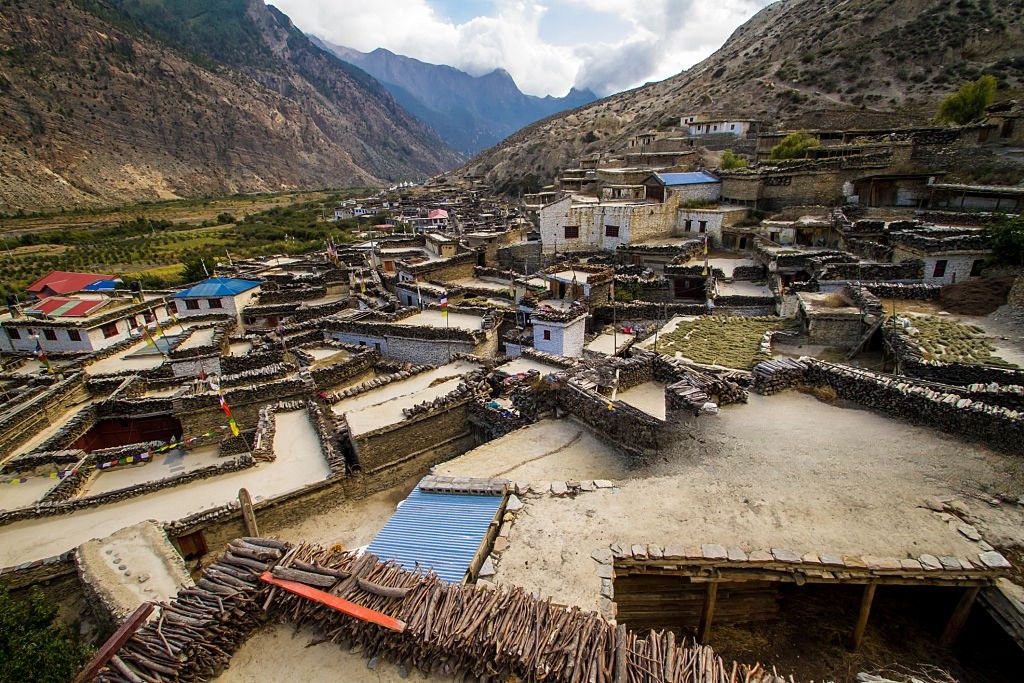
Manang (3,540 meters) is a vital acclimatization stop and a cultural crossroads. With its arid terrain, mountain backdrop, and bustling yet cozy atmosphere, it feels like a remote alpine town with a touch of sophistication. The town features bakeries, movie halls, gear shops, and a Himalayan Rescue Association clinic that gives daily altitude briefings.
Trekkers spend at least two nights here to adjust to the elevation. It’s also a base for side hikes, like the scenic routes to Ice Lake or Gangapurna Lake, which help with acclimatization and offer extraordinary photo opportunities. The local museum and monastery add to the cultural richness of this lively highland community.
Yak Kharka and Thorong Phedi: High-Altitude Outposts
Leaving Manang, the villages grow sparser as the trail climbs higher into the alpine zone. Yak Kharka (4,050 meters) is a windswept settlement surrounded by yak pastures and dramatic ridges. It’s a quiet place to acclimatize further and soak in the solitude of the upper Himalayas. A few hours farther lies Thorong Phedi (4,540 meters), the final overnight stop before the Thorong La Pass.
This rugged outpost is functional rather than scenic, with basic lodges and early dinners, as most trekkers sleep early and rise around 3 a.m. for the challenging pass. Both villages play a critical role in preparing physically and mentally for one of the world’s highest trekking passes.
Muktinath and Ranipauwa: Spiritual and Scenic Stop
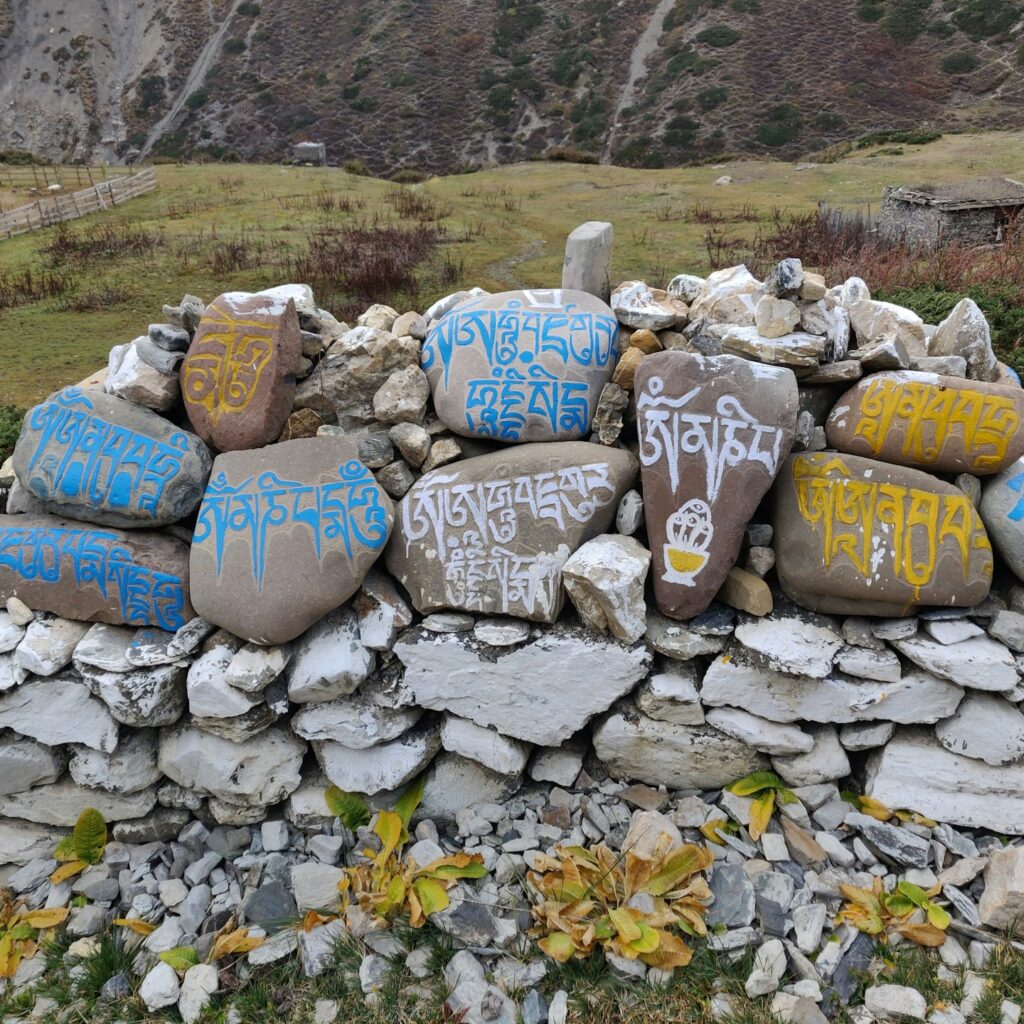
After conquering the 5,416-meter Thorong La, trekkers descend into a very different landscape—drier, windier, and more spiritual. Muktinath Temple is a sacred pilgrimage site for both Hindus and Buddhists. Pilgrims come from across Nepal and India to bathe under its 108 water spouts and see the eternal flame that burns naturally beside a spring.
Just below the temple, the village of Ranipauwa offers a wide range of accommodation and eateries catering to both spiritual seekers and tired trekkers. The mix of devotion, desert-like scenery, and friendly locals makes this one of the most memorable cultural stops on the Circuit.
Kagbeni: The Windy Gateway to Upper Mustang
Kagbeni is where ancient traditions and dramatic landscapes collide. Set along the Kali Gandaki River, this village is often buffeted by strong afternoon winds but remains a cultural gem. It’s the last stop before the restricted Upper Mustang region and maintains a unique Tibetan-Buddhist identity.
Mud-brick homes, centuries-old monasteries, and narrow alleyways make it a photographer’s dream. Many trekkers spend a night here to explore its monasteries, interact with locals, and experience a glimpse of life in the trans-Himalayan region. It’s also a great place to enjoy a rest day and reflect after the demanding pass crossing.
Marpha: Apple Capital of the Annapurna Region
Marpha is one of the most picturesque and peaceful villages on the Annapurna Circuit. Known for its terraced apple orchards, cobblestone streets, and whitewashed houses, it offers a refreshing change of pace. Located in the Mustang district, Marpha is home to the Thakali people and is famous for its apple brandy and dried apple snacks.
The town’s cleanliness, spiritual calm, and well-run teahouses make it a favorite among slow trekkers who want to unwind. Exploring the village, visiting its Buddhist monastery, and tasting the local produce make Marpha a truly delightful stop after days of high-altitude challenge.
Annapurna Base Camp: A Cultural Side Trek Option
If you’re inspired by the cultural depth of the Annapurna Circuit and have a bit more time, consider adding the Annapurna Base Camp Trek to your adventure. Starting from Nayapul or Jhinu Danda, the ABC trek takes you into the heart of the Annapurna Sanctuary. It’s a shorter trek, typically 7 to 10 days, but rich in scenic beauty and cultural experiences. Along the way, you’ll pass through Gurung and Magar villages like Chhomrong and Ghandruk, each offering cozy teahouses and warm hospitality. The trail winds through rhododendron forests, terraced fields, and glacial valleys, culminating at Annapurna Base Camp itself, surrounded by towering peaks like Machapuchare and Annapurna I.
The ABC trek complements the Annapurna Circuit perfectly, less demanding in altitude but no less rewarding in its views and human connection. If you want a slightly different taste of Nepal’s diverse trekking landscape, adding ABC to your journey is a wonderful choice.
Conclusion
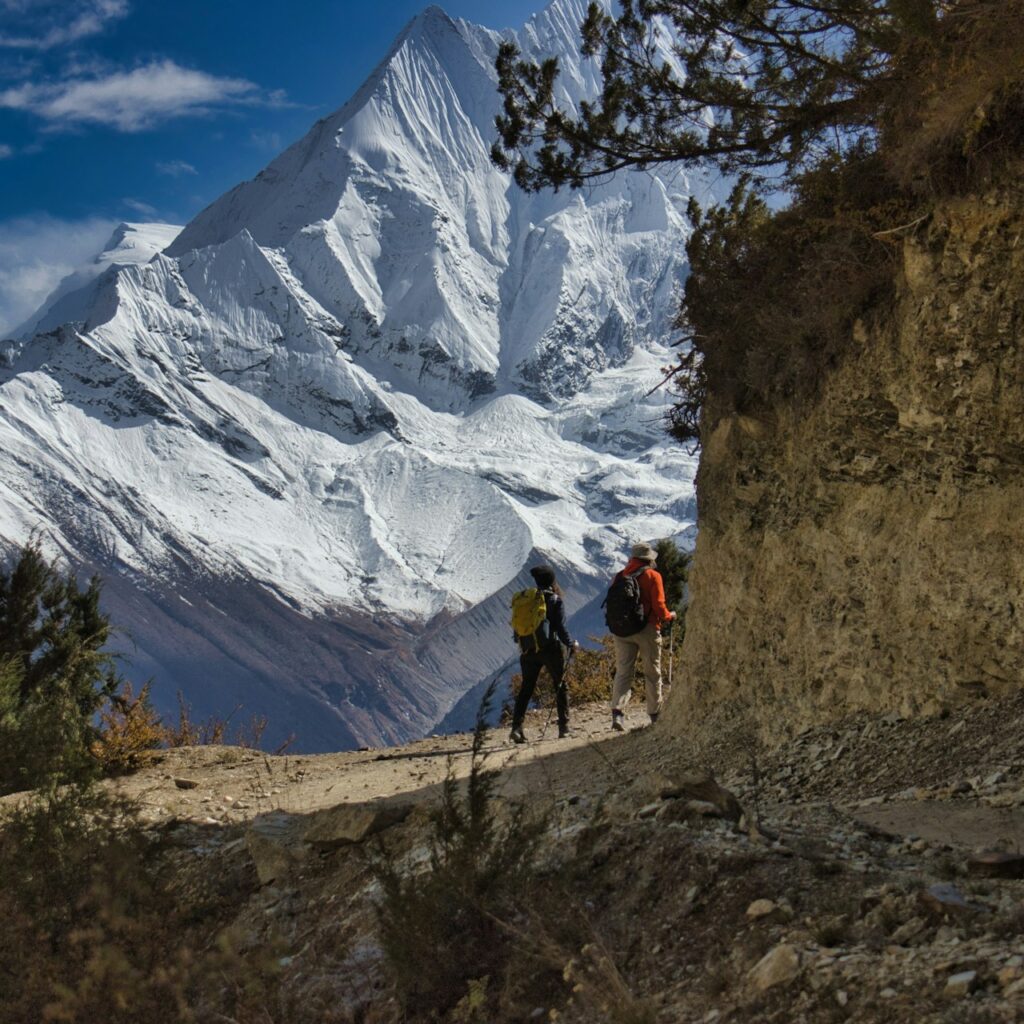
Trekking the Annapurna Circuit isn’t just about the landscapes; it’s about the people, culture, and villages that welcome you at every step. From Chame’s pine forests to Marpha’s apple pies, each village tells a story. Take your time, walk the higher trails, and let these Himalayan communities leave a lasting impression on your journey.
If you’re looking to travel smarter, not just cheaper, on treks like the Annapurna Circuit, be sure to check out this insight. It offers tips on meaningful travel that align perfectly with the spirit of these Himalayan villages.
Follow the rest of the Top Experiences series
- TOP TWENTY THINGS TO DO IN EGYPT
- WHY YOU SHOULD VISIT MALTA
- TOP FUN THINGS TO DO IN HAMPI
- 10 HISTORICAL PLACES TO ROAM ACROSS THE WORLD
- 10 HISTORICAL MARVELS OF ITALY
- 10 BEST SHOWS IN EUROPE YOU MUST SEE
- DUBAI THRILLS: 7 MUST-DO ACTIVITIES
- 10 HISTORICAL MARVELS IN TURKEY TO ENJOY WITH KIDS
- MOST ENCHANTING PALACES IN EUROPE
RESPONSIBLE TRAVELING-BECAUSE I CARE
FAQs
How difficult is the Annapurna Circuit?
The article doesn’t rate the trek’s difficulty directly, but the terrain it describes points to a serious high-altitude challenge — trekkers climb from Chame through Manang for acclimatization, on to windswept outposts like Yak Kharka and Thorong Phedi (4,540m), before tackling the 5,416-meter Thorong La Pass, usually rising around 3 a.m. for the push. The article notes these final villages are critical for preparing ‘physically and mentally’ for one of the world’s highest trekking passes.
How many days does the Annapurna Circuit take to complete?
The article doesn’t give an exact day count for the full Circuit, though for comparison it notes the shorter Annapurna Base Camp trek — which it describes as a complementary, less-demanding alternative — typically takes 7 to 10 days.
What is the best season to attempt the Annapurna Circuit?
The article doesn’t specify a recommended trekking season.
Do you need a guide for the Annapurna Circuit?
The article doesn’t address whether a guide is required or recommended for the trek.
What should you pack for the Annapurna Circuit?
The article doesn’t provide a packing list, though the terrain it describes — hot springs at Chame, rugged and ‘functional rather than scenic’ lodges at Thorong Phedi, and the drier, windier landscape after crossing Thorong La — suggests a route where you cross very different climates and altitudes.
Can you describe what a day on the Annapurna Circuit actually feels like, physically and mentally?
The article doesn’t give a personal day-by-day account, but it does describe the rhythm of village life along the trail — sipping tea in cozy teahouses, watching prayer flags flutter beside monasteries — while also noting that the final stretch to Thorong La involves basic lodges, early dinners, and a roughly 3 a.m. start, calling it a stop that prepares trekkers ‘physically and mentally’ for one of the world’s highest passes.
What should I train for or prepare before attempting the Annapurna Circuit?
The article doesn’t offer specific training advice, but it does emphasize that villages like Yak Kharka and Thorong Phedi exist specifically to help trekkers acclimatize before the Thorong La Pass crossing, implying that altitude acclimatization is a central part of preparing for the trek.
What were the hardest and most rewarding parts of the Annapurna Circuit?
The article frames the Thorong Phedi-to-Thorong La stretch as the toughest test — a rugged, basic outpost followed by an early 3 a.m. push over a 5,416-meter pass. On the rewarding side, it highlights the trek’s cultural richness: villages like Upper Pisang with its hillside monastery and Himalayan views, and Muktinath Temple, a sacred pilgrimage site for Hindus and Buddhists with 108 water spouts and a naturally burning eternal flame.
What gear or supplies turned out to matter most on the Annapurna Circuit?
The article doesn’t list specific gear, though it does mention that Chame has hot springs where trekkers can soak tired legs, and that teahouses along the route offer comfort and care — practical stops built into the trail itself rather than gear you’d need to carry.
What would you tell a first-time trekker considering the Annapurna Circuit?
Based on the article, a first-time trekker should know this is as much a cultural journey as a physical one — each village along the way, from Chame to Marpha (known as the ‘apple capital’ of the region), has its own rhythm, traditions, and teahouses. It’s also worth knowing that villages like Manang, Yak Kharka, and Thorong Phedi exist specifically to help you acclimatize before the demanding Thorong La Pass crossing, and that many trekkers extend their trip with the shorter, less-demanding Annapurna Base Camp trek for a different taste of Nepal’s trekking landscape.


