The best of the Darjeeling food; what you should not miss
West Bengal’s premier hill station is an eclectic mix of Nepalis, Tibetans, and Gorkhas. Their cuisine goes back to the Rajbanshi cuisine heritage and forms some of the best of the Darjeeling food. Here’s a quick guide on what to eat in Darjeeling. Honestly, I did not expect this hill station to be such an amazing culinary destination.

Highlights of the Darjeeling dishes
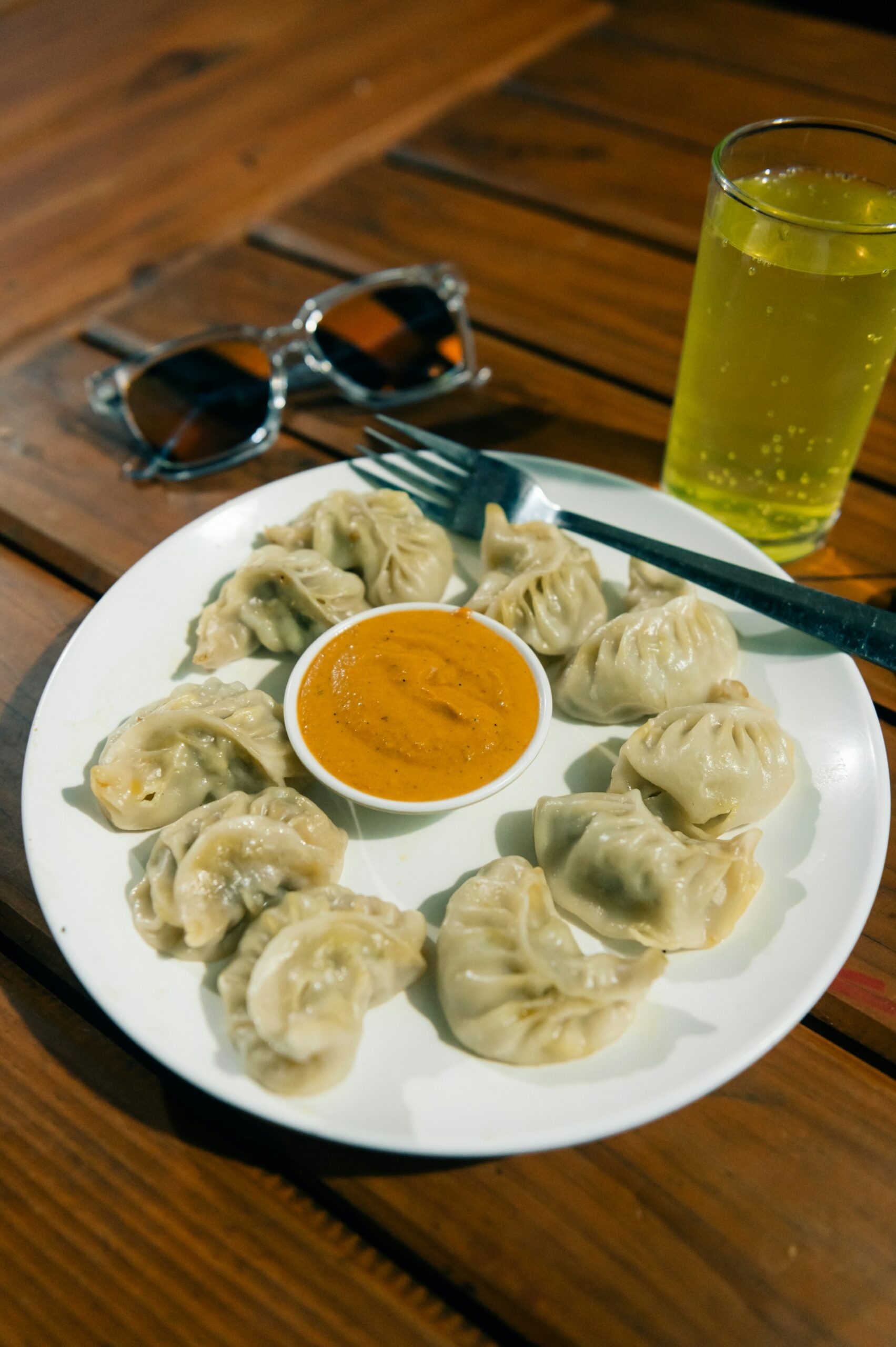
- Momos can be found at every nook and corner of Darjeeling. There are plenty of varieties and fillings that come in forms of chicken, vegetables, pork, or cheese. Try them steamed or fried, or dunked in a soupy broth. Recommended place to try momo in Darjeeling is Kunga on Gandhi Road. For vegetarian options, head to Hasty Tasty in Chowk Bazaar.
- Thukpa rules the palates of Darjeeling. It is a soupy bone or vegetable broth having noodles, eggs, meat, and shredded vegetables thrown in. It is a complete meal in a bowl. Immensely pocket-friendly, a steaming bowl of thukpa is all you need to beat the chill. Try the thukpa at Dekevas, next to Kunga on Gandhi Road. For vegetarian options, head to Hasty Tasty in Chowk Bazaar.
- Sael Roti is a seasonal specialty especially found during Diwali and Dusshera. It is a circular, deep-fried local bread, which can be had as a snack or as an evening tea accompaniment.
- Gundruk is where Darjeeling food gets all Rajbanshi and forest forage-based. It is a strong-smelling dish made up of fermented green leaves of radish, mustard, cauliflower, etc. The two-day-old fermented leaves are then dried in the sun, giving them a strong smell. The shredded dry leaves are mixed with vegetables or prepared with onions & radish. Its odour makes it a persona non grata at restaurants. Best places to try Gundruk are the small family eateries catering to the local blue-collar workers or at homes.
- Shaphalay is like a Tibetan pie. It is a bread pouch stuffed with meat and can be had with any curry or chutney/sauce. Shaphalay is usually served with tsampa (roasted barley), cheese, or butter.
- Niguru is a dish made of local fiddlehead ferns and their tendrils with churpi (cheese). Normally not available in restaurants, they are best enjoyed at local homes.
- Churpee is made from cow or yak milk. They are local cheeses and come in soft or hard forms.
- Sinki is prepared from radish tap roots. An indigenous dish with strong Rajbanshi traits, it is a forage food specialty in which aged radish silvers are pressed into a hole lined with bamboo and straw that is confined by a cover of vegetation, rocks, wood, and finally, mud. It is dried in the sun and stored to last a few more years.

Traditional Nepali Thali with mutton - Phagshapa is cooked with radishes and dried chilies. It is made of strips of pork fat and is mainly served in the summer.
- Kakra ko Achar and Kinema are local home staples. Kakra Ko Achar is a pickle prepared with cucumber juliennes, sesame seeds, garlic, green chili, salt, etc. Kinema is prepared using fermented Soybeans.
- Dalle Chili Pickle is not for the faint-hearted. It is prepared with the fiery, round red chili, mustard oil, salt, and spices. The pickle is sold in glass bottles and can be bought at local pickle shops. Be warned that Dalle chilies have the maximum heat in the world. Try Dalle at your own risk.
- Alu Dum is the most popular Darjeeling food. It is basically boiled, diced potatoes cooked in thick gravy. The specialty is the mixing of local Dalle chili, which renders Darjeeling alu dum a tongue-burning heat. Try it out at Beni’s Cafe, located on SM Das road (off Laden La road), very close to the Big Bazaar store.

Traditional Naga Thali
Include these thalis in the ‘must-have Darjeeling food’ list
Thali means plate or platter and includes small portions of many dishes. It is a very subcontinental concept and can be found all over India.
- Nepali Thali – In Darjeeling, the Nepali Thali is a must-have. Comprising several items like daal (lentils cooked in a soup), bhaat (boiled rice), tarkari (an assortment of vegetable curries served on small bowls), chutney or achar (pickles), curd, papad, and a dessert, a Nepali platter is spicier than a Bengali platter. You can have the non-vegetarian option as well. For a Nepali thali in Darjeeling, head to the 1972 establishment of Penang Restaurant. It is located on Laden La road and close to the State Bank of India (and just before the Big Bazaar store).
- Naga Thali – The fiery Naga Thali hails from Nagaland and is very popular in Darjeeling. It consists of rice, dried or fermented bamboo shoots, served with a choice of chicken dish, fish, or pork, a side of Ghee (clarified butter), and pickles. Naga food is famous for smoked pork, so give it a try if you love the meat. Also, note that fermented bamboo shoots come with a very strong flavour and are an acquired taste. The best place to try the Naga Thali in Darjeeling is at the Revolver Restaurant.
- Bengali Thali is famous for its fish curry and is a daily staple for most Bengalis. That is why many restaurants in Darjeeling proudly display the “Bengali Meals” sign and serve large portions of rice, dal, vegetables, fish, chicken, mutton, or egg. Try the Mahakal Restaurant near the Gandhi Road Traffic Police Point.

Bengali thali in Darjeeling is pocket-friendly
Drinking in Darjeeling
- Darjeeling Tea – No trip to Darjeeling is complete without having a cup of the world-famous Darjeeling Tea. Cultivated in the luscious tea gardens across Darjeeling, it is known as the ‘champagne of teas’ all over the world.
- Local brew Chang – This is a local brew that is prepared by fermenting millet with yeast. It is served in a bamboo container known as a Tongba and should be had with a bamboo pipe. The fermented millet is topped with warm water until it loses potency. The small tin shack called Hot Stimulating Cafe is most popular for its Chang. It is located on the way to the Himalayan Mountaineering Institute & Zoo.


RESPONSIBLE TRAVELING-BECAUSE I CARE


Darjeeling is one of the most popular hill stations in India. The chance to see the Kanchenjunga peak has a big appeal among the tourists. Last month I visited Darjeeling with my family. It is a very beautiful and calm place its apt for refreshing your mind away from the city chaos. Overall it’s a perfect destination for holiday.
I have tried almost everything that you’ve mentioned except that phangsapa. Will you please tell me, where I can get it?
I love momos because It is the topmost desirable food in Darjeeling. With an ideal taste and surface you must have it in Darjeeling this is my recommendation, thanks for the help.
Thank you.