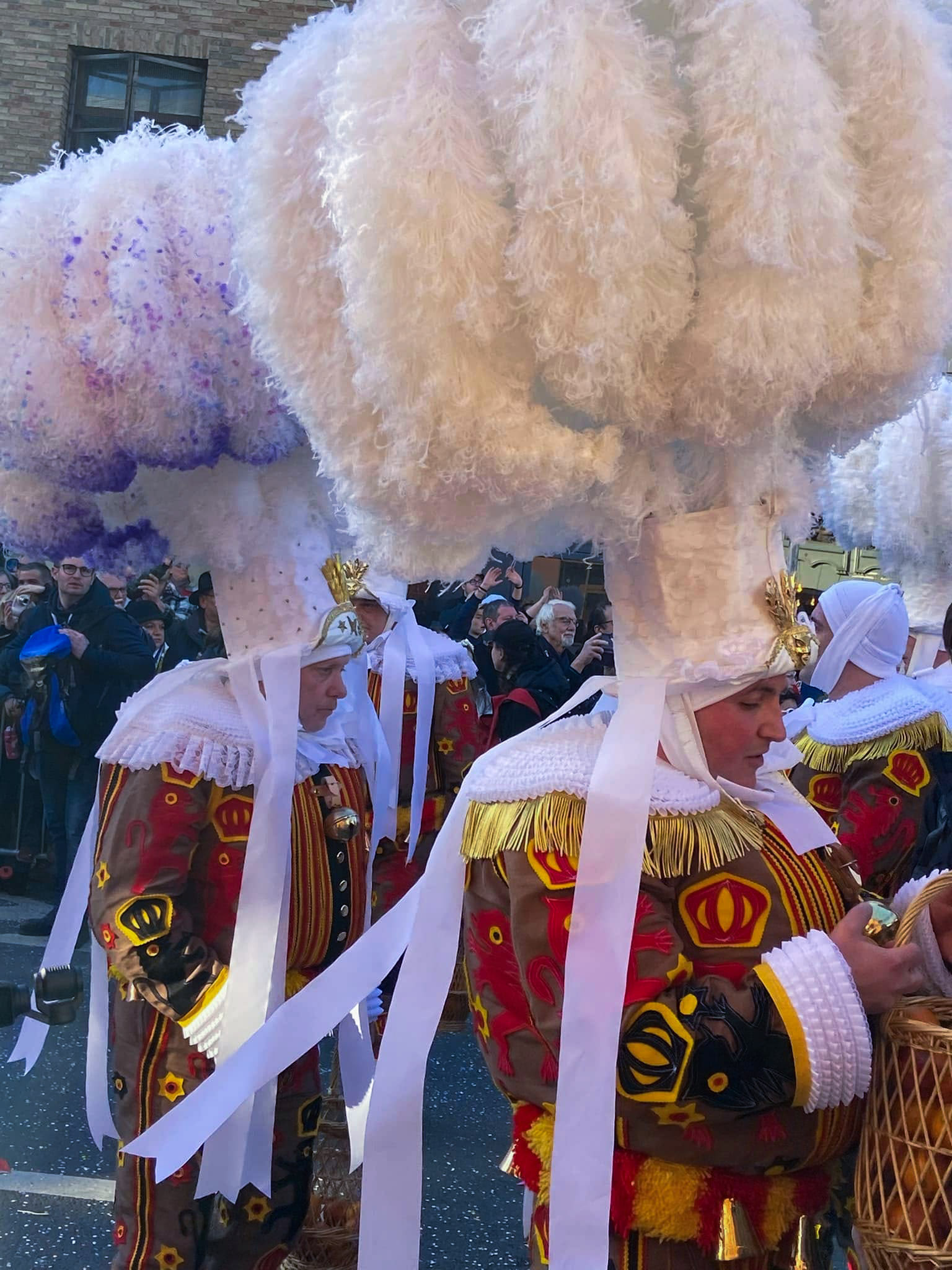
Binche Carnival: Belgium’s Wildest Festival — Through the Lens of Tintin and the Picaros
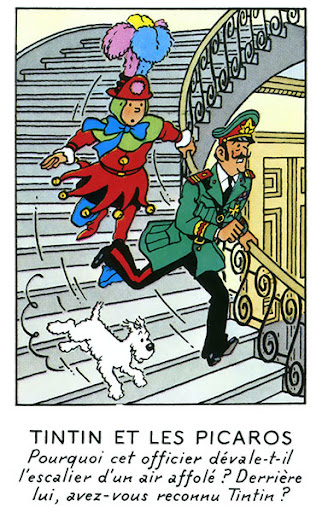
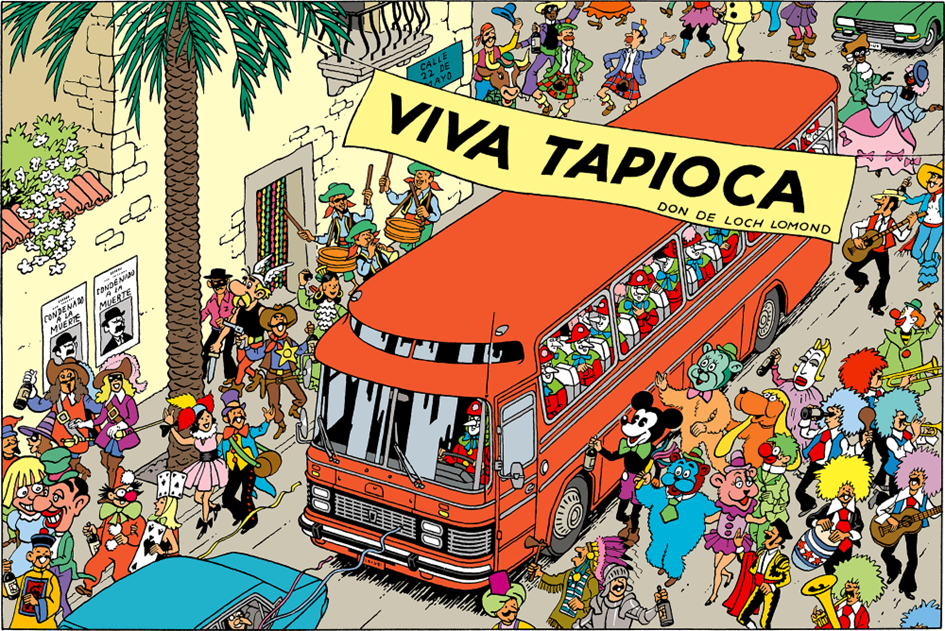
I am a big fan of Tintin, and I came to know about the Binche Carnival in Tintin and the Picaros. In this adventure, Tintin and his team go spy hunting, and Hergé adds in glorious carnival imagery, disguises, masks, and colourful chaos for some extra fun. Although the carnival is set in a fictional South American country of San Theodoros, the visualisation is influenced by the Binche Carnival. The result is a stunning comic illustration of a town erupting into one of Europe´s most extraordinary festivals.
The fascinating Binche Carnival
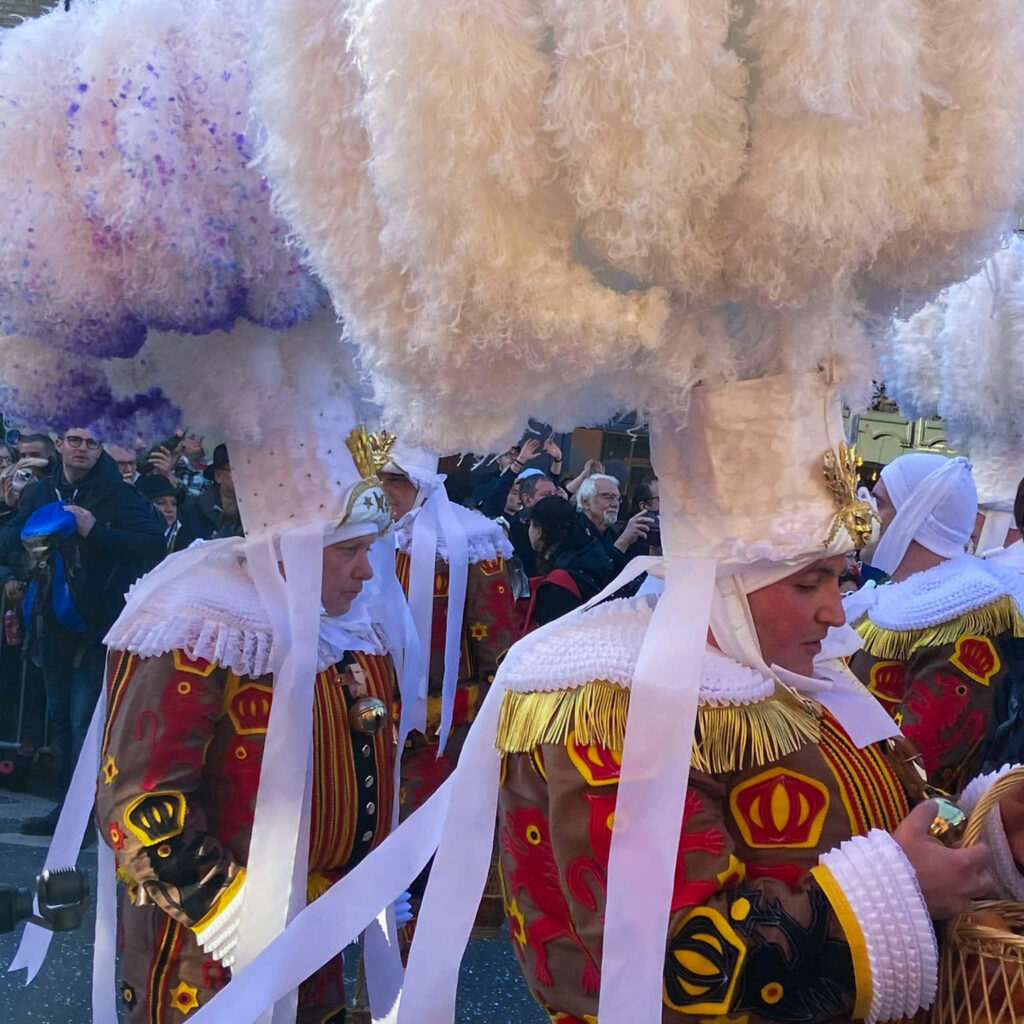
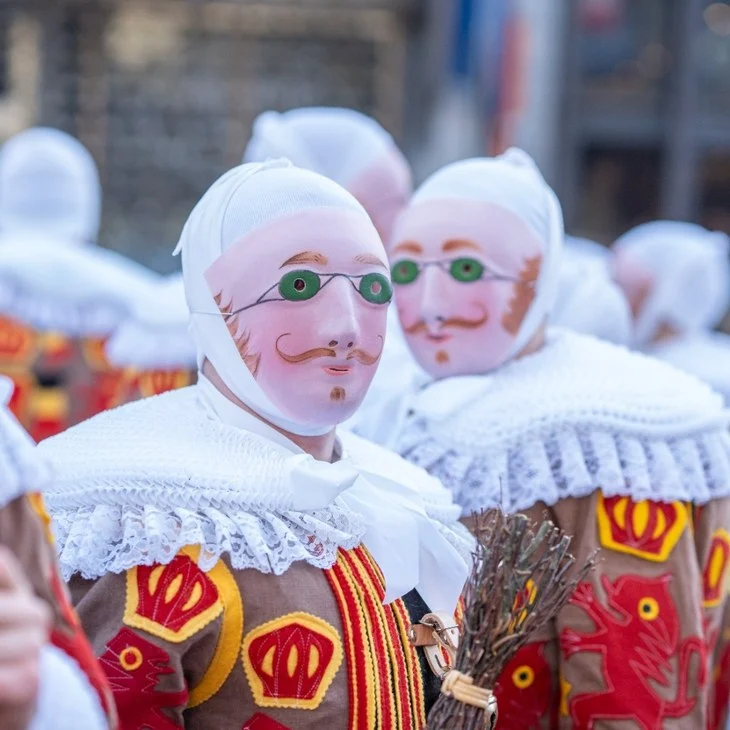
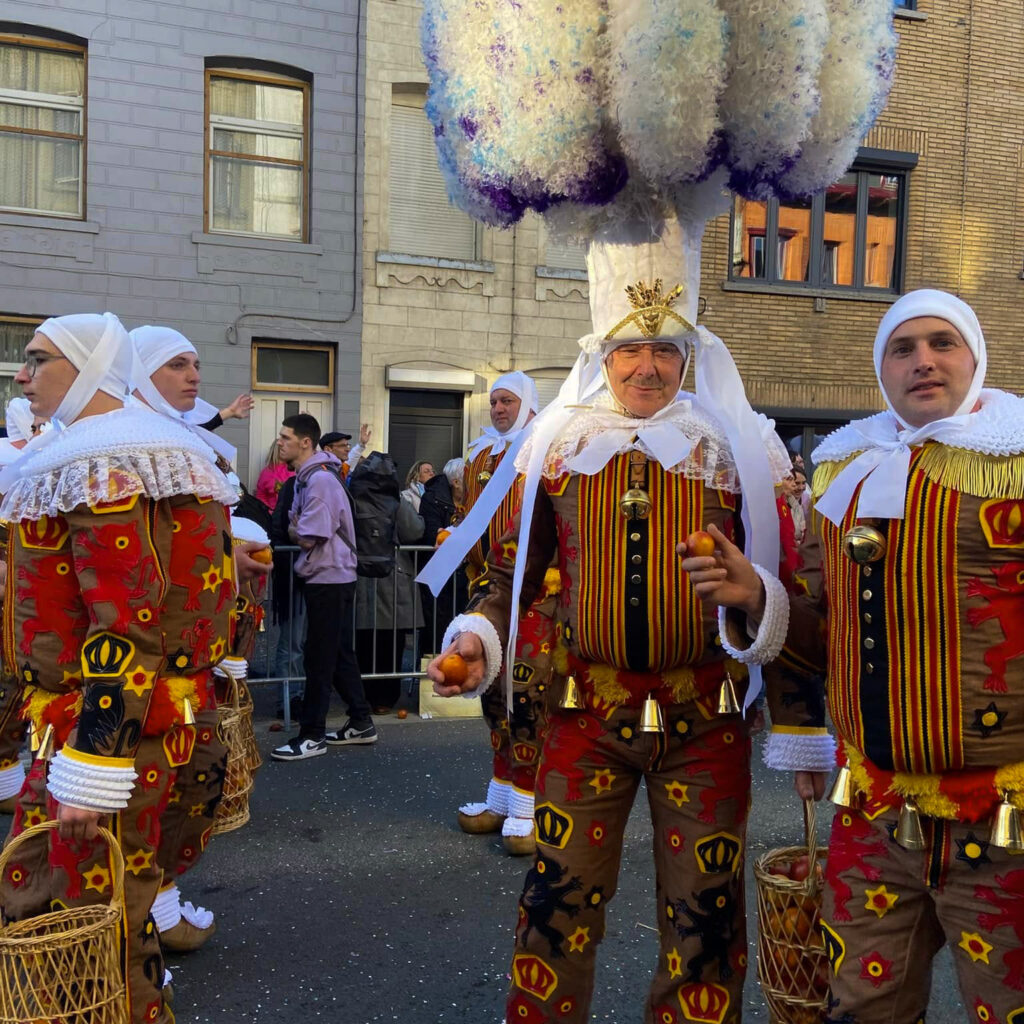
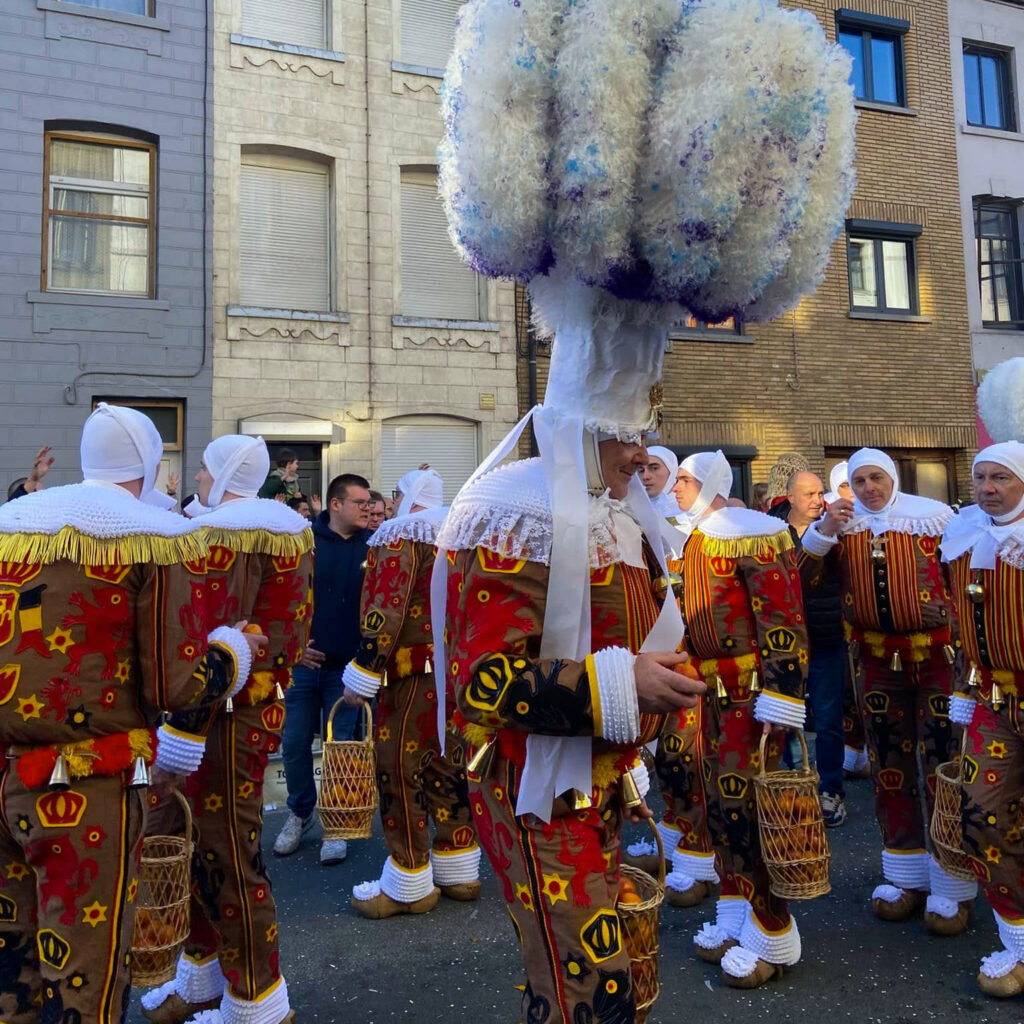
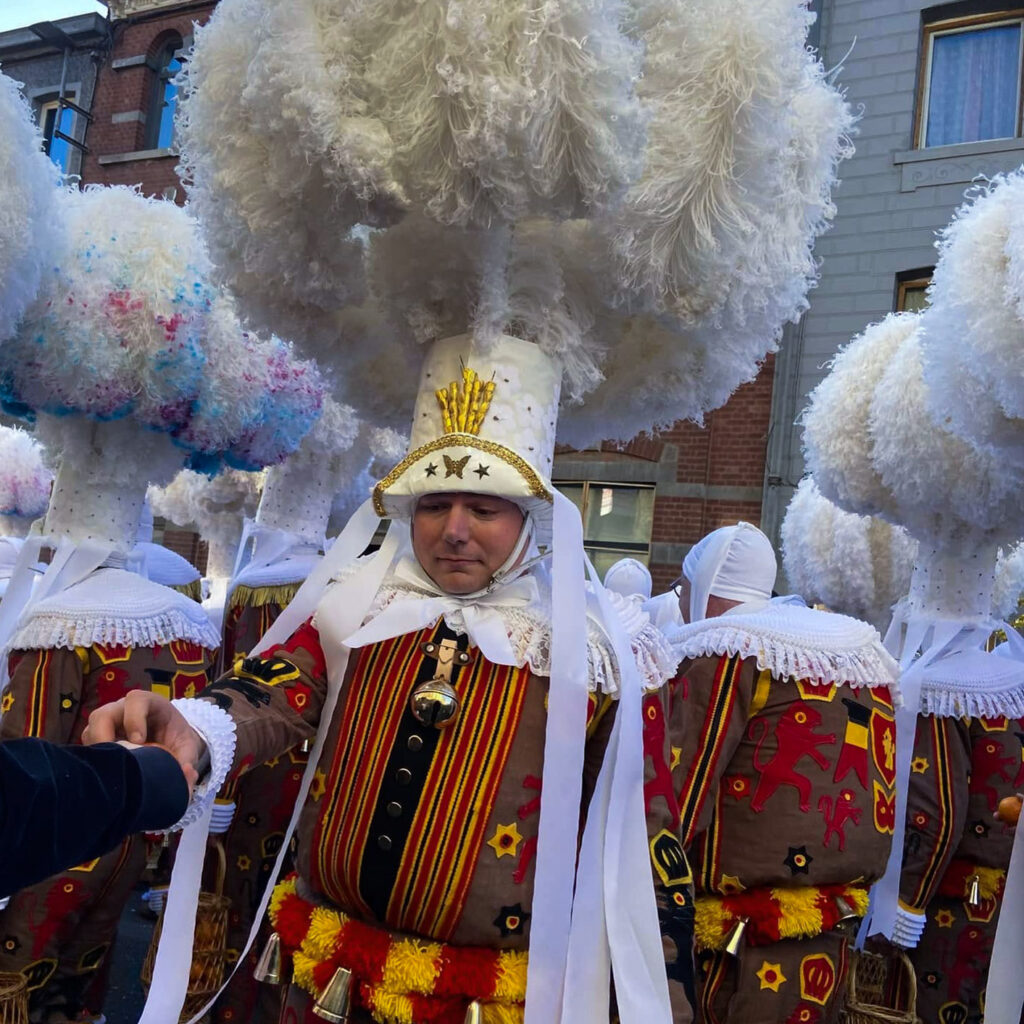
Celebrated every year before Lent in Binche, this Carnival has been recognised by UNESCO as Intangible Cultural Heritage. At the heart of this carnival lies the Gilles with their strange waxy masks, colourful orange costumes, and absurdly tall ostrich-plumed hats. Called Gille de Binche, this is a position of great honour, and only local men born in Binche can become Gilles. On Shrove Tuesday (Mardi Gras), Gilles transform themselves completely and come out of their homes donned in their traditional costumes:
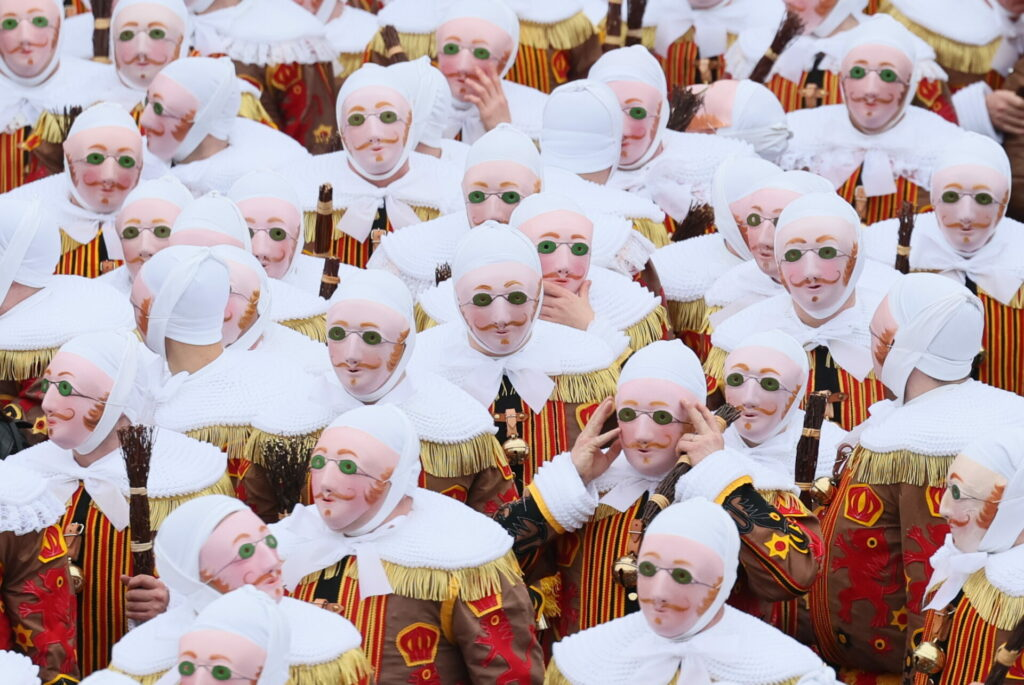
- wax masks with frozen smiles
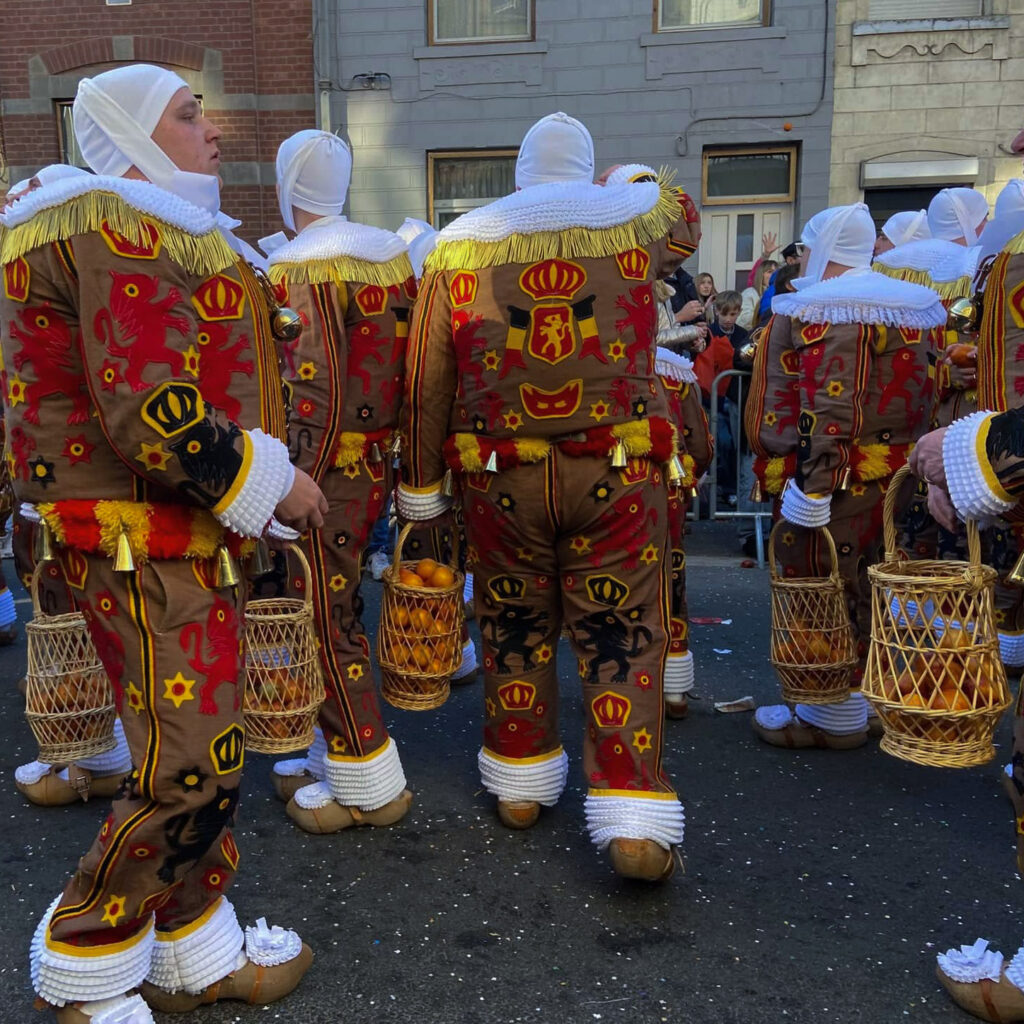
- linen costumes stuffed with straw
- wooden clogs pounding cobblestones
- enormous ostrich-feather hats
- baskets of blood oranges, thrown into the crowd for luck
When they converge at one point in the city, the entire street seems like a sea of feathers under a rain of oranges. Excitement runs through the air as drums echo through the winding streets and the Gilles march, dance, and throw oranges at random. P.S. – Getting hit by a Gilles orange is considered lucky, and you´re not supposed to dodge them. They are preceded by troupes of other characters in colourful traditional costumes, and the entire parade is a fascinating show.
A Brief History of Binche Carnival
Although I researched extensively online and browsed through the local museum dedicated to this strange festival, I could not find much information about its origin. References of the Binche Carnival date back as early as the 14th century, and one popular theory links it to the celebrations organised during the reign of Mary of Hungary, sister of Emperor Charles V, when Binche was an important political center. Although this theory is highly debatable owing to the bizarre costumes, it remains one of Europe’s oldest living rituals—loud, symbolic, tightly regulated, and fiercely protected by locals
All about the fascinating Gilles
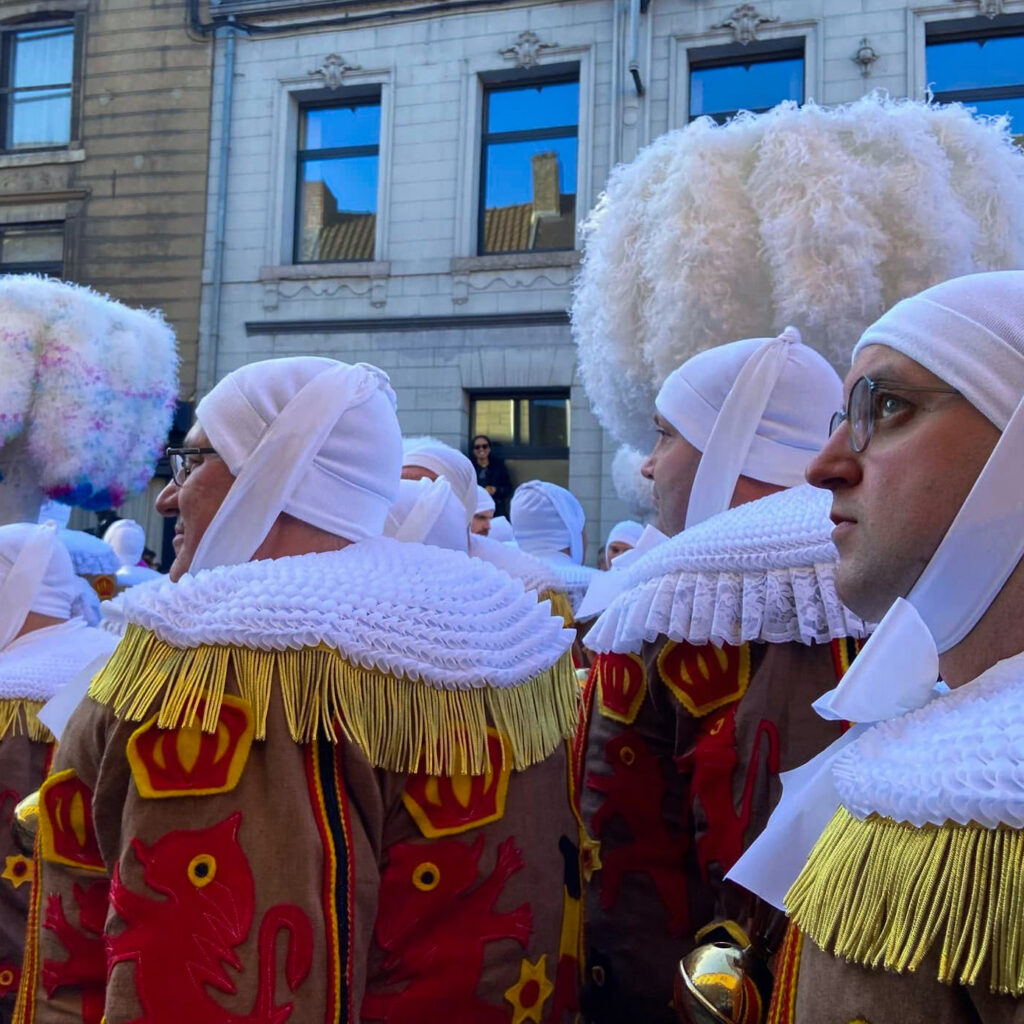
The Gilles of the Binche Carnival are among the most strictly regulated carnival figures in the world. Their interesting costume is an explosion of colour, and each element bears symbolism.
1. The Linen Suit symbolises exaggerated masculinity and abundance
- Cream-coloured linen, stuffed with straw to make it look paunchy
- Decorated with lions, crowns, and stars in Belgian colours
- Creates a rounded, almost puppet-like silhouette
2. The Wax Mask, which is only worn on Mardi Gras morning, represents equality and anonymity.
- Identical faces with green glasses
- Frozen smile
- No individuality
3. Wooden Clogs & Bells, along with rhythmic stomping, is highly choreographed, and the entire procession is a long-standing ritual.
4. The Ostrich-Feather Hat symbolises prestige, ceremonial, and civic pride.
- Can weigh up to 3 kg
- Extremely expensive and carefully stored
- Only worn in good weather
Symbolism: prestige, ceremony, and civic pride
The other characters of this fascinating carnival
The Binche Carnival is a carefully structured performance, and although the Gilles are the stars of the show, it also features other interesting characters. All of these characters have a role, a costume, a time to appear, and rules governing their behaviour.
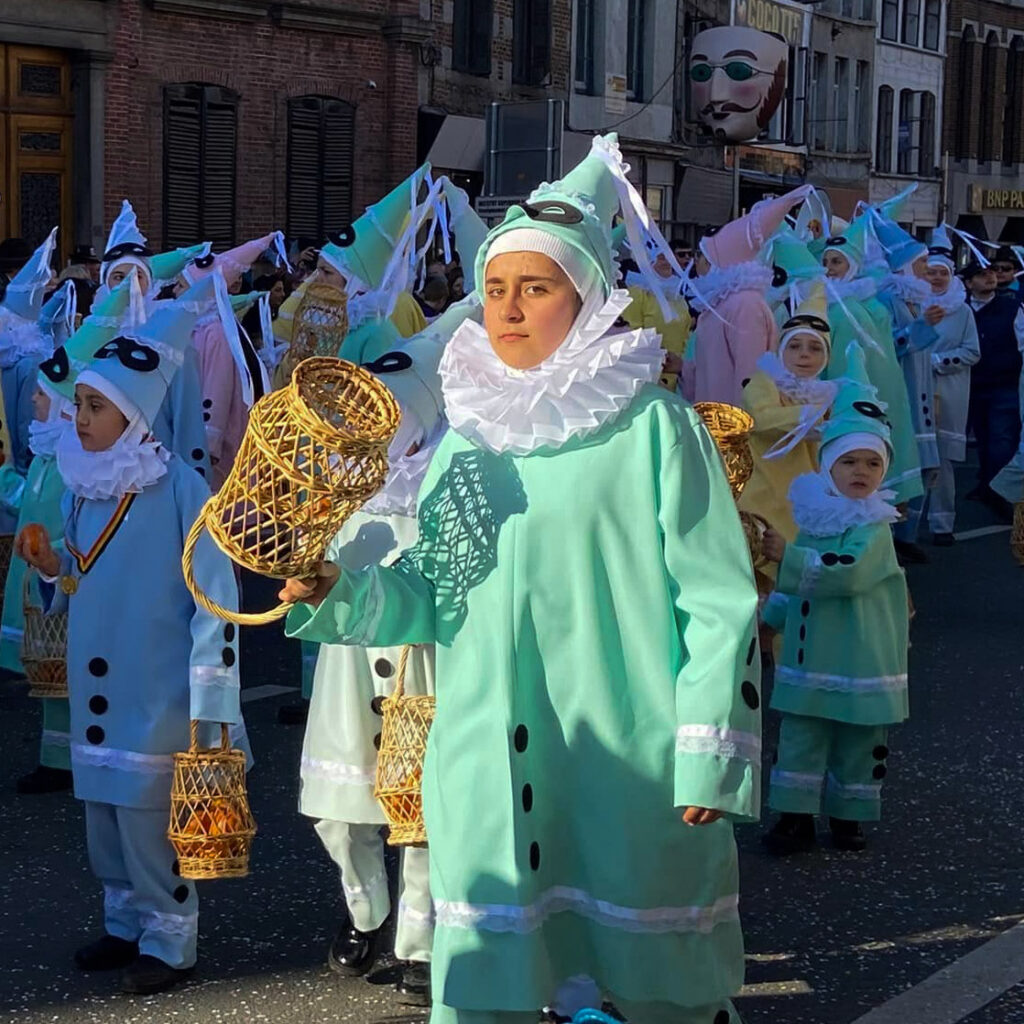
The Pierrots (The Poets & Night Wanderers) appear sometime during late Sunday night or on early Monday morning. They wander through the town at night, singing traditional songs and evoking a quieter carnival. Pierrots wear:
- loose white costumes
- conical or floppy hats
- soft makeup instead of masks
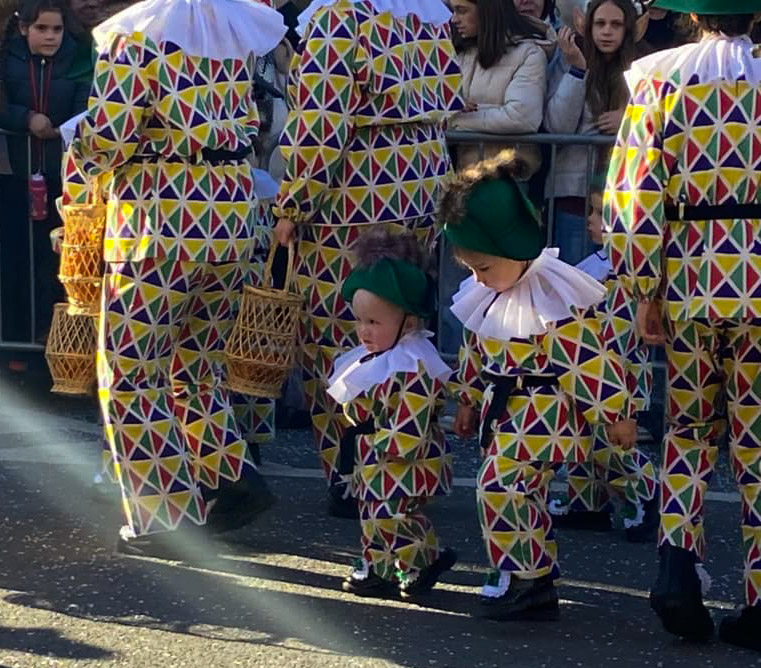
The Harlequins (Harlekins) are, in contrast, loud, theatrical, and deliberately disorderly. They appear on Monday afternoon wearing:
- brightly coloured patchwork costumes
- exaggerated shapes
- expressive movements
The Peasants (Paysans) represent the ordinary folks and parody everyday life, agricultural labour, and social stereotypes. They appear throughout the carnival dressed in:
- traditional rural clothing
- aprons, scarves, wooden tools
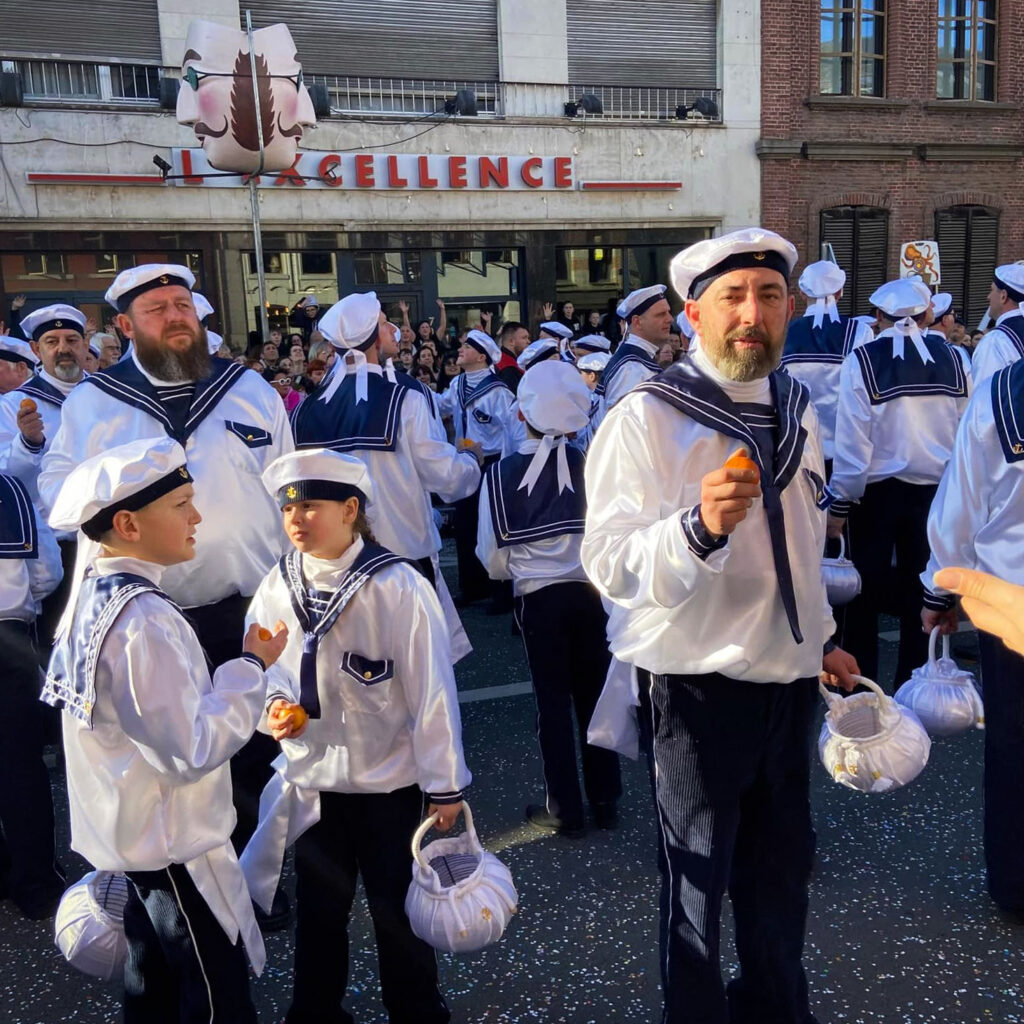
The Sailors (Marins) highlight Belgium’s maritime identity, and they appear mainly on Monday. The sailor costumes include:
- striped shirts
- caps
- ropes and nautical symbols
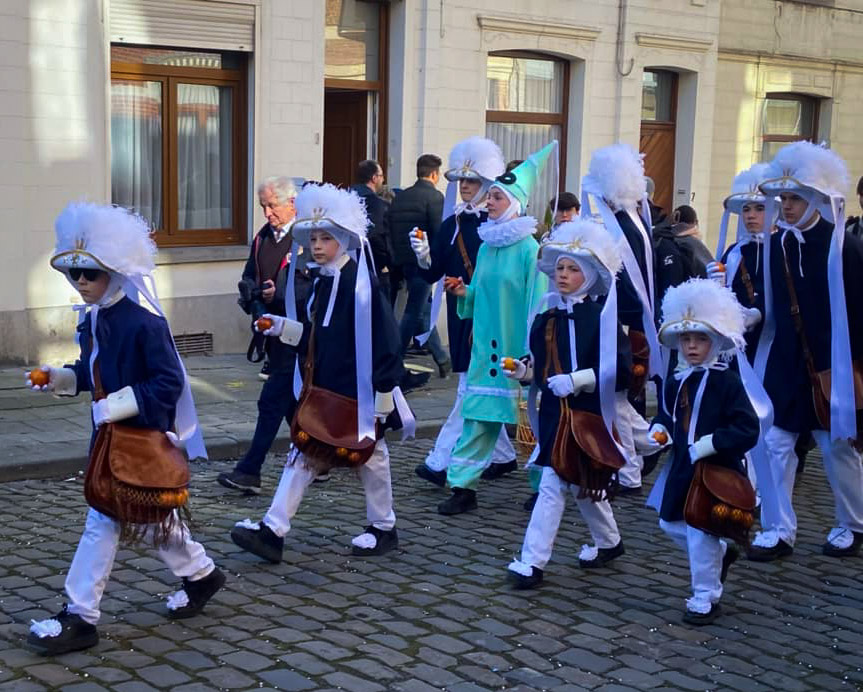
The Hussars & Historical Figures put up a colourful parody of power, hierarchy, and military order. Their costumes are highly theatrical and are inspired by:
- Napoleonic soldiers
- 19th-century uniforms
- historical authority figures
The Drum Masters & Musicians are perhaps the most important members of the Carnival. They appear throughout the spectacular procession, controlling the rhythmic beats of the gamboling Gilles.
How to Enjoy Binche Carnival: A Detailed Visitor Guide
When to Go
Three days before Ash Wednesday
- Sunday: Opening processions, atmosphere builds
- Monday: Youth and family events
- Tuesday (Mardi Gras): the main event — the Gilles appear in full costume
Tuesday, from early morning to late afternoon, is the best time, if you have just one day.
How to Get There
By Train
- From Brussels: ~3 hours
- From Charleroi: ~30 minutes
- Binche station is a short walk from the old town. Wear sturdy shoes since the streets are cobbled.
By Car
- Easy drive, but parking is limited during the carnival
- Expect road closures in the historic center
Nearest Airports
- Brussels Airport (BRU)
Where to Stay
- Binche: very limited, book months ahead
- La Louvière: an excellent base and a short train/bus ride away
- Mons: best base (short train ride)
- Charleroi or Brussels: workable alternatives (although Brussels is 3 hours away by train)
What to Wear
- Warm layers (winter festival)
- Waterproof jacket
- Sturdy, closed shoes (cobblestones and long periods of standing)
- Avoid fragile accessories, especially glasses, in case you get hit by an orange
How to Behave
- Respect processions
- Accept oranges with good humour
- Don´t disrupt the procession to photograph close-ups
- Don’t mock the costumes
- Don’t block the Gilles
- Be prepared that some windows might get broken by the orange missiles. It is a part of the ritual.
- Don’t treat it like a fancy dress party. It is a lived heritage and not a street show.
This is lived heritage, not a show.
Top Tips
- Stand near narrow streets for drum intensity
- Go to the Grand Place for a full visual spectacle
- Make sure you carry something to eat and drink because all the cafes overflow with people, and you have to stay put if you want a good spot
- Morning = masks, afternoon = feather hats
- Masks are worn only until midday—don’t arrive late
- Make sure to protect your cameras, glasses, and face
Binche Carnival isn’t just a festival—it’s a much-loved medieval tradition that is celebrated with much pomp and pride. So, if you love folklore and festivals, then the Binche Carnival should be on your list.

Follow the rest of the Belgium travel series
- 28 PHOTOS THAT MAY TEMPT YOU TO VISIT BRUGES
- TRAILING THE BRUGGE LACE
- STREET ART IN GHENT
- BRUSSELS SPRING
- BRUSSELS STREET ART
- HALLERBOS BLUE FOREST
RESPONSIBLE TRAVELING-BECAUSE I CARE


