Leh began with the stunning Ladakh Festival
I got lucky in Leh the next morning. It is the capital city of Ladakh, located at 11,562 feet above sea level, and is a charming little Himalayan town, which is very popular with travelers from all over the world. Thus, it was not a surprise when I found the dining hall of my hotel to be quite crowded for breakfast, and at the table, bits and pieces of conversations from a large group of photographers floated up to me. They all had huge professional-looking cameras, ate fast, talked big, and were universally excited about the Ladakh Festival.
Recommended Read: Postcards from the Srinagar to Kargil road trip
In 2012, the Ladakh Festival was held in September
An annual fiesta organized by the Jammu & Kashmir Tourism Department, in collaboration with local communities and district administrations of Leh, the Ladakh Festival is designed to be an eyeball-grabbing event. The main aim of this festival is to showcase and highlight the spectacular Ladakhi culture, its traditions, and heritage. Though the Ladakh Festival usually lasts for at least 15 days, that year, which I presume was 2012, it was limited to only 8 days.

Ladakh Festival begins with a spectacular inauguration parade
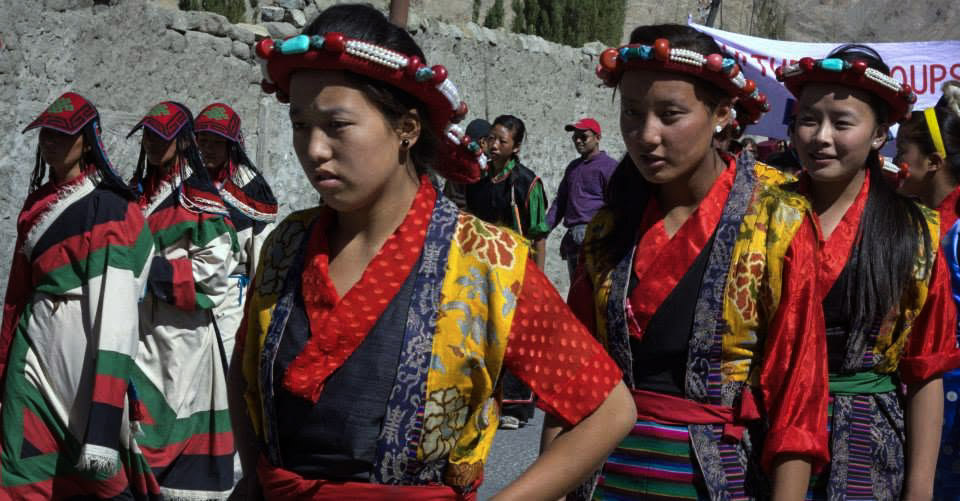
The festival begins with an inauguration ceremony, and a spectacular procession is carried out in Leh. Various cultural troupes of local leaders, school children, and dancers in their ceremonial costumes participate in this parade, and there is much singing and dancing to traditional orchestra tunes. The procession culminates at the Polo Ground, where the participants perform various folk dances, unique to their region, and this makes up most of the first day. For the next week, the Ladakh Festival hosts many special events like costume and mask dances, craft stalls, musical concerts, archery contests, polo matches, Thanka exhibitions, etc. This festival is also celebrated in many parts of the Ladakh region with various sports and cultural events.
You may also like: Kargil to Ladakh by road
September mornings in Ladakh seem like the best time in the world
So, as luck would have it, that morning happened to be the Ladakh Festival inaugural ceremony day. The September morning was beautiful without the need for pomp and grandeur, and the Ladakh Festival added more charm to it. Sun shone brightly through a vast cloudless blue sky, and the crisp mountain air was refreshingly sharp. Dazzling snow-clad peaks stood out in clear rows in the distance, and it was a kind of morning when the world feels like a wonderful place. Excited by the news of the festival, I hastily finished my breakfast and, being a stranger to Leh, trailed behind the gang of photographers. They walked up and down steep roads, past closed Tibetan Refugee markets, endless restaurants, until I got an orientation of the dinner-plate-sized Himalayan town.
Headgear, stone jewellery, dazzling costumes, and masks
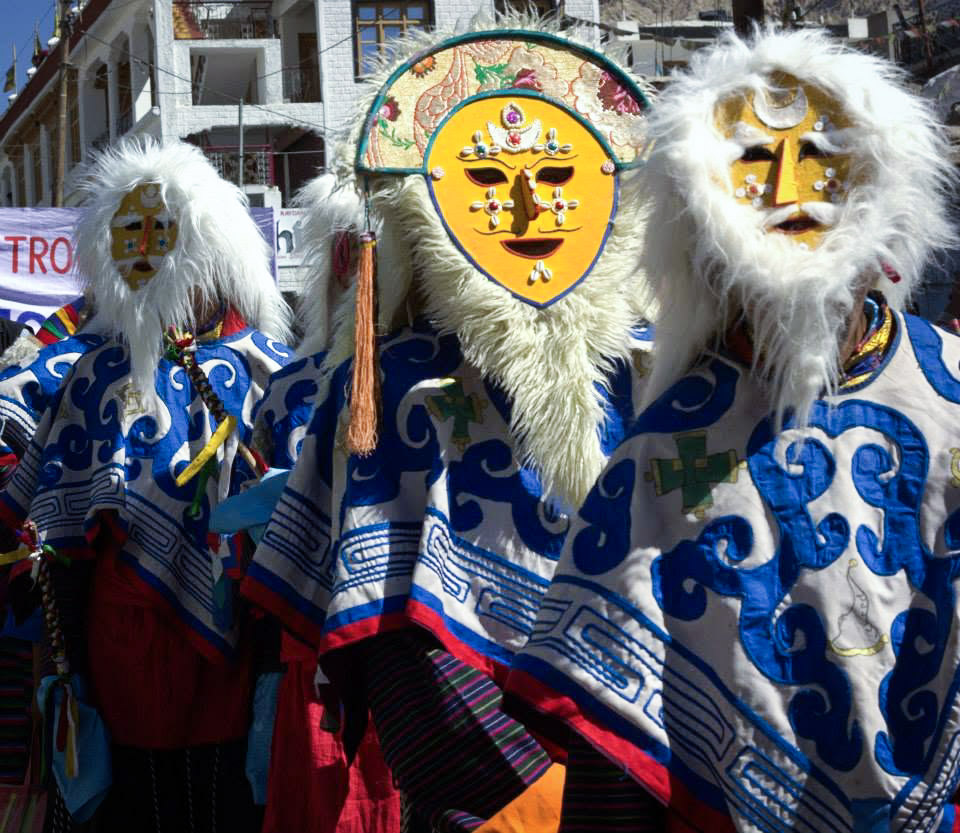
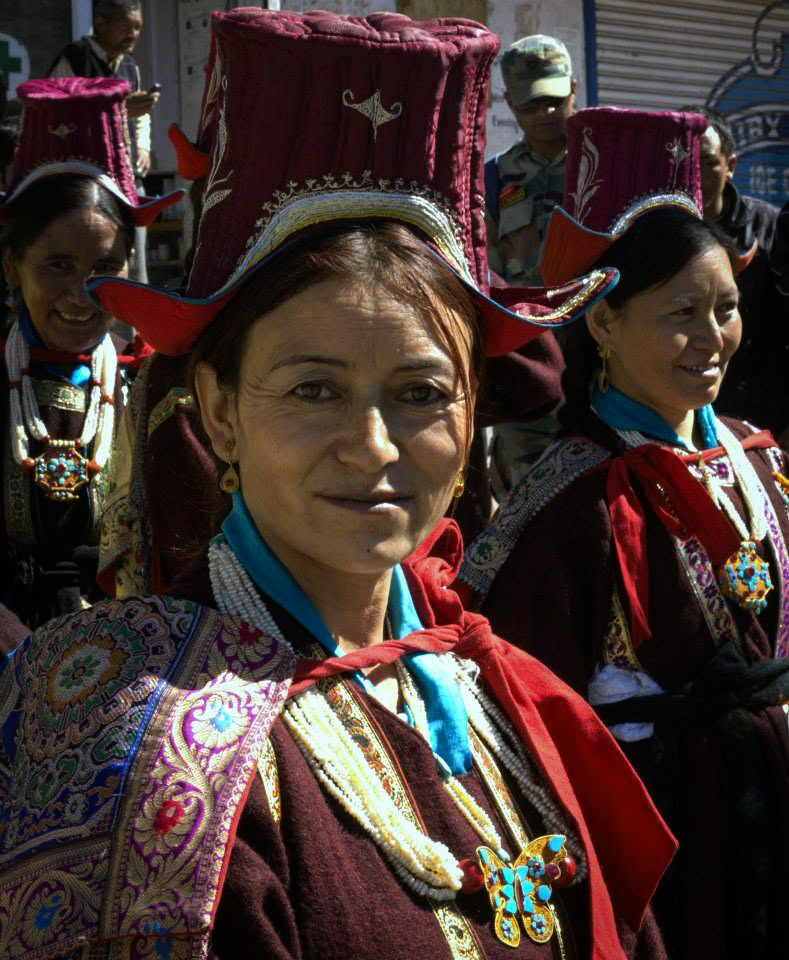
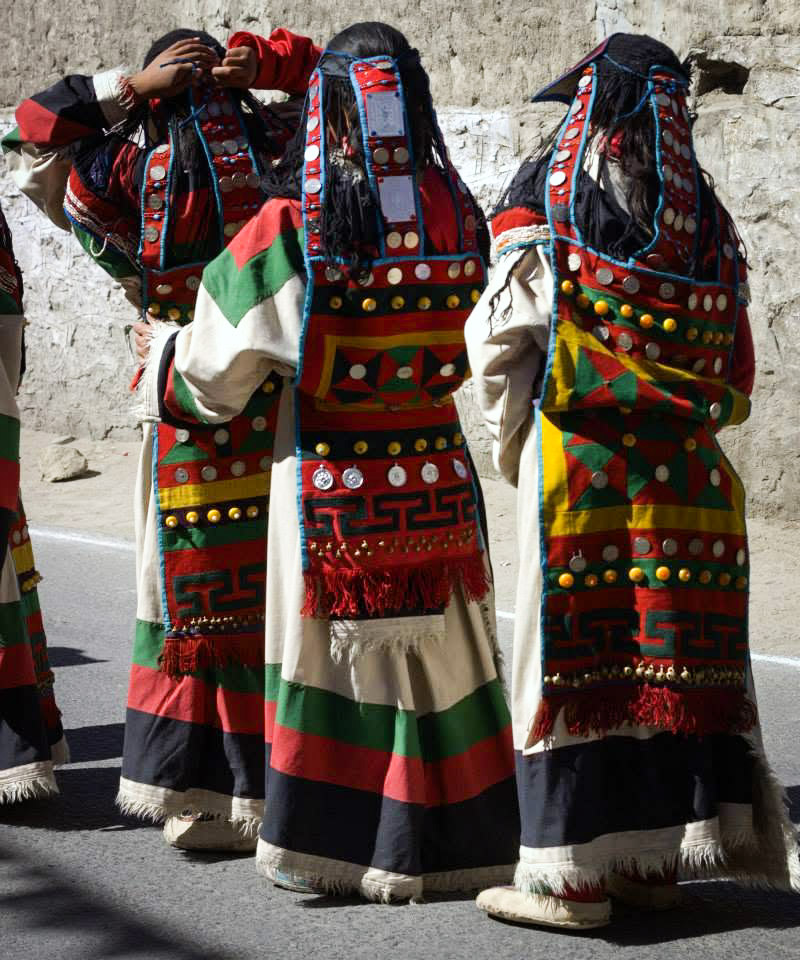
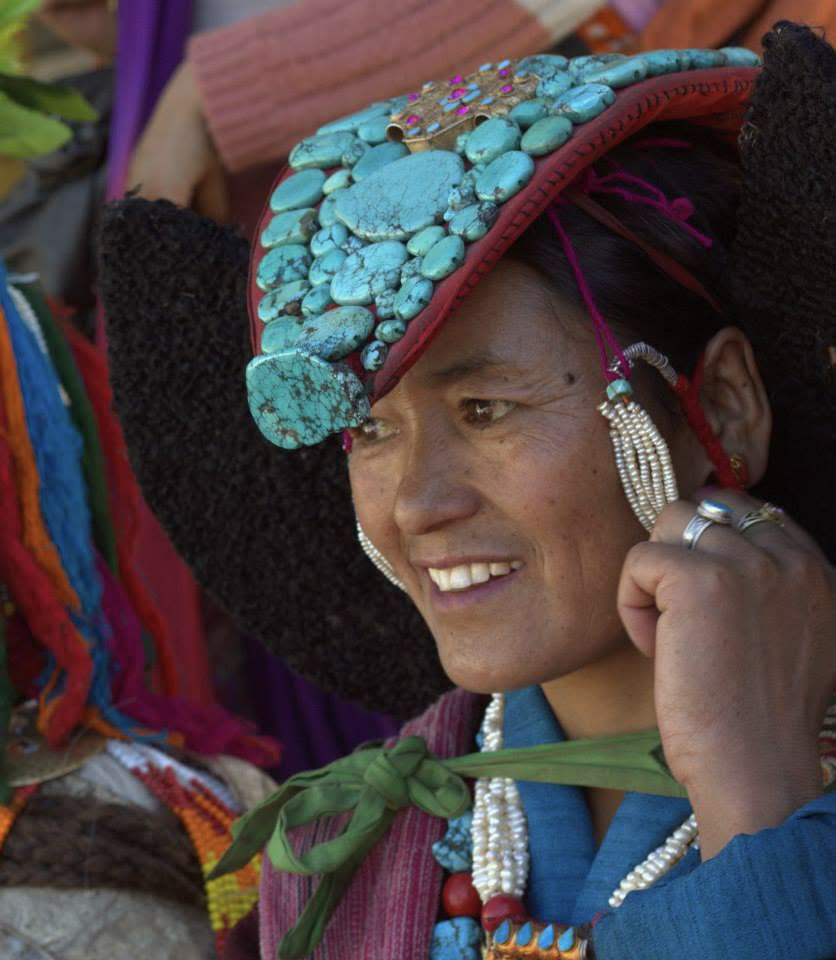
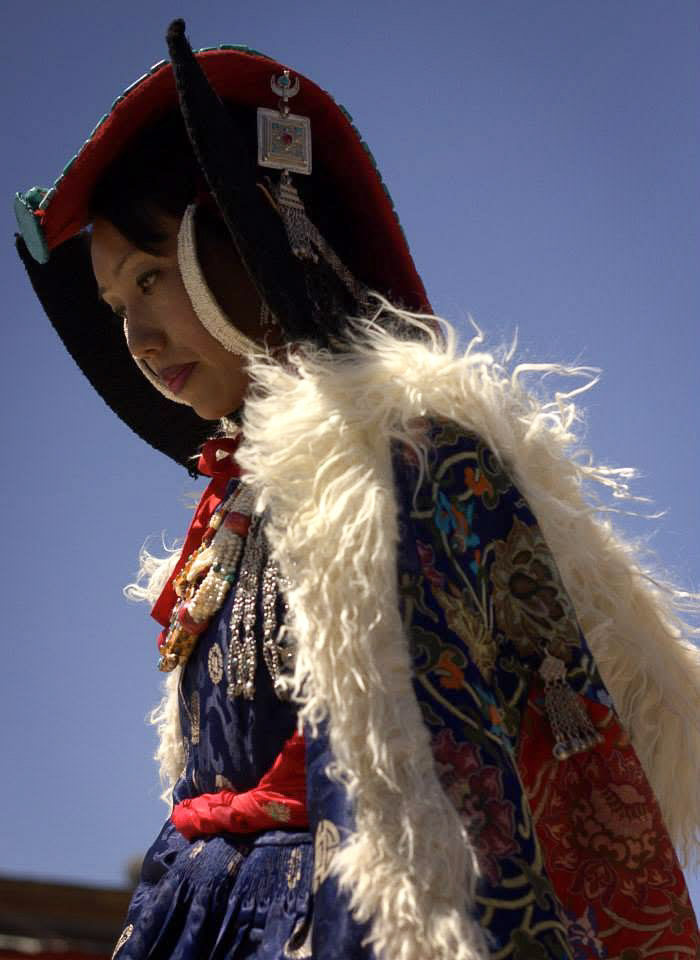
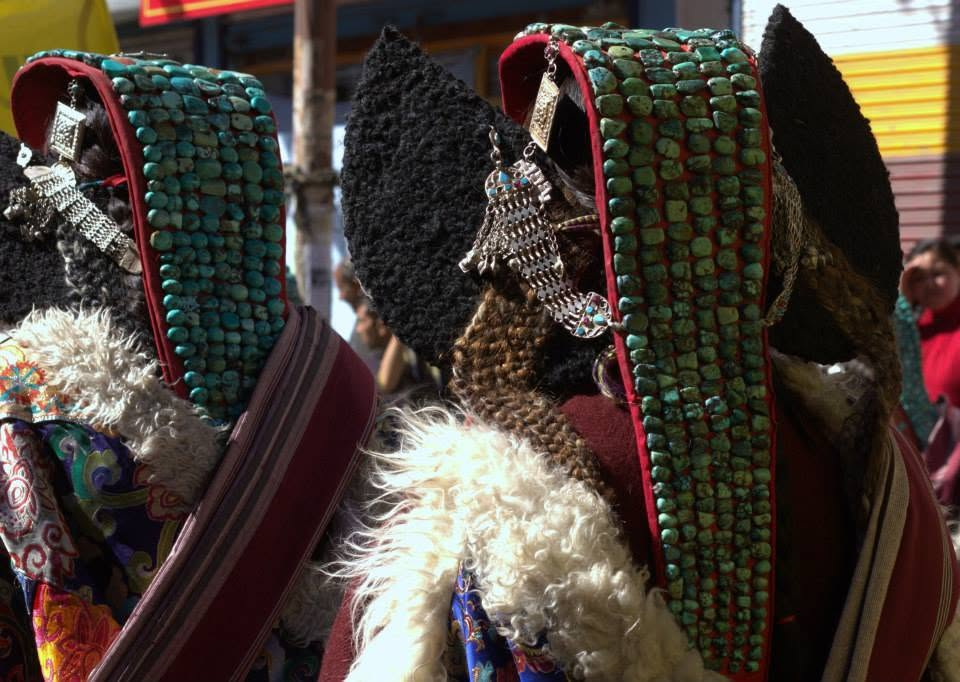
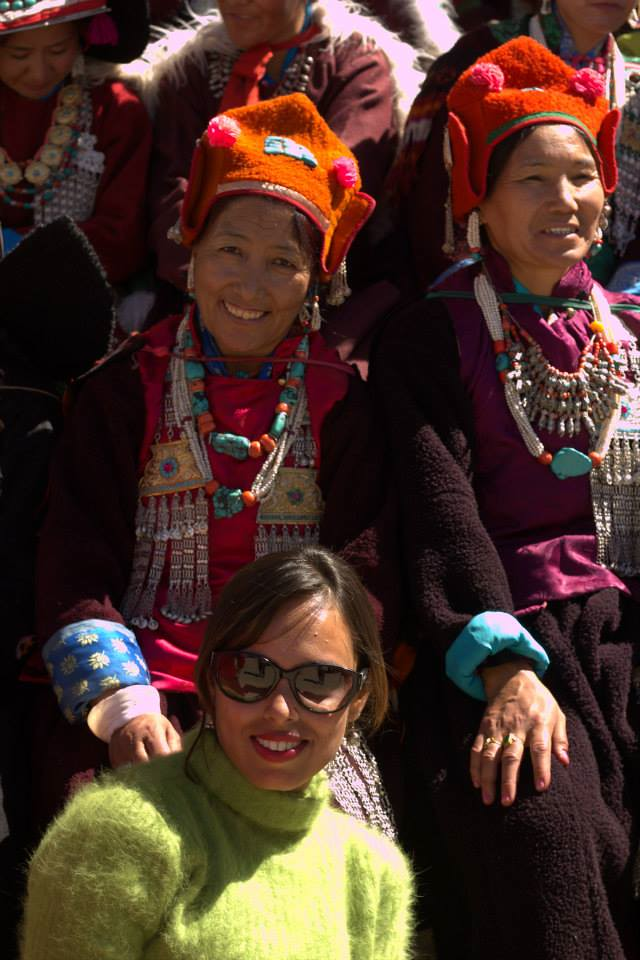
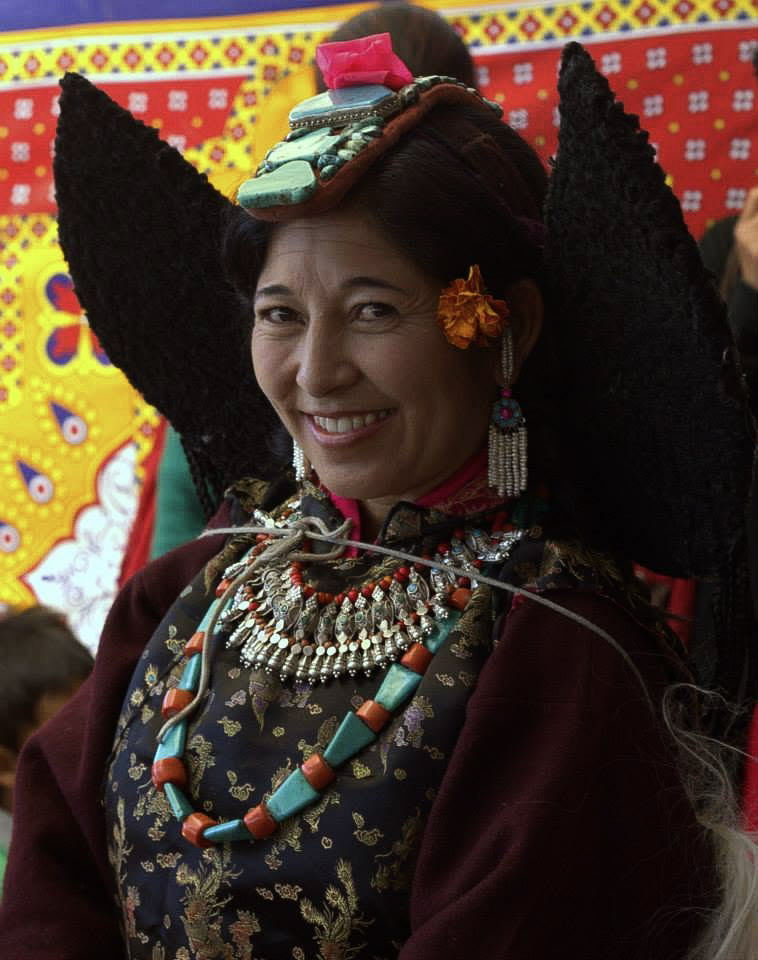
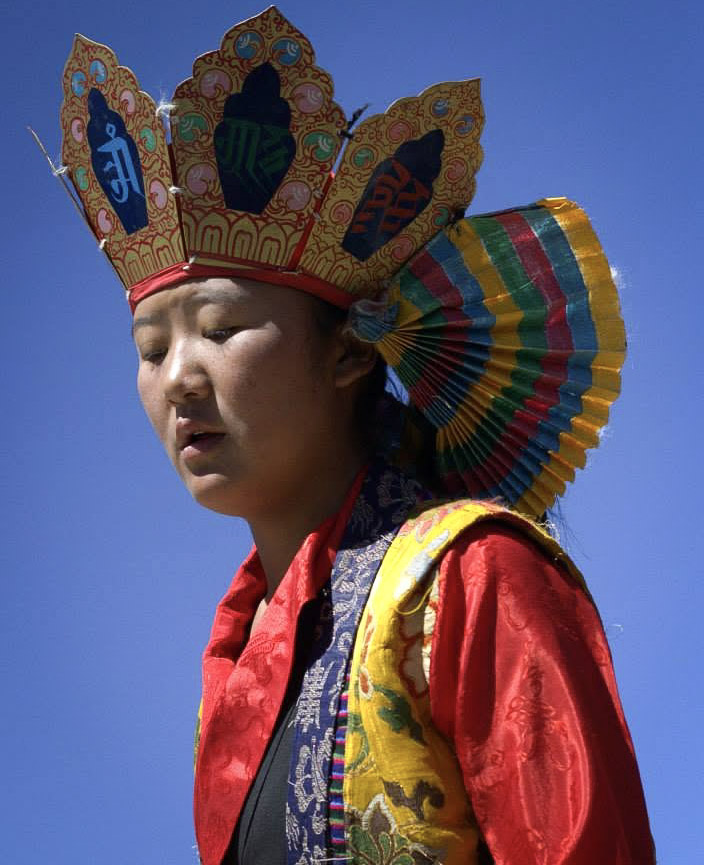
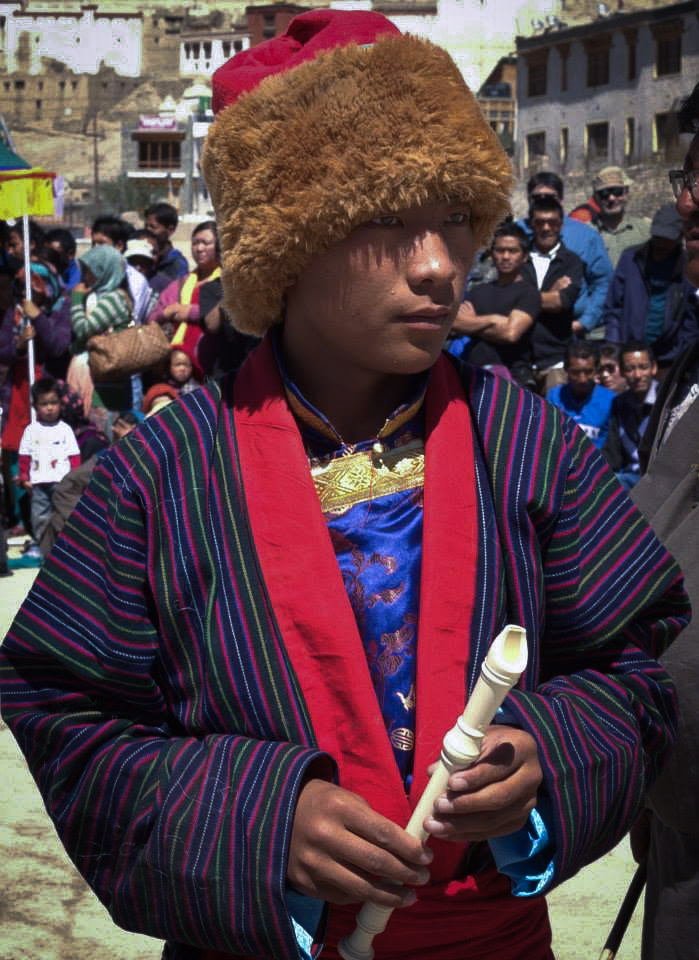
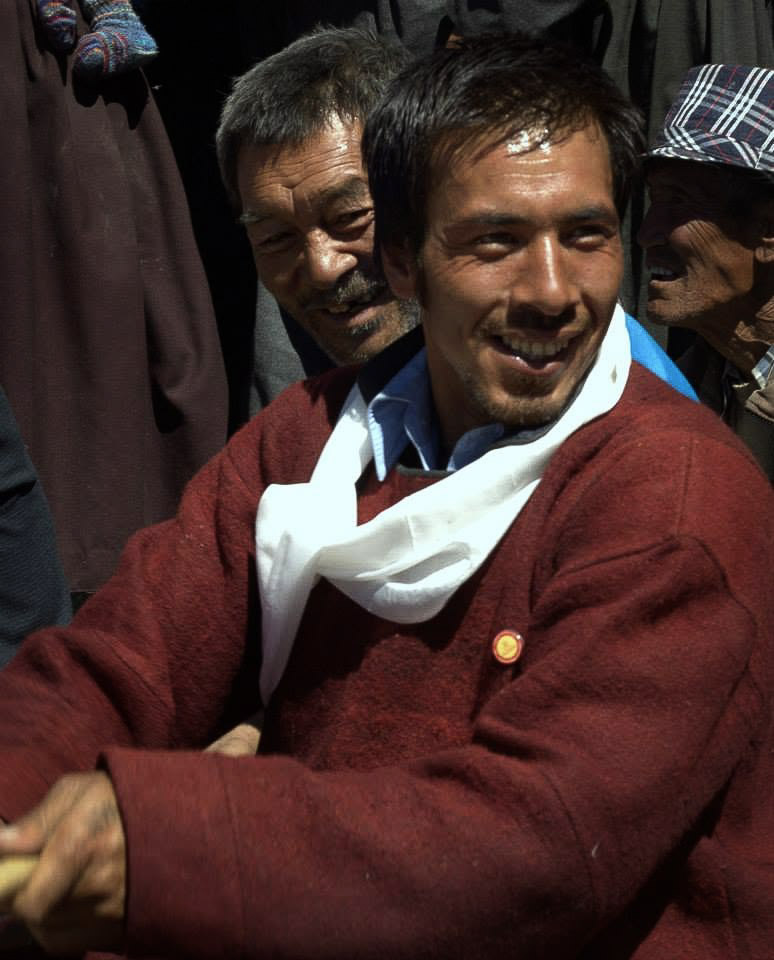
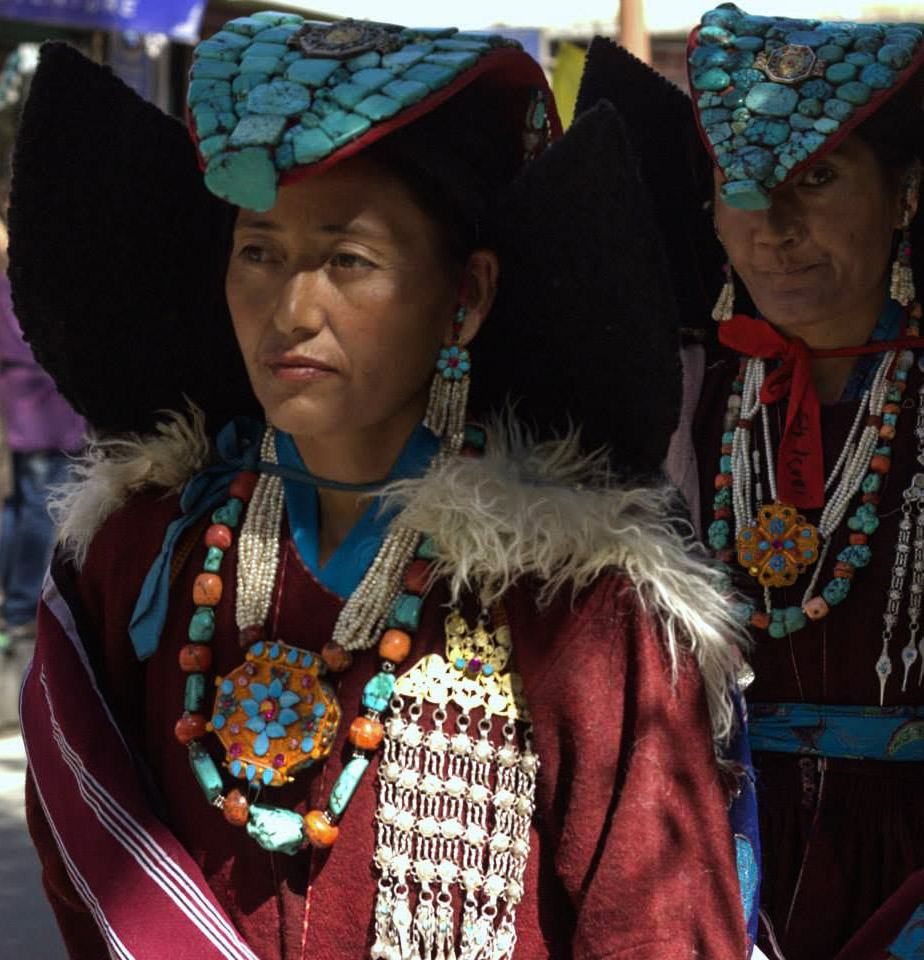
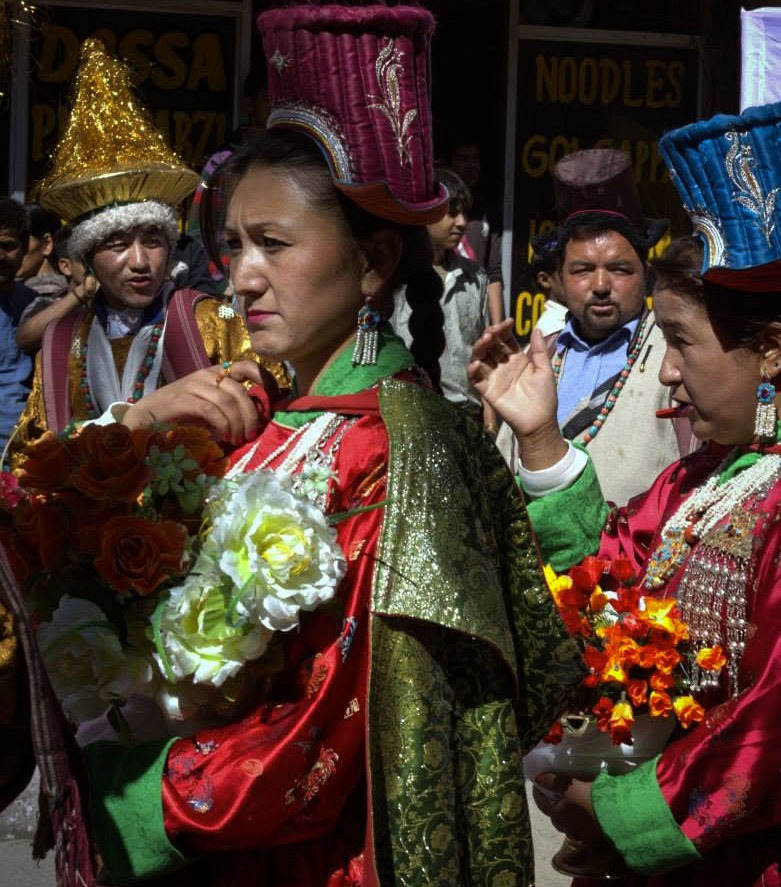
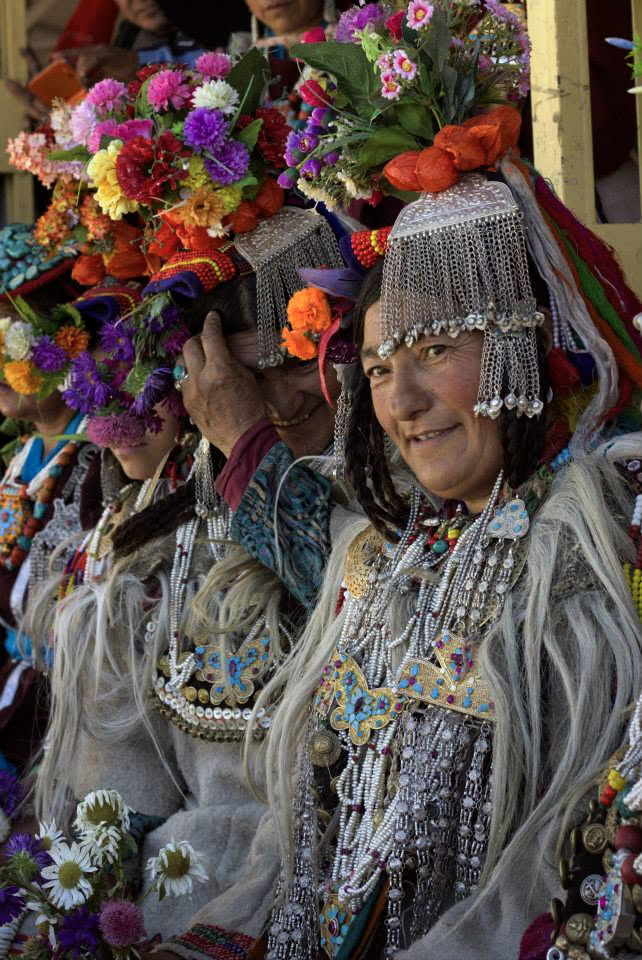
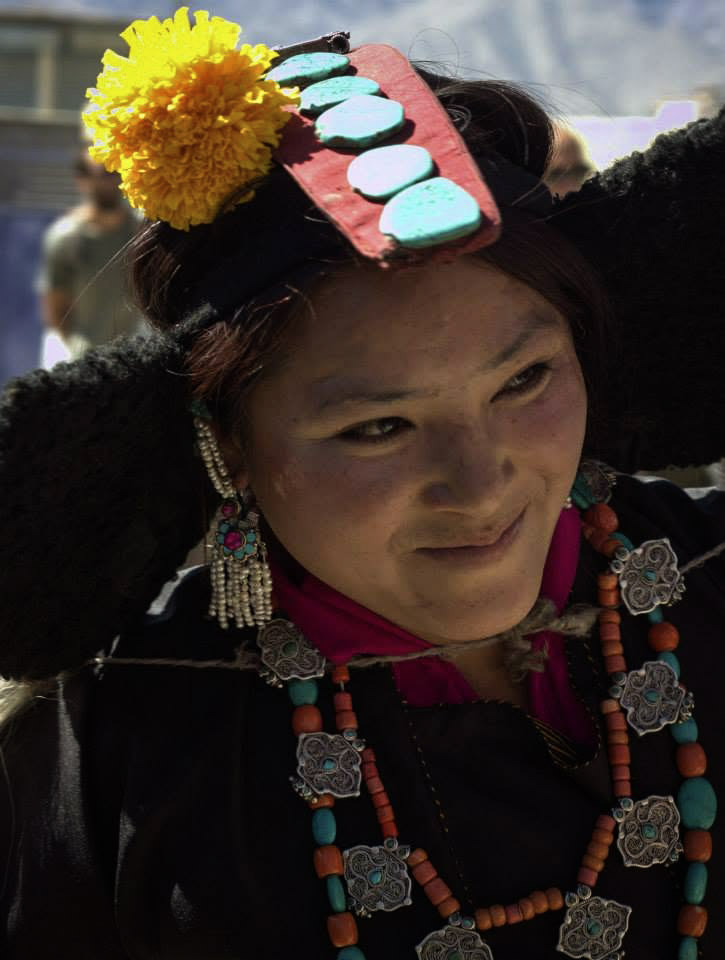
On that day, all roads and everybody seemed to be heading towards the same place, and all of us stopped in front of a beautiful white and green mosque. There were throngs of people lining up by the time I reached there, and they were an eclectic mix of tourists, photographers, journalists, monks, local Ladakhis, Kashmiris, stray cows, and organizers wearing important-looking badges. They hung around the barricaded road, perched on top of surrounding buildings, trees, and lampposts. There was a buzz in the air, and impatient anticipation rang through the excited viewers. Suddenly, pipe music and drum beats filled the air, and a nearly naked Hindu holy man came out from behind the veil of dust. He was followed by the most fantastic procession of people behind him, and his huge trident flashed metallic in the air as the participants marched in their full glory. Stunning traditional costumes, huge masks, dazzling stone jewelry, heavily embroidered boots, glittering tassels, extraordinary headgear, and full-body lion masks were on display, sending every camera-toting person into a photographing frenzy.
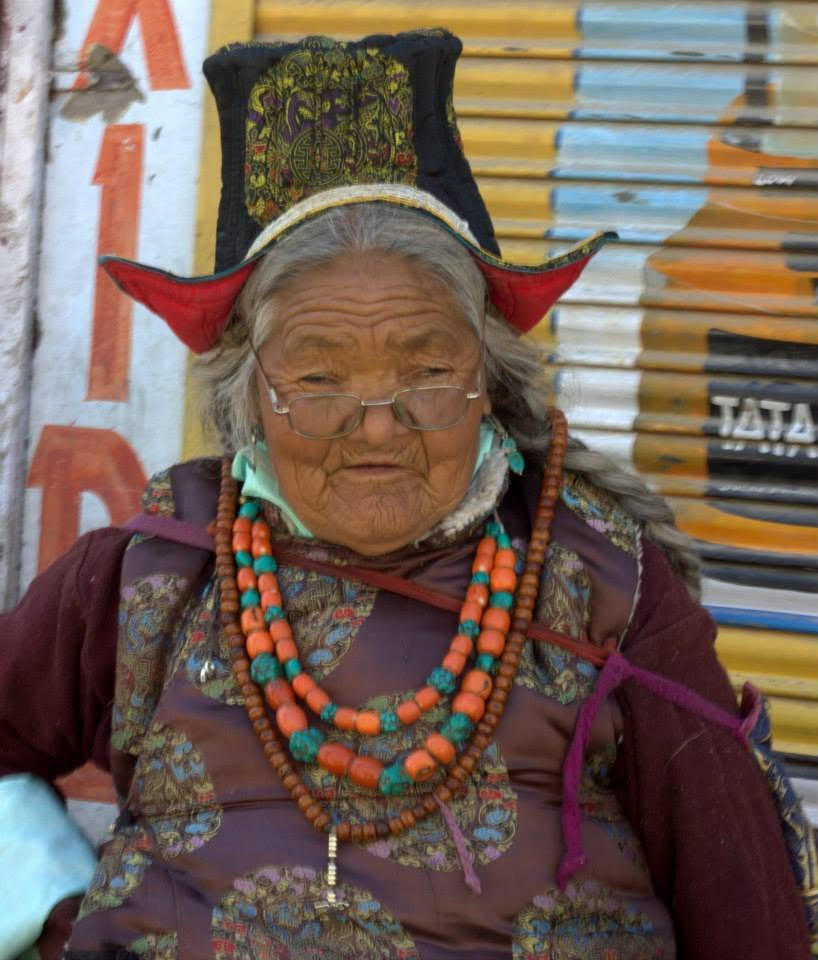
A festival in which the spectators are as photogenic as the participants
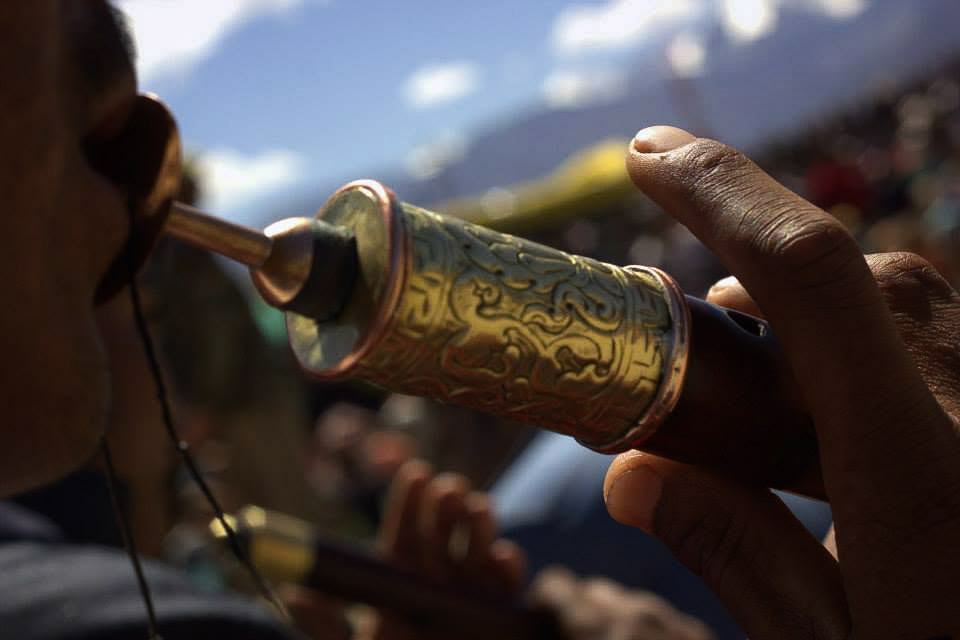
The participants walked in a disciplined procession, proudly smiling in their rich heritage. They twinkled and smiled mischievously at the crowd of spectators as fantastically attired dancers swirled slowly to the Himalayan music. The spectators were as photogenic as the parade participants, and old Ladakhi men stared at the bejeweled ladies as their wives scowled at them while twirling their Buddhist prayer wheels. People cheered from rooftops as thousands of glitter poured from the sparkling street festoons. It seemed like a festival for one and all, so we joined the procession, dancing to the drum beats until we reached the Polo Ground. Now that was a walk to remember.
Ladakh Festival Travel Tip
The Ladakh Festival is held every year in September in many places across Ladakh. The festival in Leh is the largest and most spectacular one. Those who wish to schedule their trip according to the festival are advised to download the festival calendar and schedule from the official Ladakh tourism website before planning their journey. According to this website, the Ladakh Festival dates for 2018 are from the 20th to the 26th of September. Book your hotels ahead, since it is a very popular time to visit Ladakh.
Follow the Ladakh series
RESPONSIBLE TRAVELING-BECAUSE I CARE
FAQs
What does Ladakh look like?
During the Ladakh Festival, Leh becomes a dinner-plate-sized Himalayan town of steep streets and old Tibetan refugee markets, set against snow-clad peaks and a cloudless blue sky, thronged with dancers in dazzling costumes and masks and onlookers watching from rooftops.
What are the best photo spots in Ladakh?
The inaugural parade route through Leh’s streets and the Polo Ground where the procession culminates are the festival’s photographic heart, along with the rooftops, trees, and balconies where locals perch to watch.
What is ladakh festival photo essay about?
It’s the author’s first-hand account of stumbling into the 2012 Ladakh Festival’s opening-day inaugural parade in Leh, describing the procession, costumes, and infectious atmosphere she encountered as a newcomer to the town.
What makes Ladakh visually striking?
The sheer detail and scale of the festival costumes — huge masks, full-body lion masks, dazzling stone jewelry, heavily embroidered boots, and glittering tassels — paired with striking figures like a nearly-naked Hindu holy man leading the procession with a trident.
When is the best time to photograph Ladakh?
September is prime time, when the annual Ladakh Festival takes place across the region, with the largest and most spectacular celebration held in Leh itself.
Can you describe what visiting Ladakh actually looks and feels like, through someone’s own eyes?
The author describes that September morning as one where ‘the world feels like a wonderful place’ — crisp mountain air, a cloudless sky, and getting swept up as a total stranger into the dancing procession alongside locals and photographers.
What visual details make Ladakh stand out compared to other destinations?
The costume detail and scale — elaborate headgear, full-body masks, glittering tassels — combined with the fact that even the spectators, like bejeweled local women and elders twirling prayer wheels, are as photogenic as the performers themselves.
What’s the story behind ladakh festival photo essay?
The author happened to be staying in Leh when the 2012 festival’s inaugural parade took place, followed a table of excited professional photographers to find the procession, and ended up spontaneously dancing along with it all the way to the Polo Ground.
If I wanted to capture Ladakh well in photos, what should I focus on?
Get close on the elaborate costumes and masks, follow the procession’s movement through Leh’s narrow streets, and don’t overlook candid shots of the enthralled spectators watching from rooftops and windows.
What impressions does Ladakh tend to leave on first-time visitors?
A vivid, joyful, communal energy that pulls bystanders in as participants — the author, a complete stranger to Leh, found herself dancing in the parade within hours of arriving, swept up in the town’s cultural pride.
Traveler FAQs
What is the cultural significance of leh began with the stunning ladakh festival?
The Ladakh Festival is designed to showcase and celebrate Ladakhi culture, tradition, and heritage in one concentrated event — bringing local leaders, school children, dancers, and craftspeople together in Leh’s streets.
Where can you see leh began with the stunning ladakh festival performed or experienced?
It’s held every September in multiple locations across Ladakh, with the largest and most spectacular celebration taking place in the capital, Leh, beginning with an inaugural parade through the town to the Polo Ground.
What is the history behind leh began with the stunning ladakh festival?
It’s an annual event usually lasting around 15 days (though the author’s 2012 edition was shortened to 8 days), built around an inaugural procession of cultural troupes, local leaders, and dancers in ceremonial costume.
Why is leh began with the stunning ladakh festival important to Ladakh?
It concentrates the region’s traditions, costumes, and performing arts into one accessible, highly photogenic event, drawing both international photographers and locals into a shared celebration of Ladakhi identity.
How can travelers respectfully experience leh began with the stunning ladakh festival?
Join as an appreciative spectator along the parade route or at the Polo Ground performances — the author found the atmosphere genuinely inclusive, describing it as ‘a festival for one and all’ where visitors were welcome to join in the dancing.
Can you explain the story and meaning behind leh began with the stunning ladakh festival for someone unfamiliar with it?
The festival opens with a procession led by striking figures (in the author’s case, a Hindu holy man carrying a trident), followed by cultural troupes in elaborate masks, headgear, and jewelry, who dance to traditional music through Leh’s streets before culminating in folk performances at the Polo Ground.
What should a visitor understand about leh began with the stunning ladakh festival before watching or taking part in it?
It’s held every September, with the largest celebration in Leh; the article recommends checking the official Ladakh tourism website’s festival calendar to plan your dates (2018’s festival ran September 20-26) and booking hotels well ahead since it’s a very popular travel time.
How has leh began with the stunning ladakh festival changed or survived over time in Ladakh?
Its format and duration can vary by year — the author notes the 2012 edition ran a shorter 8 days rather than the usual 15 — but it has continued as an annual showcase of local troupes, craft stalls, and costume and mask dances.
What’s the best way to witness leh began with the stunning ladakh festival authentically, without it feeling staged for tourists?
Follow the parade itself through Leh’s ordinary streets rather than watching only a formal stage show — the author experienced it by simply trailing a crowd through the town’s markets and joining the dancing procession alongside locals.
Why does leh began with the stunning ladakh festival matter to the identity of Ladakh?
It brings together local leaders, school children, monks, and villagers in shared celebration of Ladakhi heritage, turning the whole town of Leh into a participatory display of the region’s traditions rather than a performance for outsiders alone.


Reblogged this on maverickbird and commented:
Spectacular Ladakh Festival
So much colour and culture.
Such an attractive post.
Thank you. It was beautiful there.
By reading the post, every thing was imaged on my mind. Planning to visit Ladakh after reading it. Very good post.
Thank you. Glad that you liked it