Is Heidelberg worth visiting?
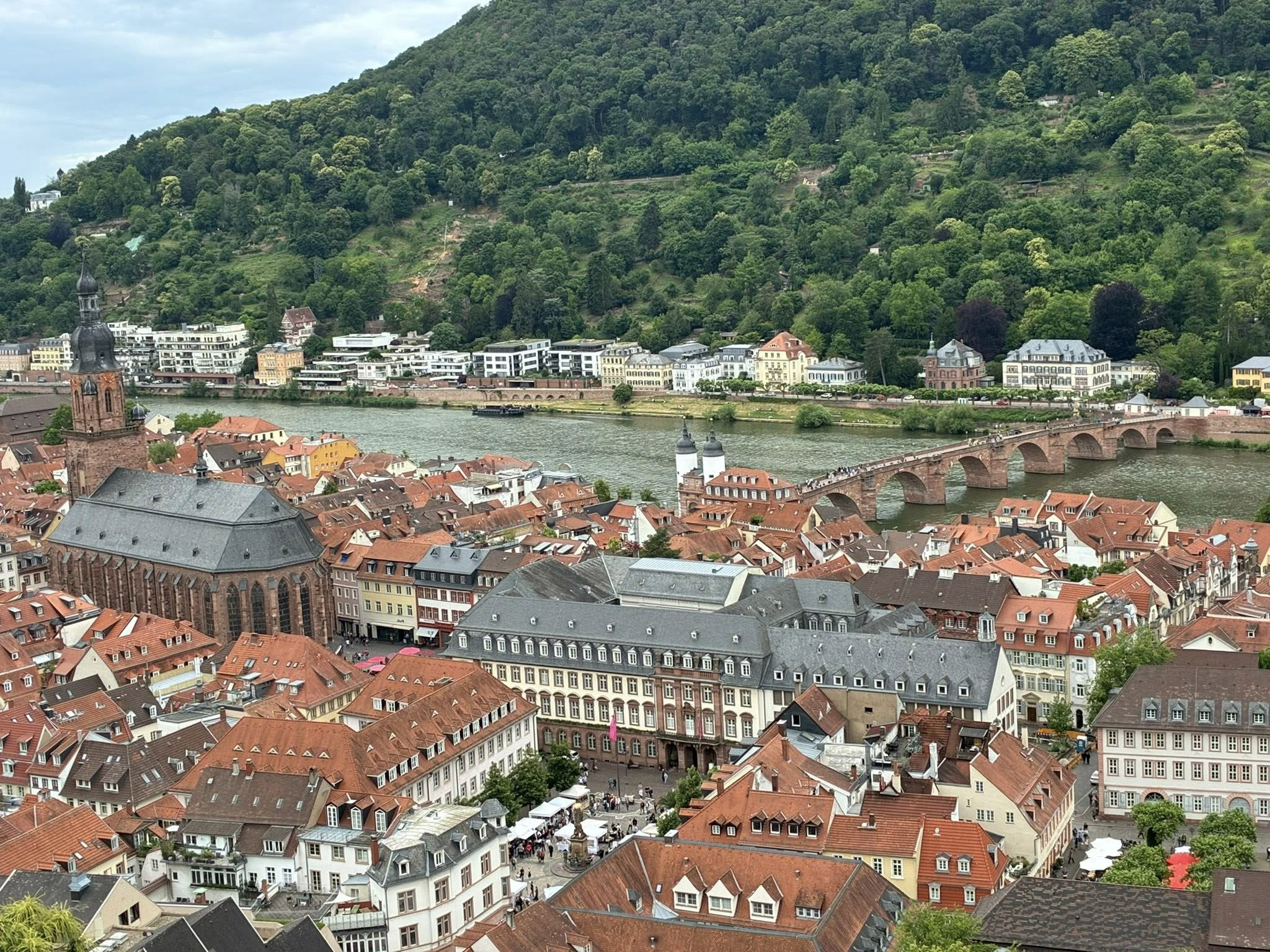
Yes, yes, and definitely, yes!! One of the loveliest riverine cities of Germany, Heidelberg has inspired many poets, philosophers, and writers. Goethe dedicated lines to its beauty, Turner immortalised it in his paintings… to name a few. There´s something incredibly charming about this prestigious university city, and it has a lot to do with the setting. Located at the edge of the green Odenwald, directly on the Neckar River, it is famous for its baroque old town (Altstadt) with an evocative background of a half-ruined hilltop castle. Pretty cobbled lanes, stunning old bridges, and sweeping hill views make Heidelberg one of the most visited destinations in Germany.
A bit about its history
Archaeological evidence proves that the region had been inhabited by humans for as long as 600,000 to 200,000 years. In the 5th century BC, the Celts built a fortress and a place of worship on the Heiligenberg, or “Mountain of Saints”, the ruins of which can still be seen today. The area was occupied by the Romans, who stayed here until 260 AD, when they were defeated by Germanic Tribes. The official name of ´Heidelberg´ first appeared in written records in 1196. The 13th century saw the construction of Heidelberg Castle and the layout of the city as the residence for the Counts Palatine of the Rhine. This was the beginning of the next five hundred years of prosperity of the city as the capital of the Palatinate. In 1386, the University of Heidelberg was built, and the city became a hub of German Romanticism, drawing poets and painters. In 1693, the French troops destroyed the city during the War of the Palatinate Succession, and in 1720, its Palatinate elector Charles Philip abandoned Heidelberg for Mannheim after the Protestant stronghold refused to embrace Catholicism. This was a huge blow, and temporarily the city suffered as a provincial war-damaged town. However, in 1803, Heidelberg became part of Baden and its glory returned in the 19th century, when its residential poets and thinkers rendered it the nickname, “City of Romanticism”. Soon afterwards, Heidelberg became a center of science and a tourist destination, and it largely escaped the WW II damage. After the war, Heidelberg was the headquarters of the US Army in Europe until 2013.
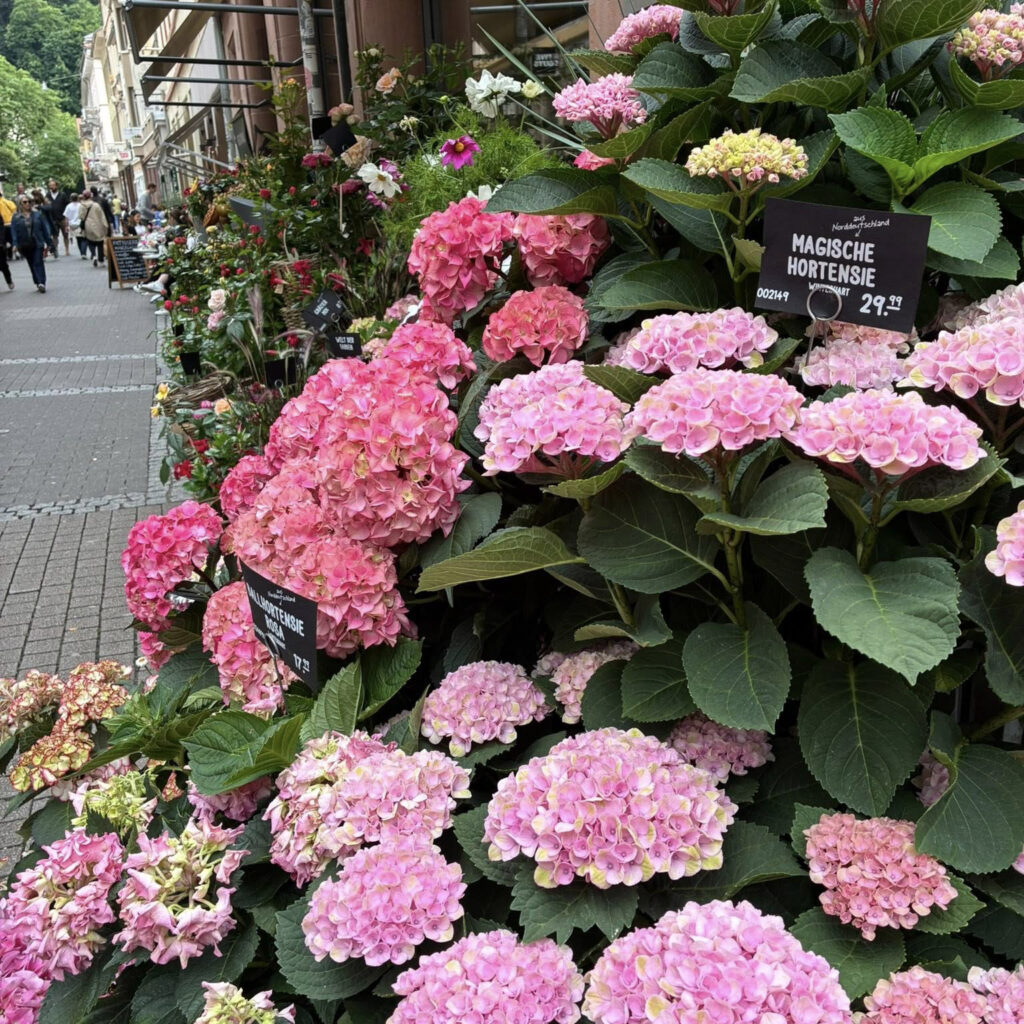
Heidelberg, a mix of the new and the historical
Although Heidelberg receives a whopping over 10 million tourists each year, it is a relatively small place with 150,000 inhabitants, many of whom are international students. Thanks to its Ruprecht Karls University, Heidelberg is one of Germany´s premier university towns. Founded in 1386, the Ruprecht Karls is the oldest university in the country, and it draws 30,000 students to the city. That is why Heidelberg is a unique mix of new and old, a place where student pubs are located in gorgeous baroque buildings. There´s a saying that all roads lead to the river, and it is literally true in Heidelberg. Most of its sights are located along the Neckar, and the promenade is one of the loveliest places in the city. I visited Heidelberg recently and was lucky enough to be there on the special Schlossbeleuchtung. Held every year, the Heidelberg Castle Illuminations in July and September are an unforgettable spectacle. The event starts with three historic cannon shots followed by the ruined castle being lit by red Bengal lights. A breathtaking fireworks display afterwards lights up the Neckar for 15-20 minutes, and it is a sight to behold. Funnily though, this event commemorates two historical incidents: the red Bengal lights at the castle represent its destruction during the Palatinate War of Succession, while the fireworks display continues a 400-year-old romantic tradition. It is believed that in 1613 Prince Elector Frederick V arranged such a display from the Alte Brücke (Old Bridge) for his new wife, Elizabeth Stuart. Today, the Heidelberg Castle Illuminations is a highly popular event that is marketed by the city´s tourism board in combination with a boat cruise, a three-course dinner, and unprecedented views of the fireworks.
Heidelberg Travel Guide
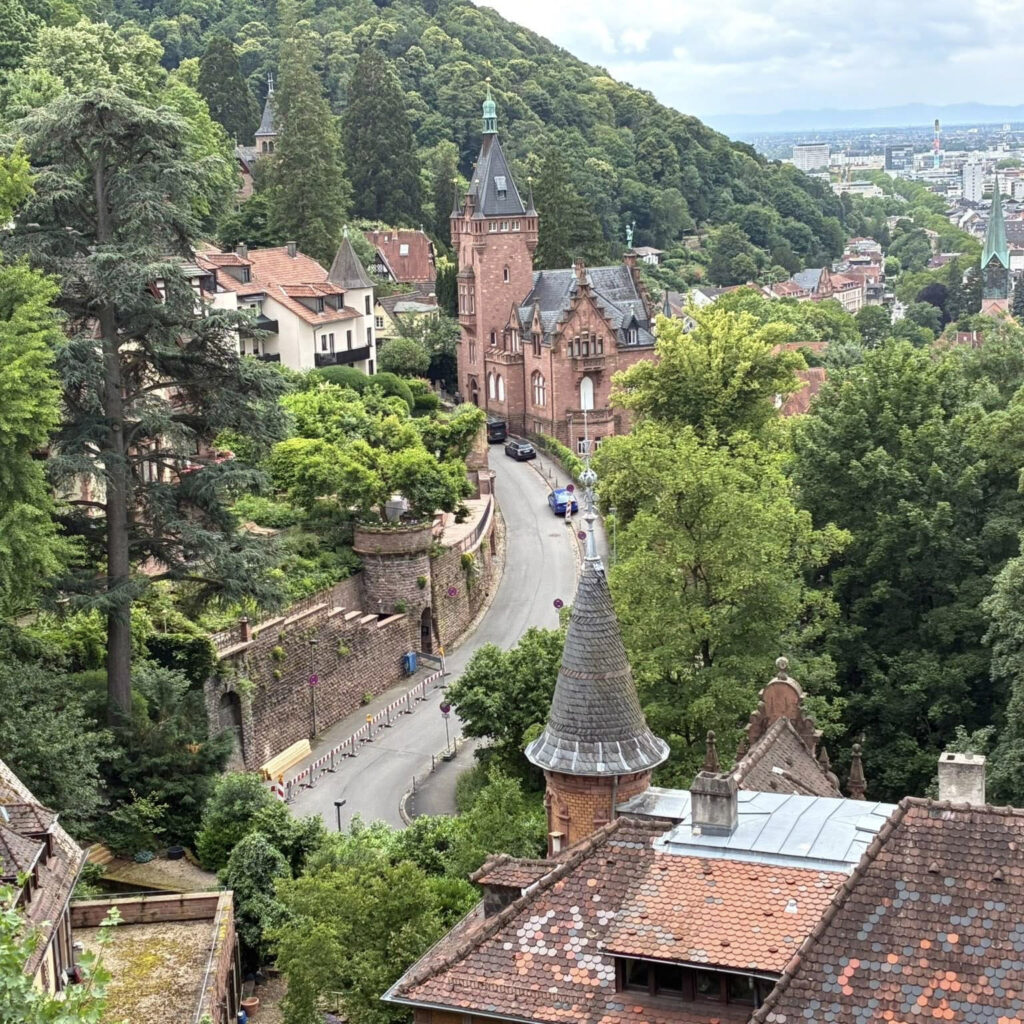
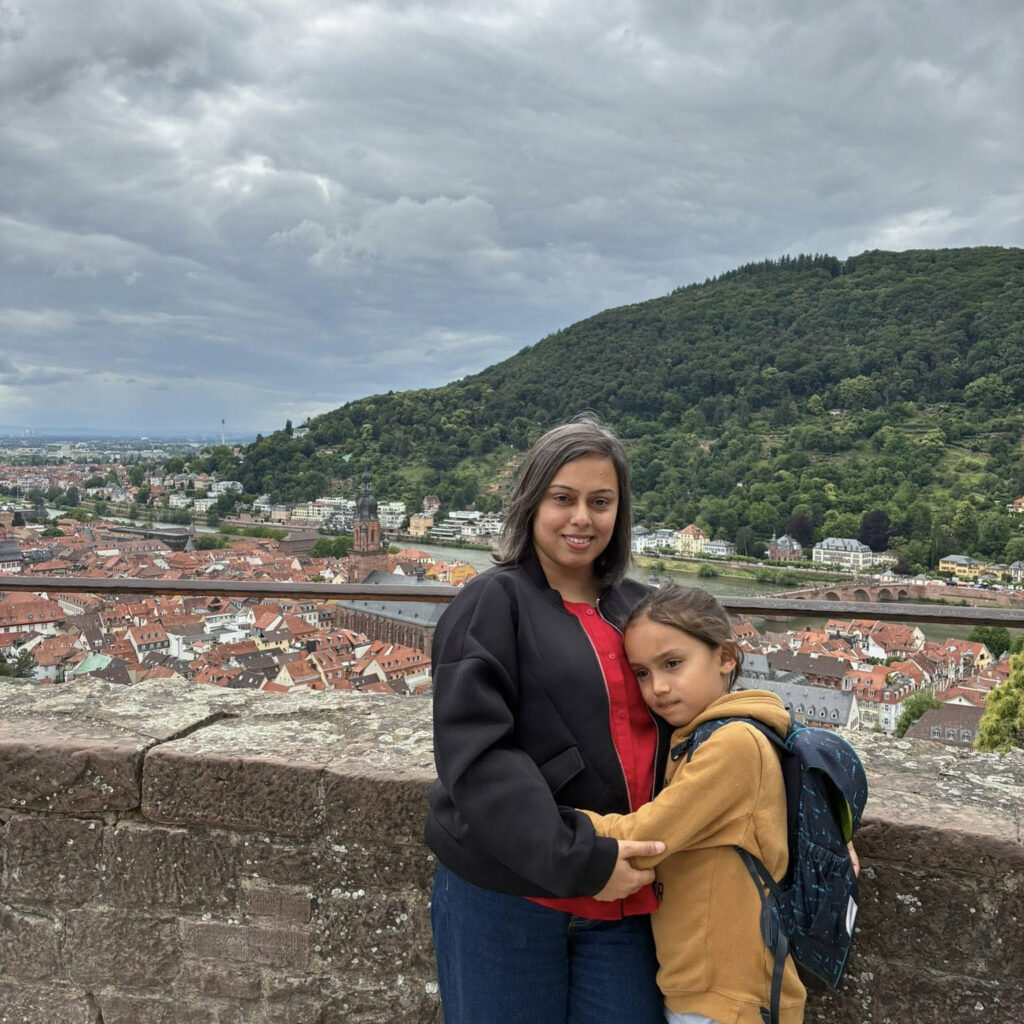
Heidelberg is the fifth-largest city in Baden-Württemberg, and it is one of the most popular destinations in Germany. Its picturesque Old Town, known as the ‘Altstadt’ in German, is situated at the foot of the castle hill and has been recognised as a UNESCO World Heritage Site. The city´s iconic ruined castle is a symbol of German Romanticism, and the Philosophers’ Walk and the Königsstuhl offer wonderful views of Heidelberg’s highlights.
How to reach and getting around
Located only 82 km away, the nearest international airport is Frankfurt Airport. The main train station, Heidelberg Hauptbahnhof, is 2 km away from the old town, and it is well-connected to the city center by regular public transportation services. Heidelberg is directly connected with Hamburg, Munich, and Frankfurt with high-speed train services (ICE), and the extensive suburban Rhein-Neckar network links it to cities such as Mannheim, Ludwigsburg, Karlsruhe, and Mainz. Heidelberg is best explored on foot. Parking can be a bit of a problem. The best thing to do is to park your car at one of the multi-storey parking areas and then explore on foot.
What to see
Heidelberg Castle
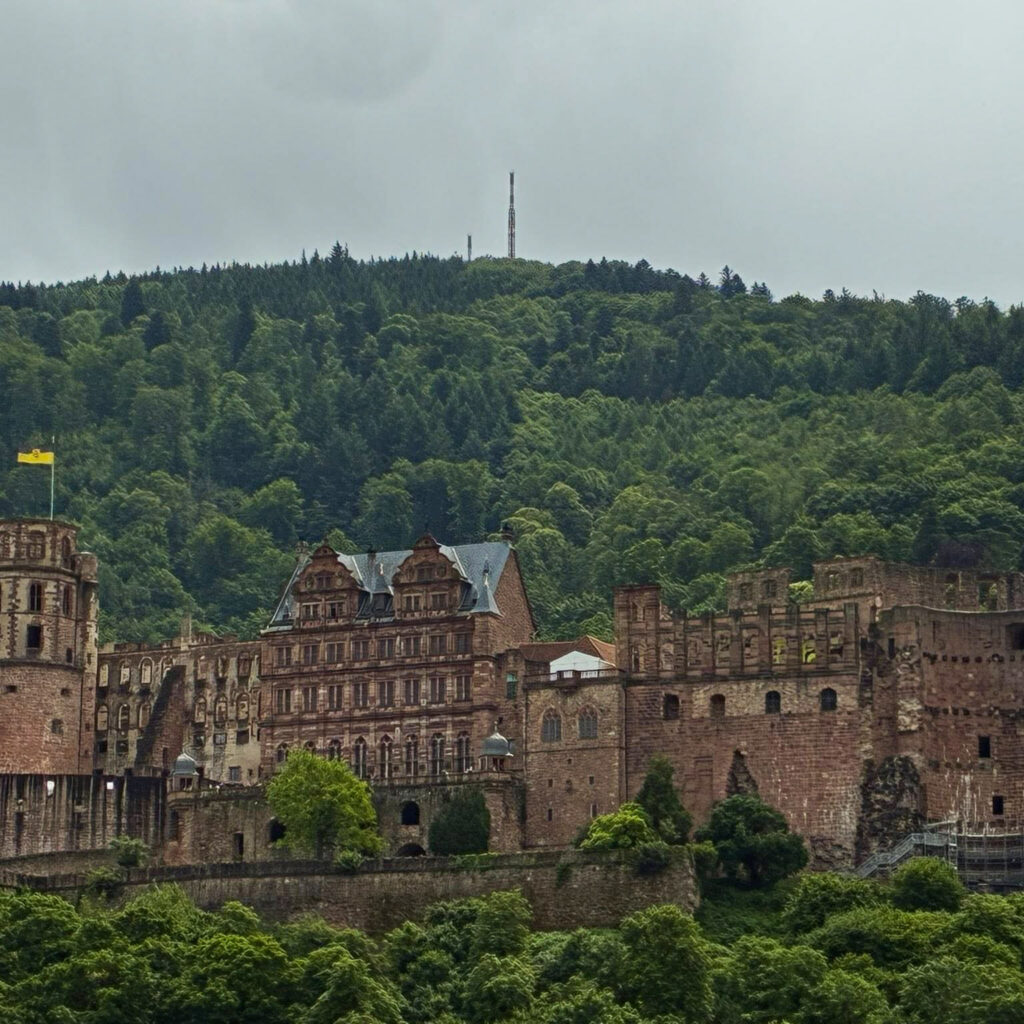
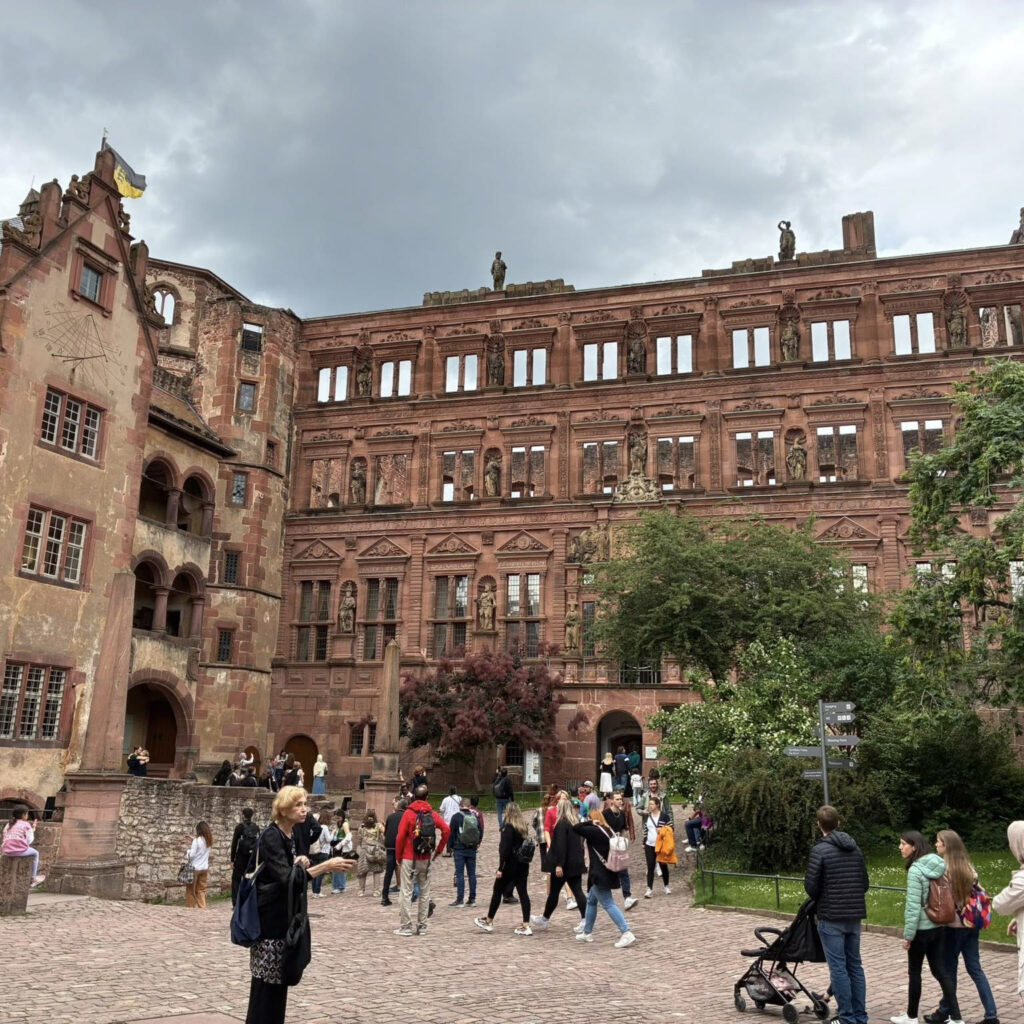
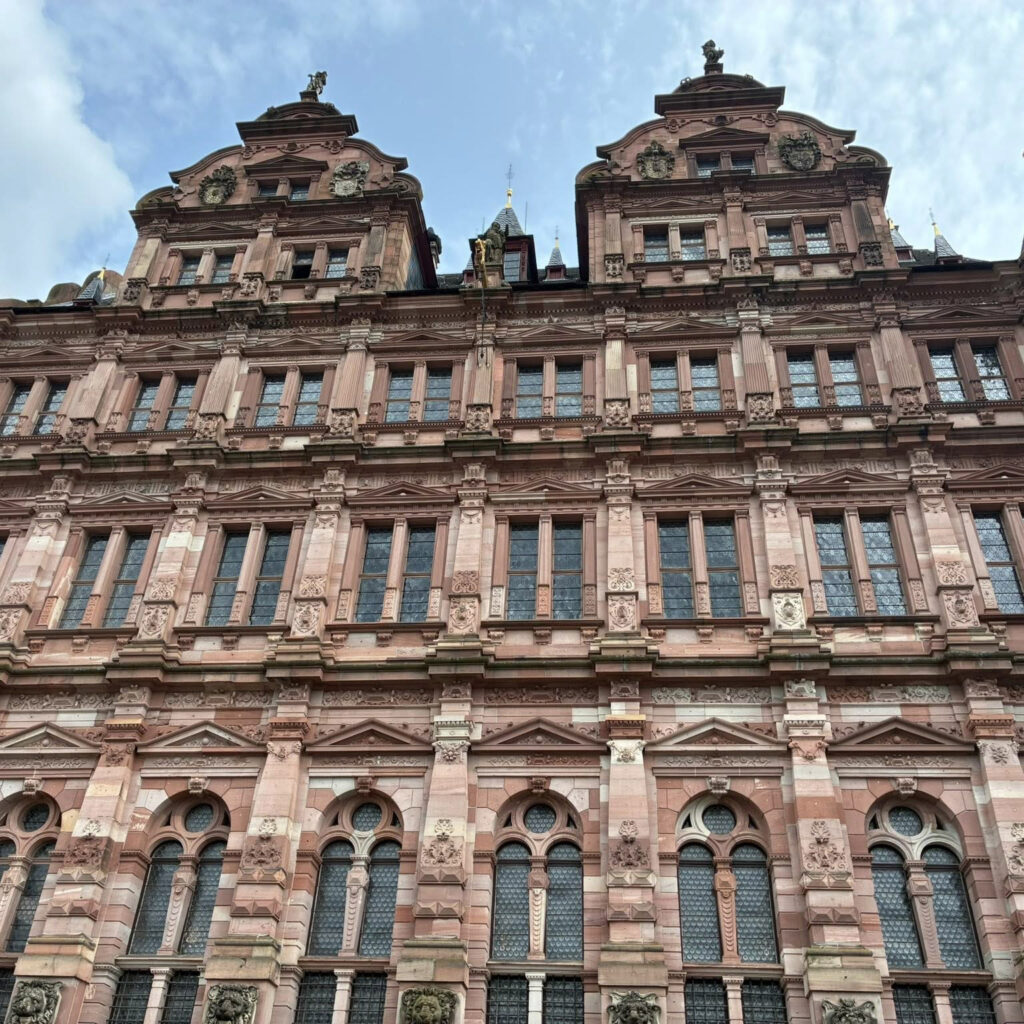
‘Schloss Heidelberg’ is the most important attraction. Apart from stunning views of the Altstadt and the Neckar Valley, the castle houses beautiful buildings from different historical periods. The castle is easily accessible either on foot (a steep hike up the Burgweg) or by a funicular railway (Heidelberg Bergbahn) from Kornmarkt. The funicular has two stations. The lower portion takes you to the castle (Molenkur), while the upper station reaches Königstuhl, the town´s highest point at 550 meters.
Price:
- Adults 7 € / Reduced 4 € round trip from Kornmarkt/ Molkenkur / Castle + entry to castle
- Adults 12 € / Reduced 10 € round trip from Kornmarkt / Molkenkur / Castle / Königstuhl / Kornmarkt
A parking garage is available at P12 Kornmarkt / Schloss.
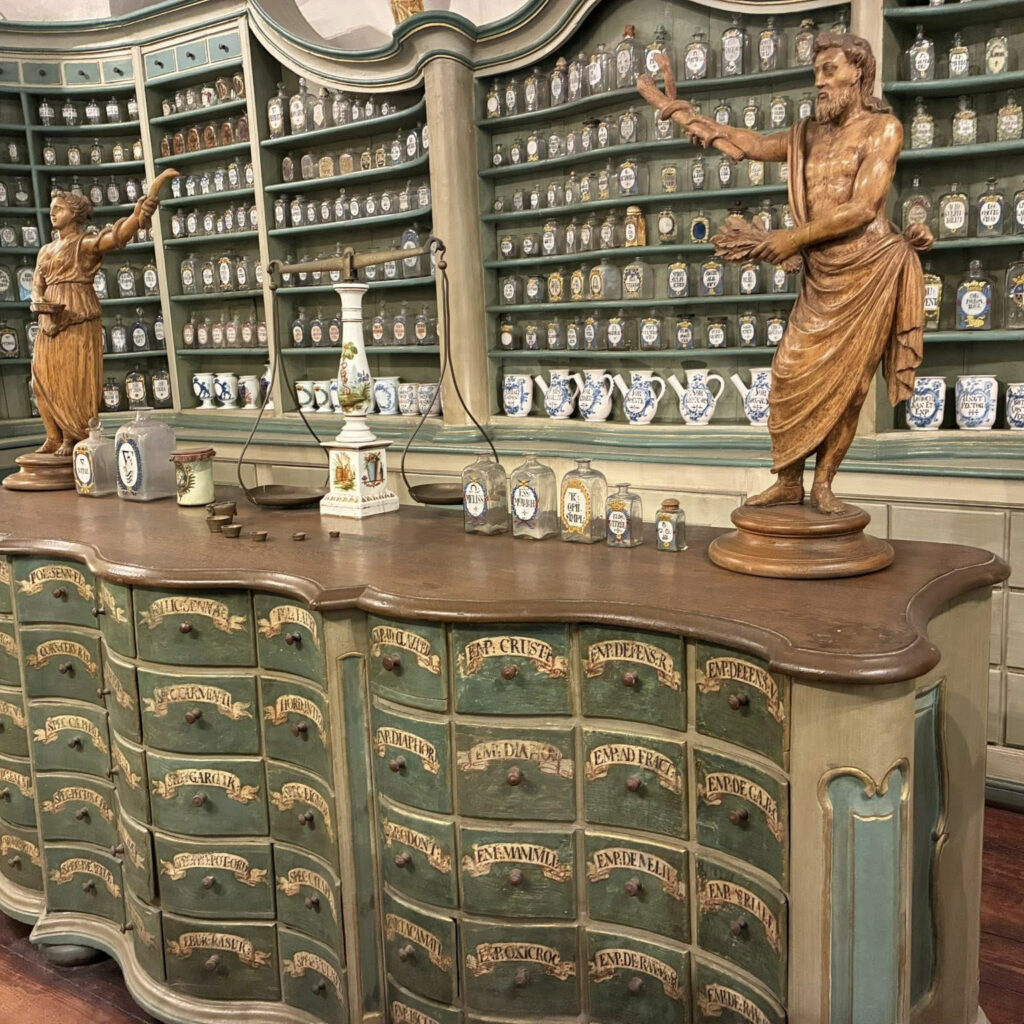
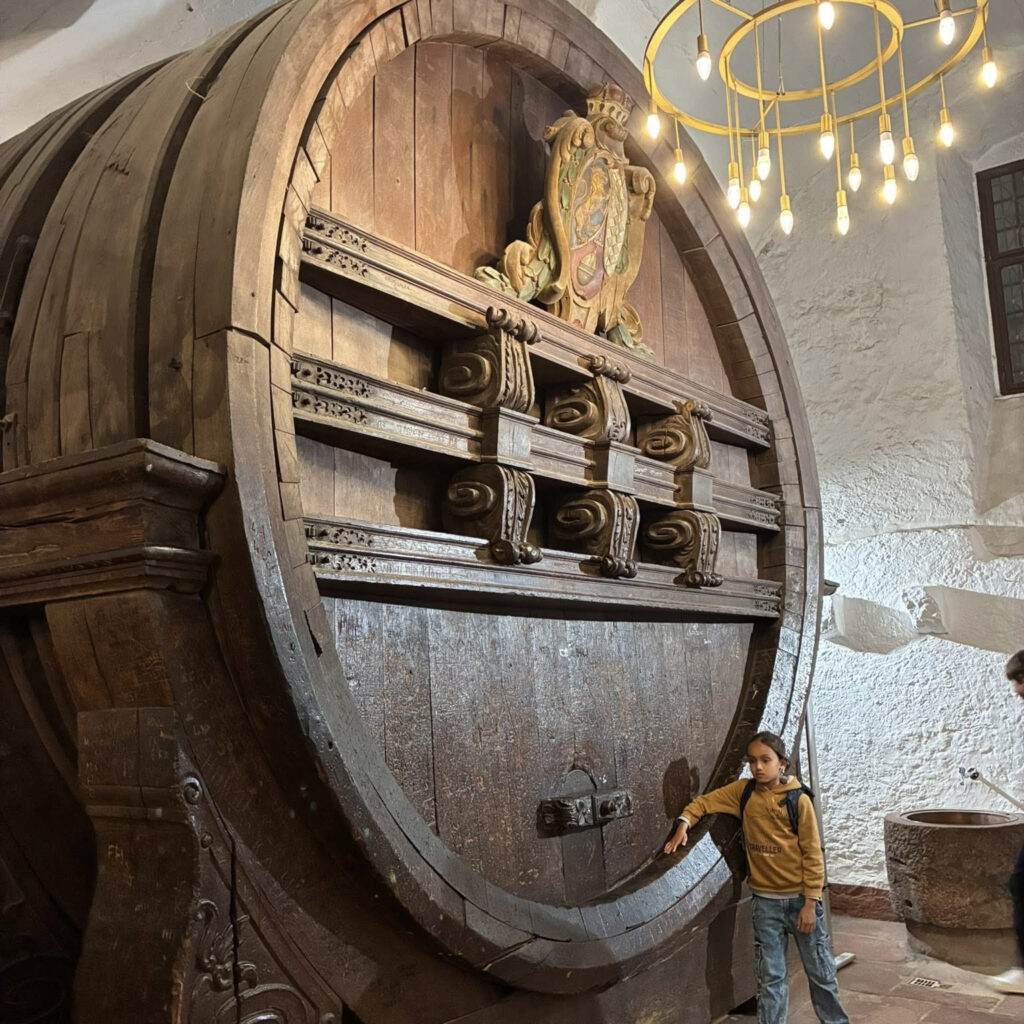
Heidelberg Castle is open every day, and tours in German and English are available every hour. The entrance fee includes admission to the German Pharmacy Museum and to the Great Barrel (‘Heidelberg Tun’), a barrel that once held 220,000 litres of wine. It is advisable to buy funicular railway tickets beforehand since it can get very crowded on public holidays and during school vacations. Website: www.schloss-heidelberg.de
Heidelberg Town Squares
There are several interesting squares in the old town along Hauptstrasse.
- Kornmarkt – the loveliest of them all. The square is dominated by a statue of the Madonna with the Heidelberg Castle in the background. In the olden days, the square was used for trading agricultural products. Kornmarkt houses several important attractions like the Palais Prinz Carl (Palace Prince Carl). It has a legacy of hosting several well-known figures like Kaiser Wilhelm I, Otto von Bismarck, Empress Sissi of Austria, Goethe, and Mark Twain. There are several other interesting squares in Heidelberg. There are several interesting squares in the city:
- Marktplatz – the location of the City Hall (‘Rathaus’) and the Heiliggeistkirche (‘Church of the Holy Spirit’). It is a popular place with plenty of cafes and bars. For some of the most spectacular views of the city, climb up the Heiliggeistkirche church tower. Price: Adults 2 € / Students 1 €
- Bismarckplatz and Hauptstrasse – the main street of the old town starts here, and this square serves as an important public transport hub. Stretching over 1 1.6 km from Bismarckplatz to Karlstor, Heidelberg’s Hauptstraße is the longest pedestrian zone in Europe. It leads to the Neckar and is lined with Baroque and Renaissance buildings that house department stores, boutique shops, cafes, hotels, and restaurants. Hotel zum Ritter St. Georg is one of the most important sights on Heidelberg´s Hauptstrasse. It is a beautiful hotel that was built in 1592 by a rich cloth merchant. Today it is one of the city´s most sought-after luxury hotels. Tucked away off a side alley from Hauptstrasse lies the beautiful pink stone church – Jesuitenkirche, built in 1712 for the Jesuits.
- Universitätsplatz – the central square of the old town. The Old University buildings line one side of the square, with the New University on the other. The Student Prison (‘Studentenkarzer‘) is just around the corner.
Old Bridge (Alte Brücke)
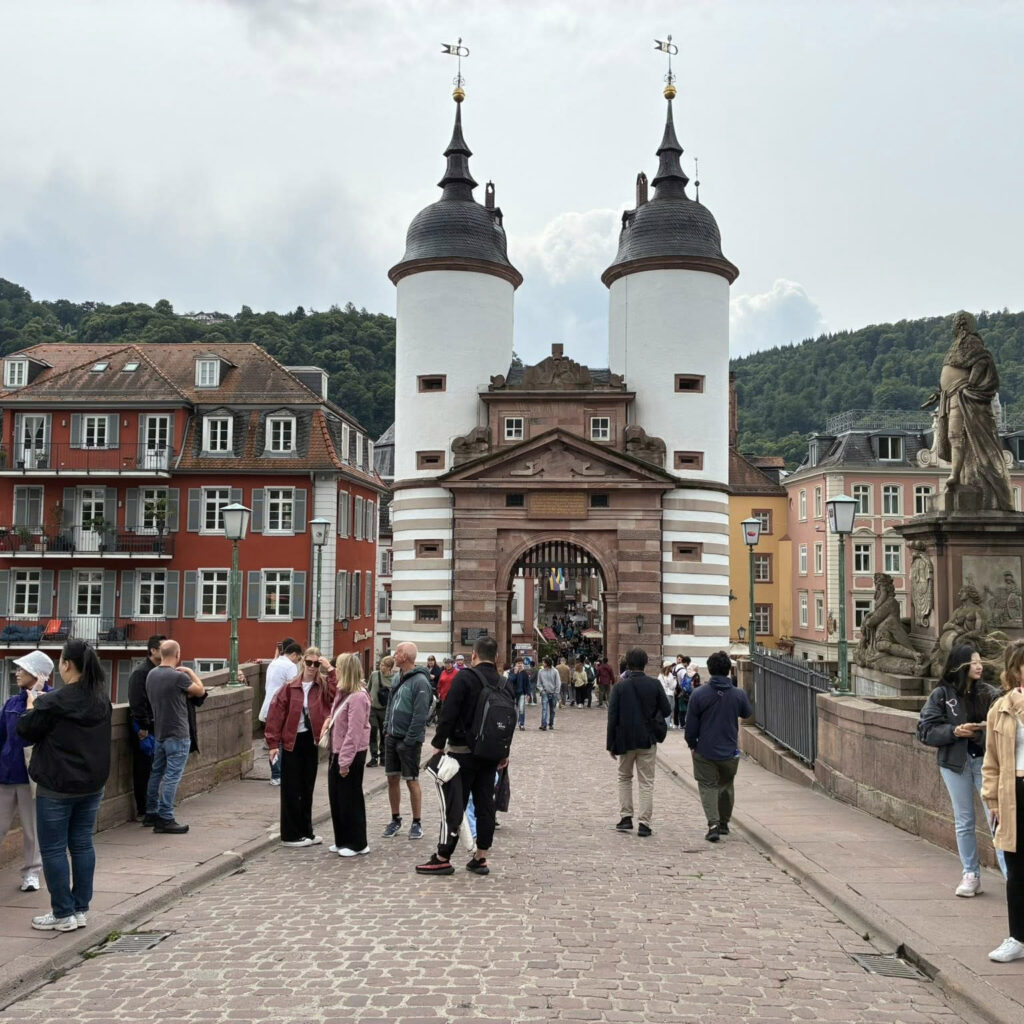
Spanning the Neckar River, the photogenic Alte Brücke connects the old town to the suburb of Neuenheim. It was built in the 18th century and was originally named the Karl-Theodor-Brücke, after one of the rulers of Heidelberg. It is the ninth bridge to be built on this spot – the previous versions being destroyed by high water and ice breaking up. The Old Bridge is decorated with the majestic twin-towered Brückentor (Bridge Gate) and directly next to it lies the quirky Heidelberg Bridge Monkey.
Philosopher’s Walk / Philosophenweg
An easy 1.5-mile trail on the northern bank of the Neckar River with a stunning view of Old Town, Philosophenweg offers panoramic views of the town of Heidelberg, the bridge and castle. There are two options – either walk along Neuenheimer Landstraße, which is wheelchair-friendly and baby stroller-friendly, or walk along the riverfront path.
Other things to do
- Discover the University of Heidelberg, one of the oldest universities in Germany
- Take a boat ride on the Neckar River
- Attend local festivals like the Heidelberg Christmas Market or the Heidelberg Spring Festival
Heidelberg Travel Tips
Buy the HeidelbergCARD to save money, especially if you want to see the most of what this lovely city has to offer. This card gives discounted access to over 60 attractions, including a Castle ticket with the funicular, free use of public transportation in Heidelberg, and a city map for either 1, 2, or 4 days or a 2-day family card. It can be bought at a number of Heidelberg hotels, the Tourist Information at the Main Station, the Tourist Information at the Neckarmünzplatz, the Tourist Information in the Town Hall (Market Square), the Käthe Wohlfahrt (Universitätsplatz), the Kurpfälzisches Museum (Palatinate Museum, Hauptstraße 97), and the Youth hostel Heidelberg (Tiergartenstr. 5).
Follow the rest of the Top Experiences series
- TOP TWENTY THINGS TO DO IN EGYPT
- WHY YOU SHOULD VISIT MALTA
- TOP FUN THINGS TO DO IN HAMPI
- 10 HISTORICAL PLACES TO ROAM ACROSS THE WORLD
- 10 HISTORICAL MARVELS OF ITALY
- 10 BEST SHOWS IN EUROPE YOU MUST SEE
- DUBAI THRILLS: 7 MUST-DO ACTIVITIES
- 10 HISTORICAL MARVELS IN TURKEY TO ENJOY WITH KIDS
- MOST ENCHANTING PALACES IN EUROPE
- IN‑BETWEEN MOMENTS IN ASPEN
RESPONSIBLE TRAVELING-BECAUSE I CARE


