The stunning Tigray rock-cut churches in Ethiopia

Leaving Aksum for Tigray rock-cut churches

Abuna Yemata, the world’s most inaccessible church

The “climb of faith” – to do or not to do

Finding peace or death by free fall

Tigray rock-cut churches travel guide
Where are the Tigray rock-cut churches?
Tigray rock-cut churches are located in Ethiopia’s mountainous north-eastern region. These are set between the cities of Aksum and Mekelle and are not easy to reach except by private car or organized tour. The best base is the town of Hawzen.
Tigray rock-cut church groups
There are more than 100 churches in the Tigray region, and these are clustered into 5 main groups. The Gheralta group of churches is the most visited, and these are located nearest to Hawzen. The Gheralta group of churches is also the quickest and easiest to access. The three most impressive ones, namely Abuna Yemata, Maryam Korkor, and Daniel Korkor, are located here.

Tigray rock-cut churches itinerary
This itinerary includes both easy-to-access and nearly inaccessible churches. Either do both if you have time and a sense of adventure, or choose your section.
Day 1
- Abraha We Atsbeha – Start early from Mekelle and head towards Wukro. Stop at Abraha We Atsbeha, the church of the twin kings. It is accessible by a short flight of steps, has beautiful murals, and sweeping views of the Gheralta region. The entrance fee is 250 Birr. Tips are expected by the priest and the guides who happen to latch on. The recommended place for an overnight stay is Korkor Lodge.
Day 2
- Abuna Yemata (Abuna Yemata Guh) – The monolithic church set atop a sheer rock pinnacle is a short drive away from Korkor Lodge. Start early to avoid the blazing noon sun. The first part of the climb is like a steep hike. Take it easy since Tigray is at an altitude of 2000m and above, and you may get breathless. The second part requires clambering up the cliff face. Safety ropes that were previously used by the local guides were prohibited at the time of my visit in 2019. The steep rock wall has only handgrips and natural holes for footholds. Being barefoot is mandatory since it is holy ground. After clambering on top of a big boulder in the middle of the two pinnacles, the final stretch includes a dash along a narrow ledge to get to the entrance of the church. This is scarier than dangerous, and you don’t want to look down the 250m drop. Return to Korkor Lodge after the hike and take the rest of the day off.
Day 3
- Maryam Korkor and Daniel Korkor (stop at Maryam Papaseit) – Start early for Maryam Papaseit church. Just an hour hike through the valley, and it is an atmospheric semi-monolithic church located under a mountain ledge. The main sanctuary is hewn from the rock, and the interiors have some well-preserved murals, which the priest can show by candlelight. Tipping is expected. Leave Maryam Korkor for the afternoon. It is on top of the mountain directly in front of Korkor Lodge. The ascent is a steep and strenuous 1,5-hour hike that sometimes includes clambering over rocks. The views are breathtaking. Maryam Korkor’s frescoes are faded. Its interior, however, has beautiful architectural features. Only the church’s old priest and an old nun live up there, and they rarely descend. According to the custom, upon their death, they will be buried in the walls of the church, just like some of their predecessors. Daniel Korkor is located a few minutes away from Maryam Korkor. It overlooks the valley and is accessed via a ledge along a dizzying precipice. Daniel Korkor is very atmospheric since only a tiny door serves as the sole source of light inside the church.
These Tigray rock-cut churches are the main attractions in the area around Korkor Lodge. If you have more time on your hands, you can explore the other groups of churches as well.

The easily accessible Tigray rock-cut churches
This part of the post is inspired by The Hot Flashpacker. In her post, she has listed down the easily accessible Tigray rock-cut churches as the ones “for fat and old people” (in her guide’s words). Most of the churches mentioned here are accessible for both men and women, and for people with physical disabilities. These monuments fall en route from Aksum to Mekelle.
- Mikael Alem Adi Kesho – This church is in a cluster of three Ethiopian stone churches near Teka Tesfai and involves a 100-foot climb up a single sandstone monolith. Entrance fee – Entry is 150 Birr
- Mikael Milhaizengi – Also located in the Teka Tesfai cluster of Ethiopian carved churches, this church is reached by a few-minute hike up a hill. Best known for the unique circular dome ceiling, the priest may open the door to the holy place and show you the pages of a 1500-year-old bible for a tip. A 4×4 is needed to get to this church, or one needs to hike over a mile from Mikael Alem Adi Kesho. A guide is recommended. Entrance fee – 150 Birr
- Wukro Churkos – This church is on the northeastern outskirts of Wukro and is the most accessible one. Located on mostly flat ground, this rectangular church resembles a free-standing monument, but in fact, it has been carved from solid rock. Entrance fee – 150 Birr
- Abraha We Atsbeha – This church is a 45-minute drive from the main highway northwest of Wukro, followed by a 5-minute walk up about 100 steps. It has the loveliest murals. Entrance fee – 200 Birr

Tigray rock-cut churches visiting tips
- Remove your shoes before entering all the Tigray rock-cut churches in Ethiopia.
Don’t expect all the churches to be open. Sometimes the priest may not be in his office, and you might not be able to visit or may have to wait for entry. - Each church has an entry fee of 150 to 200 Birr. Keep the receipt so they don’t ask you to pay the entrance fee again.
Usually, the priest will expect and may even ask you for a tip.
Almost every Ethiopian antiquated church comes with additional people looking for money – from kids trying to sell you fossils and rocks, boys trying to be your guide, or old men wanting a tip to watch your shoes. Be firm and say “no” if the hassle gets too much.
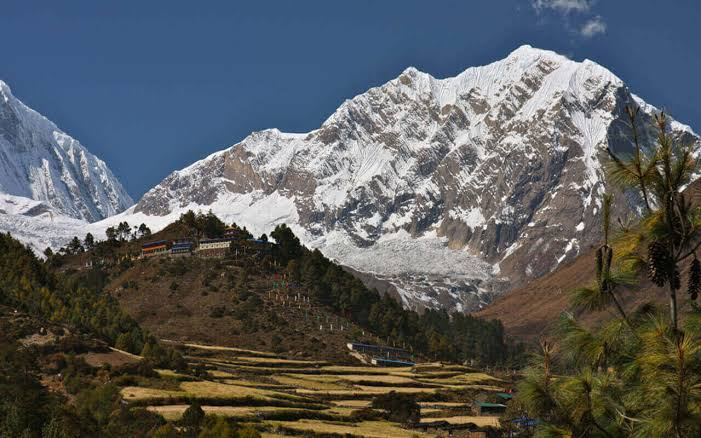
The stony mountains of Tigray in northern Ethiopia

The tour to Abuna Yemata, Daniel Korkor, and Maryam Korkor, with a stop at Wukro Churkos and 2N/3D in the Danakil Depression, cost me 700 Euros. It was an all-inclusive small group tour of six people and included accommodations, all meals, transfers, and guiding services. I went with Ethio Travel and Tours. Although there were some slight discrepancies between what we were promised and what we received, I was very pleased with their services.


Follow the rest of the Ethiopia series here
- 20 PHOTOS THAT WILL WANT TO MAKE YOU VISIT ETHIOPIA
- ETHIOPIA TRIP TIPS
- MY ADDIS ABABA MEMORIES
- PHOTO ESSAY OF ADDIS MERCATO
- ADDIS ABABA TO JINKA: AN ETHIOPIAN ROAD TRIP
- OMO VALLEY, THE HUMAN ZOO OF ETHIOPIA
- THE LOWER OMO VALLEY IN ETHIOPIA
- REAL LIFE PHOTOS OF OMO VALLEY TRIBES
- OMO VALLEY TRAVEL GUIDE AND TIPS
- MY LAZY, RELAXING AKSUM DAYS
RESPONSIBLE TRAVELING-BECAUSE I CARE
FAQs
What is the cultural significance of the Tigray rock-cut churches?
They belong to the Ethiopian Orthodox Church, one of Christianity’s oldest sects, and according to local legend the most famous of them, Abuna Yemata Guh, was quarried out of a cliff face in the 5th or 6th century by Father Yemata, one of the Nine Saints who came from Syria to the ancient kingdom of Aksum. Locals still climb to churches like this regularly to pay homage, treating the difficult ascent itself as an act of faith.
Where can you see the Tigray rock-cut churches?
They’re clustered across Ethiopia’s mountainous Tigray region, roughly between the towns of Aksum and Mekelle, with Hawzen serving as the best base. There are more than 100 such churches in total, ranging from extremely difficult ones like Abuna Yemata to more accessible clusters, such as the ones near Teka Tesfai, reachable by shorter hikes.
What is the history behind the Tigray rock-cut churches?
Per local legend, Abuna Yemata Guh dates to around the 5th or 6th century, when Father Yemata is said to have traveled to Ethiopia, climbed the mountains, and carved the church directly out of the rock — reportedly either to escape persecution or to seek the peace of a high-altitude retreat. It’s built in a traditional Ethiopian Orthodox layout, divided into distinct areas for music and Holy Communion.
Why is the Tigray rock-cut churches important to Tigray?
They represent an ancient, still-living religious tradition — local Tigrayans, including elderly guides and even pregnant women, continue to make the dangerous climbs to churches like Abuna Yemata on a regular basis as an act of devotion, and the churches remain active places of worship rather than purely historical sites.
How can travelers respectfully experience the Tigray rock-cut churches?
Remove your shoes before entering any church, expect to pay an entrance fee (150 to 200 Birr) and keep your receipt, and tip the priest if he shows you the interior or artifacts like ancient manuscripts. Be prepared for persistent requests for money from others nearby (kids selling fossils, informal guides), and it’s fine to be firm and decline if it becomes excessive.
Can you explain the story and meaning behind the Tigray rock-cut churches for someone unfamiliar with it?
At their most extreme, like Abuna Yemata Guh, these are churches built almost impossibly high on sheer cliffs, reflecting a belief that proximity to the sky brings believers closer to God — a local saying quoted in the article notes that just three steps outside the church ledge means certain death, underscoring how literally that closeness to danger is tied to the site’s spiritual meaning.
What should a visitor understand about the Tigray rock-cut churches before visiting?
Understand that some of these churches, especially Abuna Yemata, involve a genuinely dangerous, ropeless cliff climb — the government recently removed the safety ropes that used to be there — and the writer explicitly says it’s something she’d never repeat. This is not a destination for anyone with vertigo, and less extreme, more accessible church clusters exist for those who want the experience without the risk.
How has the Tigray rock-cut churches changed or survived over time in Tigray?
One notable recent change the article flags is the government’s removal of safety ropes that once assisted climbers at Abuna Yemata, making an already difficult ascent riskier. At the same time, longstanding traditions persist — at Maryam Korkor, for instance, custom holds that the resident priest and nun will be buried within the church’s walls upon death, just as their predecessors were.
What’s the best way to witness the Tigray rock-cut churches authentically, without it feeling staged for tourists?
Book a proper multi-day tour with a knowledgeable local guide (the writer used Ethio Travel and Tours) rather than a rushed day trip, and include a mix of both the dramatic, difficult churches and the more accessible ones — the churches remain active religious sites used by local communities, which naturally keeps the experience from feeling like a performance for visitors.
Why does visiting the Tigray rock-cut churches matter to travelers?
Because, per the article, they remain one of Ethiopia’s best-kept secrets — less visited and less famous than the Lalibela churches, but offering equally extraordinary architecture, views, hiking, and birdwatching, along with a rare chance to witness a genuinely living, centuries-old religious practice rather than a purely historical monument.


I’ve read this excellent article about the rock-cut churchs of Tigray. I’m ethiopian. I’ve lived in Tigray for a very long period of time. I’ve never visited these churchs. you inspired me to visit them now though I am living in exile. Thank you ery much for your wonderful review and enlightening article.
Thank you.