Post cards from Kashmir to Kargil on Srinagar Leh road trip
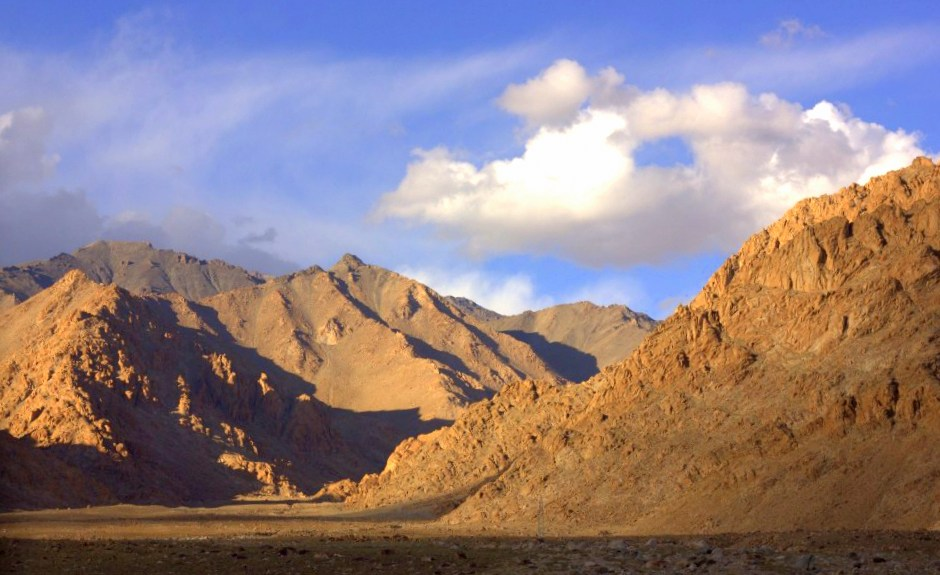
On my first trip to Kashmir, I had the opportunity to explore Ladakh as well. Famously known as the “Land of High Passes”, Ladakh is located in the eastern part of Jammu and Kashmir in India and has a spectacular high altitude desert. The rain shadow of the Himalayas denies entry of monsoon clouds to that region, thus creating its stunning arid beauty. Jagged, stark mountains envelop this Buddhist ex-kingdom from all sides, making road accessibility to Ladakh via the Srinagar-Leh road trip an adventure in itself. In winters, Ladakh gets more remote than usual, and only a handful venture into its snowy depths. During the rest of the year, especially the summers and autumns, are very busy times for the tourism industry, and Ladakh’s breathtaking beauty captivates with each change of season.
An epic road trip to a legendary Himalayan Buddhist kingdom
Though geographically the distance between Srinagar and Leh is only 421.4 kilometers, it usually takes most travelers two days to complete it. The National Highway 1 is a torturous road, which twists, turns, and seems to only go higher until the air becomes too thin to breathe comfortably. A perennially broken road, it is also one of the most dramatic and has changes in scenery which can set anyone wanderlusting. Add to this the biting cold, harsh terrain, and inhospitable environment, and you have the epic Srinagar-Leh road trip.
Fluttering prayer flags, stark rocky landscape, and endless skies
However, the aura of Ladakh is such that every year, hundreds of travelers navigate this mountain highway, and it is easy to understand why. Imagine picturesque gompas dramatically crowning rocky outcrops where pristine whitewashed stupas stand still beneath fluttering rainbow coloured prayer flags. Mysterious old monasteries with their bands of calm saffron-robed monks loom over the landscape, and their chanting inside frescoed decorated rooms floats in the cool thin mountain air. It is a place where human civilization noises are happily subdued by roaring rivers, and only during colourful monastery festivals does this tranquility get broken.
You may also like: Daksum, the hidden jewel of Kashmir

The lure of Ladakh versus the arduous Srinagar-Leh road trip
This unique calmness is Ladakh’s biggest draw, after its staggering natural beauty and its easy, languid pace have relaxed visitors for centuries. This, however, does not mean that time stands still there, and Ladakh is intensely filled with high adrenaline sports opportunities, titillating historical mysteries, and an energetic, active local community. There is a lot happening in Ladakh all the time, and I am proud to say that there are very few places like this slice of high-altitude India on earth.
Nothing prepares you for Ladakh’s jaw-dropping beauty
Here, purple mountains look up to the dramatic, endless skies, and green rivers tumble down from ageless glaciers, as the region’s amazing, well-balanced, self-sufficient society consciously strives to preserve its beauty and ancient traditions, just like their forefathers did for centuries. Needless to say, all these and more make Ladakh a highly popular place among travelers, and though I had seen innumerable photos of its beauty before my visit, nothing had prepared me for its jaw-dropping magnificence in reality. I remember questioning myself before the travel if the arduous Srinagar Leh road trip was worth the effort, and today, if given a chance, I would do it all over again.
Recommended Read: 21 photos that may tempt you to visit Kashmir
Enchanting glimpses of Kashmiri autumn
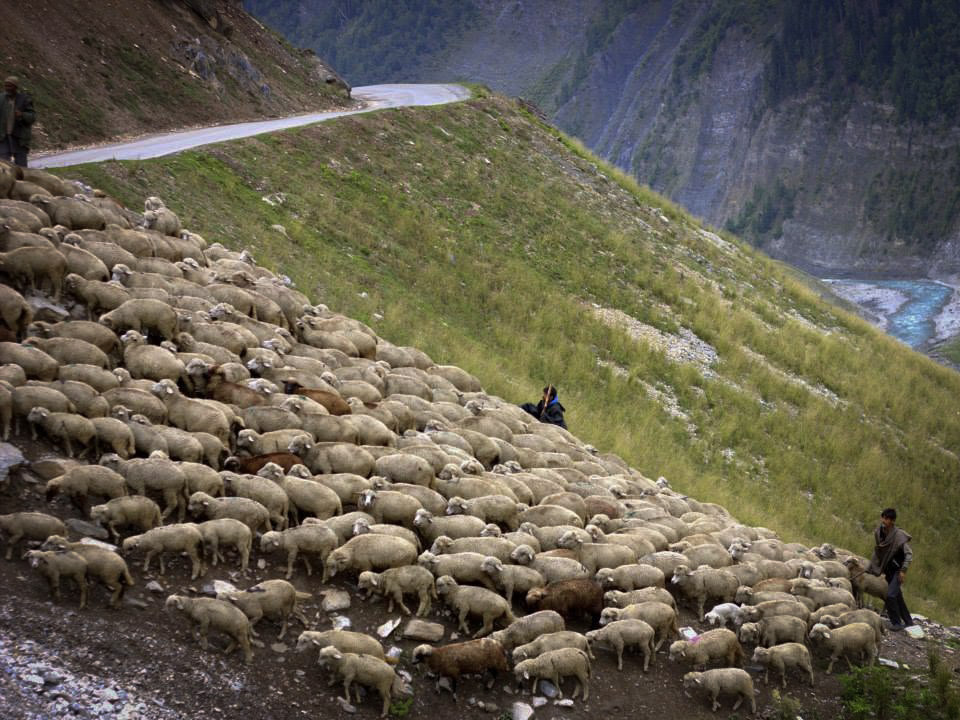
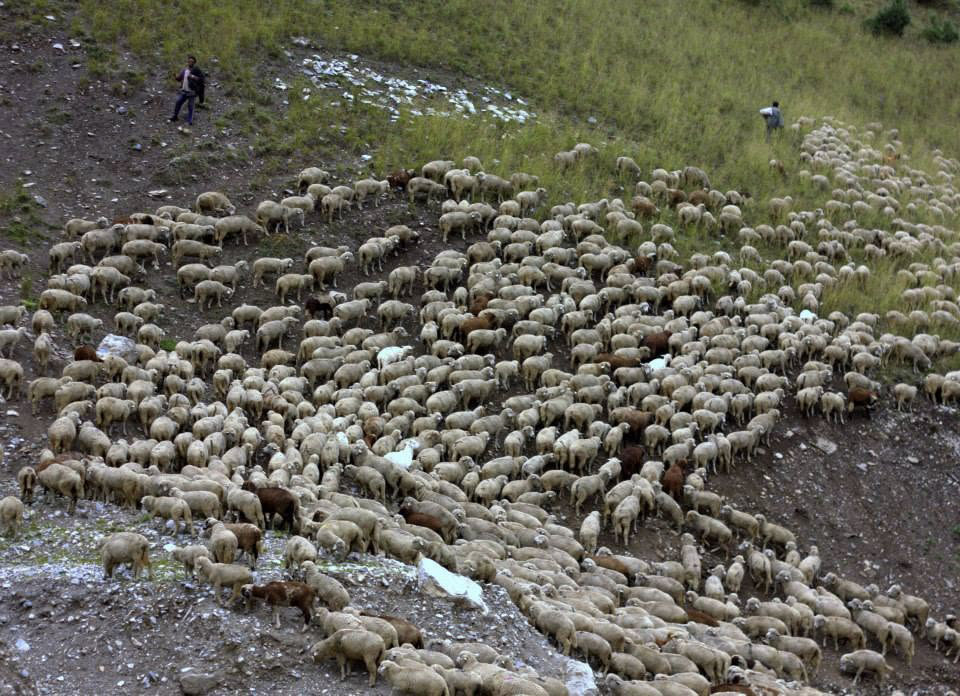
Some of my most beautiful memories of the Srinagar-Leh road trip are of the Kashmiri countryside. It was September when I visited Ladakh, and the weather was just perfect. Clear sunny skies smiled down, and the Kashmiri autumnal countryside was awash with colours. Enchanting glimpses of rural Kashmiri autumn filled the beginning of my journey, which took two and a half days and loads of altitude sickness pills to complete. On the day of my departure, Srinagar was facing a curfew, and the ancient, troubled city resembled a ghost town. Outside the city limits, however, life hummed with activity, and the indigenous pastoral nomads, the Bakarwals, were beginning their downhill journey. Inhabiting the higher altitude areas of India’s Jammu and Kashmir state, the members of the Bakarwal communities migrate to the warmer areas around September, and they travel with their entire lock, stock, and barrel.
Goats, sheep, horses, and dogs make traffic jams on the Srinagar-Leh road
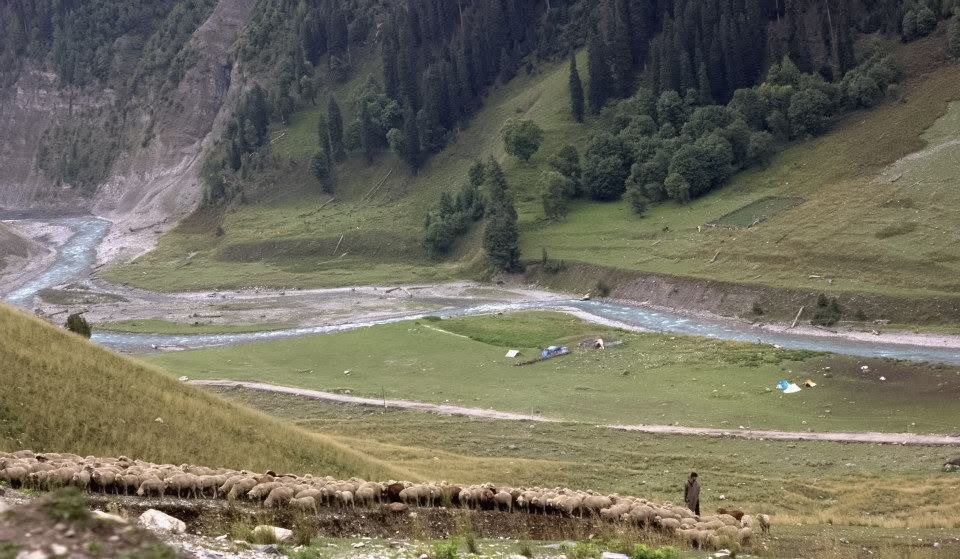
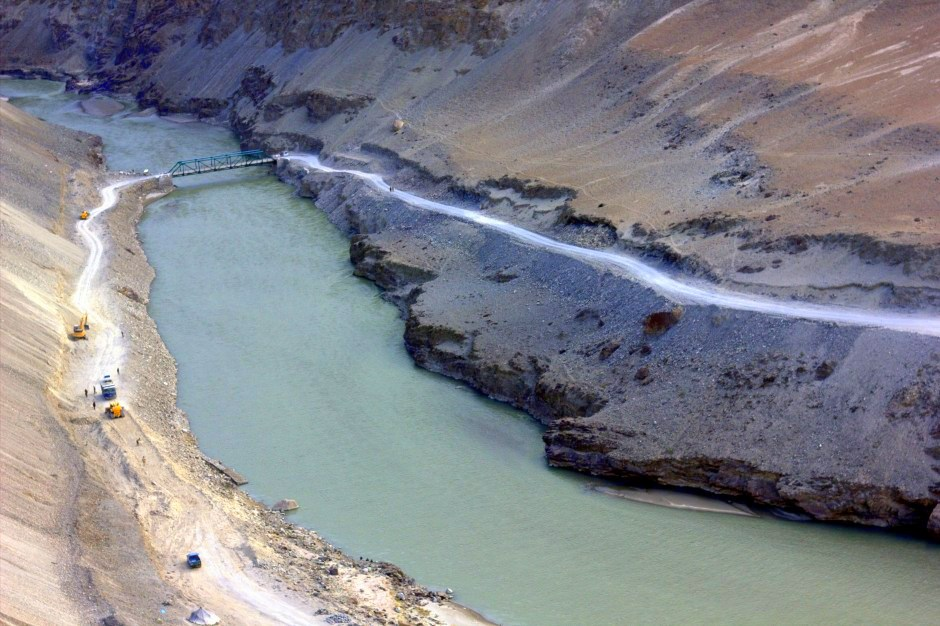
The long procession of commuting Bakarwal families with their huge herds of sheep, goats, horses, buffalo, and dogs is a picturesque sight, and I remember gawking shamelessly at their fantastic costumes and henna-dyed brilliant red beards. They blended in perfectly with Kashmir’s soft autumnal beauty and stood out gloriously in their rich colours. It was harvest season at that time, and entire Kashmiri villages were busy in the stretches of ripe gold fields. Flowers filled every inch, and every plant seemed to be in a rush to burst out in as many blooms before winter. The usually limpid willow trees looked radiant, the meadows were carpeted with lush grass, and sparkling rivers bounced along the route.

A Sonmarg break before heading towards Drass
Sonmarg, with its legendary “Meadows of gold,” arrived soon with snowy mountains and an impossibly blue sky, and I rested awhile there to stretch my legs. Once, a gateway on the ancient Silk Route, Sonmarg, along with Gilgit, connected Kashmir with China and further to the Gulf Countries. Today, it is a picturesque temporary township with no permanent settlers. Harsh winters make it inaccessible due to heavy snowfall and avalanches, and only a handful of wooden huts make it look hospitable. These serve as hotels and residences for the tourists and hospitality staff in summer, and though deserted due to autumn, Sonmarg was still extremely pretty. The lively Sindh River rushed through it, and big yellow sunflowers grew tall on its banks. It was a nice place to rest, relax, and bask in the sun, and in retrospect, I was glad that I did it.
Hairpin turns and falling stones on the Srinagar-Leh road
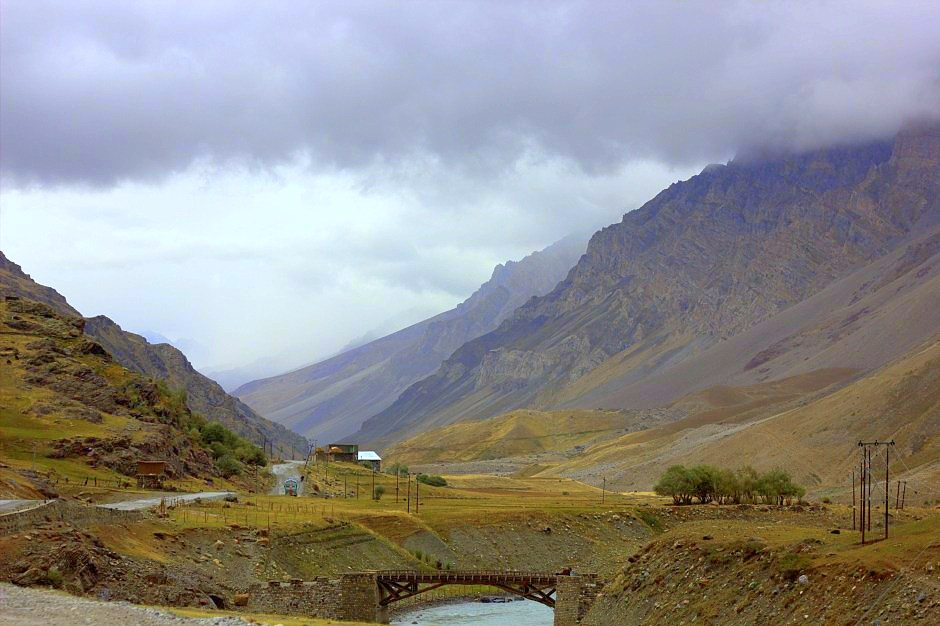
The terrain became harsh and difficult immediately after leaving Sonmarg, and my breathing too became laborious. Steep mountain roads turned to rubble, and peaks seemed to be too close to be comfortable. I was at dizzying heights, battling hairpin turns and falling stones on a road that is nearly always under construction due to frequent landslides. Avalanches, too, are quite common there, thus breaking the road down further. The altitude thankfully leveled out after crossing the Zojila pass, and Drass, the Gateway to Ladakh, appeared.
Suggested Read: A saffron autumn in Kashmir
Poignant Kargil and a gorgeous sunset
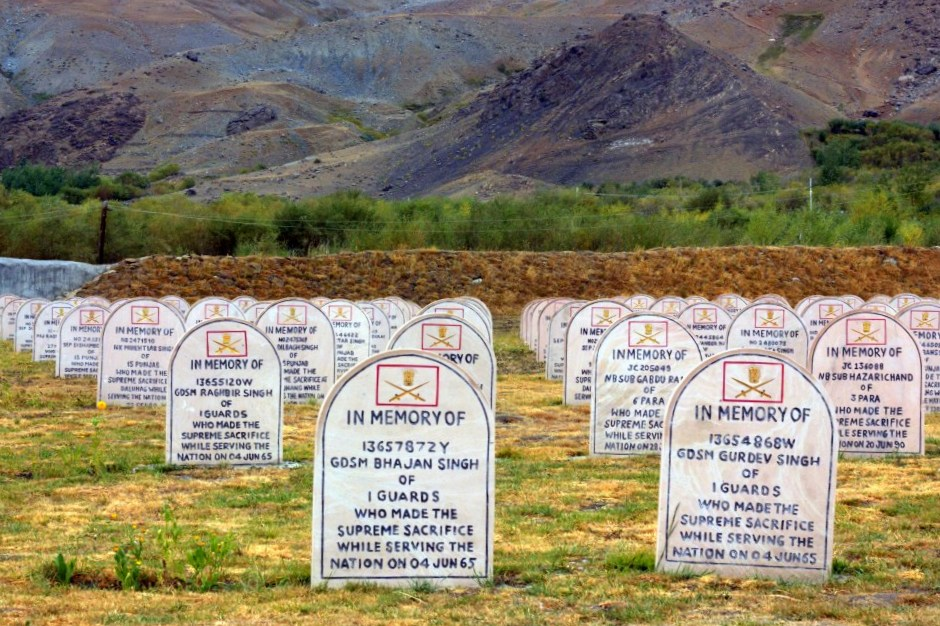
Known to be the second coldest inhabited place on earth, with the temperature dipping to -50 degrees Celsius in winter, Drass was wet and rainy when I arrived. A biting cold wind seeped inside my clothes the moment I stepped out of the car, and my extremities immediately froze. The warm sunny Kashmir was officially over, and I was in Kargil district, the infamous Indo-Pakistan battleground. Kargil shot into prominence after the Partition of India and has had a rocky history ever since. It has been affected by all Indo-Pak battles, and endless tombs dot Kargil’s meadows like white flowers. One of the least populous districts of India, Kargil is an interesting mix of conservative Islamic culture and supposedly indigenous Aryan people. Suru River flows through it, nurturing patches of farmlands in the middle of stony, arid mountains. It is a poignant place with no apparent tourist attraction or infrastructure, and most people move on from there, paying homage to the Kargil War Memorial.
When Kargil was all about a gorgeous sunset
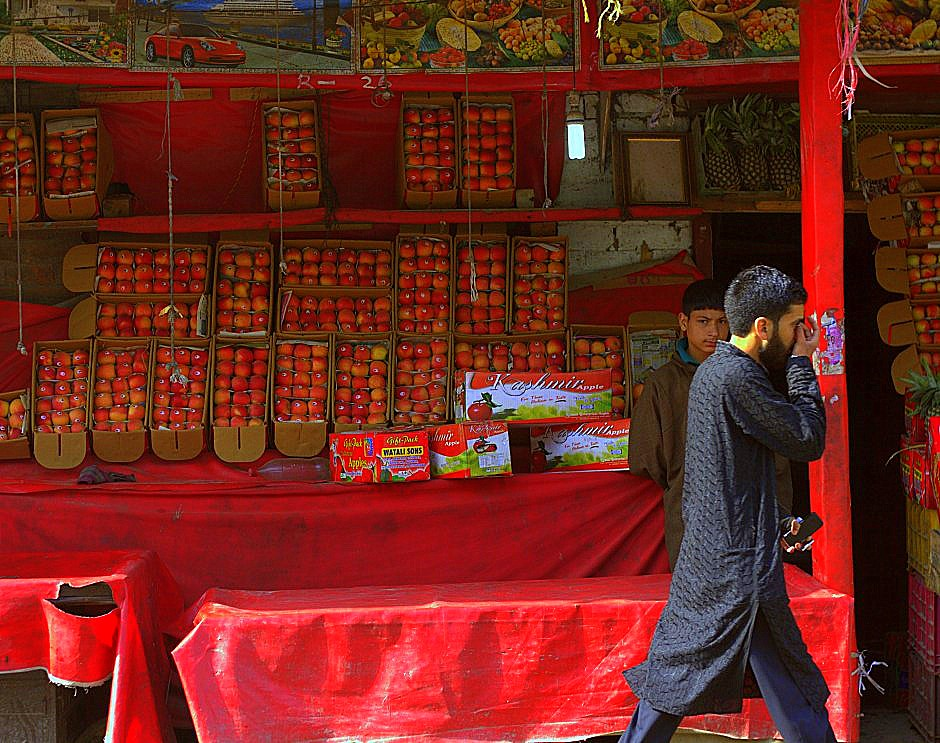
I, too, followed suit and headed off towards Kargil city, my next stop on the long drive from Srinagar to Leh. Kargil came sometime during sunset, and in my eyes, it had no attraction other than being a weary travelers’ pit stop. Busy, dusty, and congested, I remember it’s only sparks of beauty being the bountiful orchards and a lush sunset to match. The sky above the dusty town was magically crystal clear, and the resting sun lit it up with scintillating streaks of pink and peach. The colours were so intense that even the distant snowy peaks got tinted into a beautiful blush, and after that, cold, glittering stars filled the night fell fast.

“After midnight, the moon set, and I was alone with the stars.”
My journey ended with the falling twilight, and by the time I reached the nearby Nun Kun campsite, I was cold, bone-exhausted, and starving. Sleep, however, eluded me even after a belly full of hot dinner, and I wrapped myself in warm layers to sit outside in the open. With one hand cradling a glass of hot whiskey and another an amateur portable telescope, I left the cold Kargil camping ground to explore the pinpoints of lights in another galaxy and another universe.
You may also like: Gulmarg in white
Travel tips for Manali, Leh, and Srinagar Leh road trip
Ladakh can be accessed by road from both Srinagar and Manali. While the Srinagar-Leh road trip takes place at a lower altitude, it passes through some high-militancy areas, and the more popular Manali-Leh route goes through very high-altitude territory. Both routes are extremely picturesque and time-consuming due to narrow mountain roads and numerous military checkpoints. Ladakh is the highest plateau of the state of Jammu and Kashmir in India, with much of it being over 3,000. Altitude sickness is known to affect even the most experienced climbers in/en route to Ladakh, and extreme caution is to be exercised for acclimatization. Even when flying into Ladakh, it is recommended to take things easy for the first two days and keep altitude sickness pills/antidotes handy. Altitude Sickness is dangerous if not taken care of and has claimed lives. Both roads remain closed during winter and reopen around May-June.
What other bloggers write about: Why visit Drass by Sandeepa Chetan, Srinagar Leh highway in pictures by Travelshoebum
Follow the Kashmir series
- 21 PHOTOS THAT MAY TEMPT YOU TO VISIT KASHMIR
- DAKSUM, THE HIDDEN JEWEL OF KASHMIR
- WET APPLE FLOWERS AND KOKERNAG SPRING
- YOUSMARG: THE MEADOWS ON WHICH JESUS WALKED
- A SAFFRON AUTUMN IN PAMPORE
- MY MEMORIES OF WINTER IN KASHMIR
- GUIDE TO A WHITE GULMARG WINTER WEEKEND
- BEAUTY OF GUREZ IN AUTUMN
- SRINAGAR TULIP FESTIVAL
- LIFE ON SRINAGAR LAKES INSTAGRAMMED
- BLOOMING ALMOND TREES AT BADAMWARI
- WALIMA, A KASHMIRI WAZWAN WEDDING FEAST
- THE MOUTH WATERING KASHMIRI CUISINE
- KASHMIR ITINERARY FOR 7 DAYS
- 2012 LADAKH TRAVEL GUIDE AND TIPS
- PANGONG TSO BLUE
RESPONSIBLE TRAVELING-BECAUSE I CARE


Loved to read your post. Amazing pics.
Thank you vey much
You rekindle memories with your words and images. Three years in J&K have taught me invaluable lessons for a lifetime.
Thank you Ilakshee. That is a wonderful thing to say to a writer. Good memories have been rekindled I hope.
the rivers running through the bare landscape are incredible! What an amazing adventure!
Thank you Andrew. Ladakh is an incredible place
What an amazing post.. Thanks for bringing back the memories of our Ladakh trip..
Thank you very much
Gorgoues, as usual. I love your posts and this one in particular remind3d me of the arduous trip we took to Spiti Valley via Kinnaur, fun!
Thank you. A road trip to Spiti is on my wishlist for a very long time. Will turn to you for tips when we plan it.
Great pictures !! some of the pictures are very beautiful and stunning
Thank you.
What a splendid post 🙂
Memories galore.
Thank you